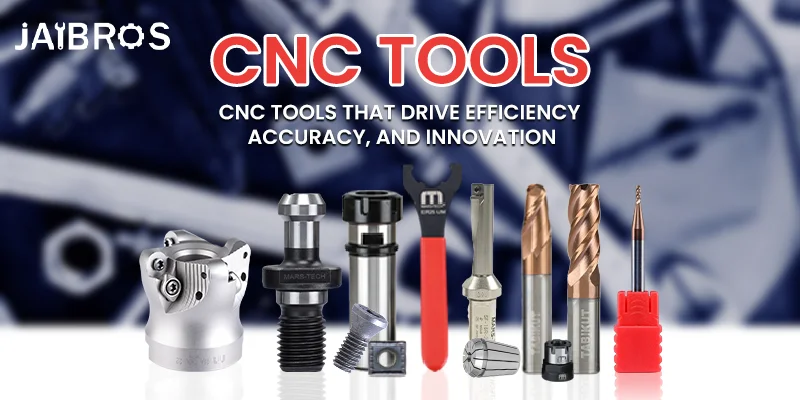
CNC Tools for Professional-Grade Cutting and Milling
In today’s fast-paced manufacturing environment, precision and durability are non-negotiable. Every machinist knows that the right CNC tools can dramatically improve output quality, reduce machining time, and extend tool life. Whether you're working on steel, aluminum, or specialized alloys, professional-grade cutting and milling depend heavily on the tools you choose. With industries demanding tighter tolerances and smoother finishes, using high-performance tooling has become more important than ever.
Modern machining setups are built around a wide range of CNC machine tools, all designed to support specific milling, drilling, and cutting needs. These tools not only make production faster but also ensure that each component meets the required standard. Understanding tool types, coatings, materials, and geometries helps machinists and manufacturers make smarter decisions for better performance and profitability.
The Quality of Your Cutting and Milling is Dependent upon CNC Tools
CNC machines have changed how manufacturing is executed. Instead of manual guesswork, automation is now responsible for carrying out the most important functions of machining with reliability and accuracy. Yet, no CNC machine - regardless of technological advancements - will have success without appropriate high-quality tools. Tools such as end mills, drills, and inserts work in tandem with CNC machines, and each tool has its individual role when is comes to shaping and finishing a work piece.
Tools that are correctly paired with CNC machine tools will provide superior control, less vibration, and better chip removal. This is essential in dense materials due to heat buildup and tool wear, which can ruin an entire process.
.
Types of CNC Tools Used for Precision Cutting
A variety of tooling options are available for different machining requirements. Below are some of the most commonly used tools:
1. End Mills
End mills are essential for contouring, slotting, pocketing, and general-purpose milling. Available in 2-flute, 4-flute, and higher variations, they play a critical role in shaping the final product.
2. Drills
Drills are used for creating holes with accuracy and speed. When matched with the right speed and feed, they create precise, consistent results.
3. Inserts
Inserts are used for turning, milling, and threading. These replaceable tips offer long tool life and reduce downtime since only the insert needs to be replaced.
4. Reamers
Reamers refine an existing hole for high accuracy and smooth finishes and are often used when tolerance is extremely tight.
5. Face Mills
Face mills remove material from flat surfaces quickly and effectively, making them perfect for preparing workpieces.
How CNC Tools Improve Professional-Grade Results
1. Accuracy in Complex Designs
Precision machinery demands tools capable of holding tight tolerances. High-quality tools maintain consistent performance even during long production cycles.
2. Better Surface Finish
Tools made with micro-grain carbide or coated with TiAlN, TiN, or DLC generate smoother cuts and reduce friction, resulting in clean finishing.
3. Longer Tool Life
The right coating and geometry reduce wear, prevent chipping, and improve overall tool performance.
4. Faster Machining Cycles
Efficient chip removal and reduced cutting resistance allow machinists to run operations at higher speeds.
5. Compatibility with High-End CNC Machine Tools
Premium tools enhance machine output, allowing businesses to take full advantage of their equipment.
Growth in CNC Tools Availability in India
The demand for CNC tooling has significantly increased over the years. Manufacturers now prefer buying from trusted sellers or using a CNC tools online shop India, where a variety of cutting tools, inserts, and holders are easily accessible. This also simplifies bulk buying for industries that require frequent tool changes.
Additionally, several local and international suppliers have set up distribution channels to supply high-grade tools. Whether you need end mills or indexable inserts, choosing a reliable cnc tools manufacturer ensures consistent quality, material durability, and reliable heat resistance.
How to Choose the Right Tools for Your Operation
Selecting the right tool impacts performance, tool life, cost, and finish quality. Here are a few points to consider:
1. Material of the Workpiece
Different materials require different tool types and coatings. For example, hard materials often need carbide tools.
2. Cutting Parameters
Speeds, feeds, and depth of cut greatly influence tool performance. Always choose tools that match your machining requirements.
3. Tool Coating
Coatings such as TiAlN and TiN provide better heat resistance, making tools ideal for demanding conditions.
4. Tool Geometry
Sharp edges, helix angles, and flute designs help achieve smooth cutting and control chip flow.
5. Dependable CNC Manufacturer
Working with a trustworthy CNC tools manufacturer ensures the tools you use are tested, certified, and capable of handling tough industrial workloads.
The Future of Tools in Manufacturing
Technology continues to reshape industries, and CNC machining is no exception. With automation, smart tooling, and precision engineering, the next generation of tools will likely be more efficient, durable, and adaptive to various applications. Businesses that invest in high-quality tooling will gain better performance and reduced production costs in the long run.
Conclusion
Professional-grade cutting and milling depend heavily on the selection of high-performance CNC tools. From finish quality to machining speed, every factor is influenced by the tools you choose. As manufacturers continue adopting advanced techniques and automation, the importance of reliable tools and trusted suppliers will only grow. In this context, Jaibros stands out for offering quality-focused industrial supplies that match the expectations of modern machining environments, helping users maintain consistency and precision without directly promoting itself.
FAQs
1. What are CNC tools used for?
They are used for cutting, milling, drilling, and shaping materials with precision in CNC machines.
2. How do coatings improve tools?
Coatings reduce friction, enhance durability, and allow tools to withstand high heat.
3. What is the difference between HSS and carbide tools?
Carbide is harder, more heat-resistant, and suitable for high-speed machining, while HSS is ideal for lighter applications.
4. How often should tools be replaced?
Replacement depends on usage, material, and tool quality. Regular inspection prevents tool failure.
5. Where can I find CNC tools in India?
You can check any trusted online shop in India for a wide variety of reliable tools.