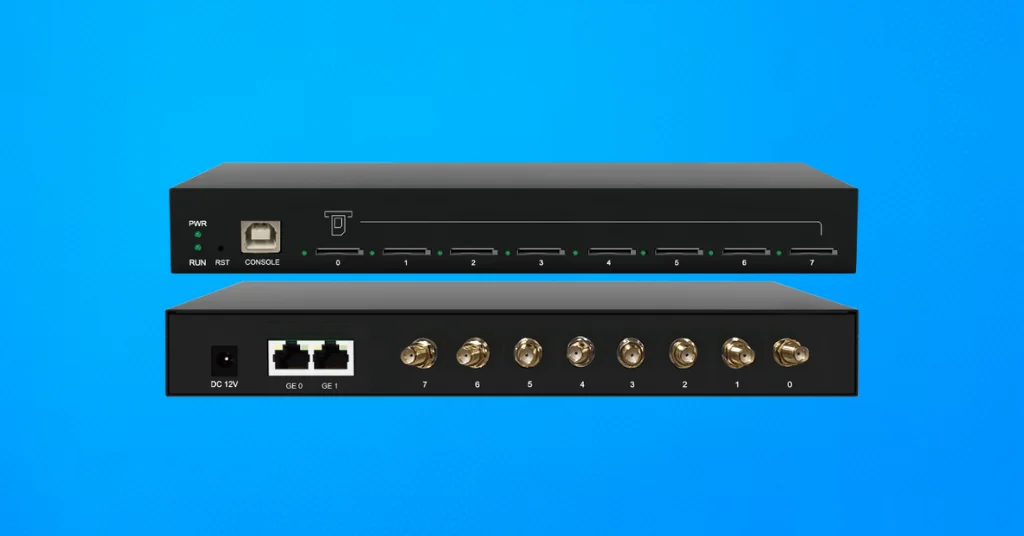
A GSM Gateway has become an essential communication tool for businesses that want reliable calling, reduced telecom expenses, and a backup to their existing phone systems. As companies grow and communication demands increase, the need for flexible, stable, and cost-effective solutions becomes crucial. This is where a GSM Gateway plays a powerful role—allowing businesses to make and receive calls through GSM networks without relying only on landlines or internet-based trunks.
This blog explains everything about GSM Gateways—how they work, their features, use cases, and why modern businesses increasingly prefer them.
What Is a GSM Gateway?
A GSM Gateway—often known as a Mobile Gateway or VoIP GSM Gateway—is a device that connects your office phone system to GSM mobile networks. It uses one or multiple SIM cards to route voice calls, making it possible to connect your traditional analog PBX or IP PBX directly to mobile networks.
In simple terms, it bridges two worlds:
your phone system → GSM network → the person you’re calling.
This ensures better call routing, reduced call costs, improved coverage, and a dependable backup during network outages.
How Does a GSM Gateway Work?
A GSM Gateway works by converting voice signals between different communication systems. When a call is placed from your phone system:
-
The call reaches the gateway.
-
The gateway identifies the best SIM card or mobile network to route the call.
-
It sends the call out through the GSM network.
This enables businesses to manage large call volumes efficiently while controlling costs. The gateway can support multiple channels, meaning several calls can run simultaneously depending on the model.
Businesses also use it for automated calling, bulk SMS, OTP delivery, and customer support processes.
Why Do Businesses Use GSM Gateways?
Many businesses rely on GSM Gateways because they offer better control over voice communication. Modern communication is not limited to a single platform, and companies need solutions that support mobility, cost management, and resilience.
A GSM Gateway ensures that your communication system remains functional even if your internet or landline services fail. It gives you flexibility, scalability, and uninterrupted calling—essential for customer-facing teams.
Key Features of GSM Gateway
1. Multi-SIM Functionality
Most gateways support multiple SIM cards. This allows businesses to use different mobile networks for better coverage and load balancing.
2. Intelligent Call Routing
The device automatically chooses the best route for every call—helping reduce telecom costs significantly.
3. Backup Communication Channel
If your SIP trunk or broadband connection goes down, the gateway continues routing calls through GSM networks, ensuring uptime.
4. Easy Integration with Existing Systems
Whether you use analog lines, IP PBX, softswitches, or call center software, a GSM Gateway connects smoothly without major upgrades.
5. SMS Capabilities
Some models support bulk SMS, API-based messaging, alert systems, and automation for workflows like OTPs and reminders.
6. Supports High Call Volumes
From small offices to enterprise call centers, GSM Gateways are built to handle continuous inbound and outbound calls.
Benefits of Using a GSM Gateway
1. Reduced Call Costs
Since calls are routed through local GSM networks, businesses pay lower tariffs, especially for mobile-to-mobile connections.
2. Higher Reliability
The gateway ensures that communication continues uninterrupted—even during internet outages.
3. Maximum Network Coverage
By using SIMs from different telecom operators, companies get the strongest signal in any location.
4. Scalable for Business Growth
As your call load increases, you can add more channels, more SIMs, or additional gateways.
5. Ideal for Multiple Industries
GSM Gateways are used by:
-
Call centers
-
Banks and financial institutions
-
Small and medium businesses
-
Remote branches
-
Hotels and healthcare
-
Support and telemarketing teams
6. Easy to Deploy and Manage
Setup requires minimal configuration, and ongoing management is simple with built-in web interfaces.
Common Use Cases of GSM Gateways
1. Call Centers
For outbound sales, support, and verification calls, GSM Gateways offer flexibility and cost savings.
2. Sales & Marketing Teams
Commercial teams use GSM Gateways to automate prospecting, promotions, and follow-up campaigns.
3. Enterprise Telephony Backup
Companies use it as a failover system to ensure their PBX or VoIP setup remains operational 24/7.
4. Branch & Remote Offices
Locations with unstable internet or landline connectivity use GSM Gateways for dependable voice communication.
5. OTP, Alerts & SMS Applications
Businesses use gateways to send automated SMS alerts for transactions, service updates, or attendance systems.
How GSM Gateway Strengthens Modern Business Communication
With increasing reliance on mobile communication, businesses cannot afford call drops, outages, or expensive call routing. A GSM Gateway gives them complete control over voice operations—ensuring better performance, strong connectivity, and lower operational costs.
It also helps bridge gaps between traditional communication methods and modern IP-based systems, making it a reliable asset for any organization aiming to streamline its communication infrastructure.
Conclusion
A GSM Gateway is a powerful tool for businesses that want reliable, flexible, and cost-effective communication. From reducing call expenses to ensuring uninterrupted connectivity, it offers practical benefits for companies of all sizes. As communication grows more mobile-centric, GSM Gateways are becoming a preferred solution for organizations that want to modernize without replacing their entire system.