Introduction: North America Jeans Industry Outlook (2025–2030)
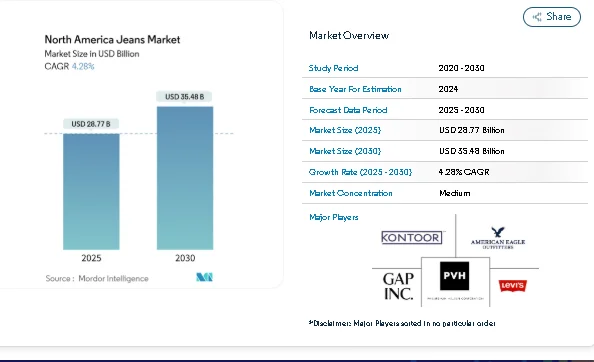
The North America jeans market continues to be one of the most resilient fashion categories, supported by long-established denim culture, growing preference for casual dressing, and rising interest in sustainable wardrobe choices. The market is valued at USD 28.77 billion in 2025 and is expected to reach USD 35.48 billion by 2030, recording a 4.28% CAGR.
Changing workplace norms, hybrid work lifestyles, and a renewed focus on comfort have played a key role in denim’s steady performance. Jeans now sit at the intersection of functionality, fashion, and convenience. Consumers across all age groups continue to rely on denim as a go-to clothing staple, while brands refine fit options, size ranges, and finishing techniques to appeal to broader audiences. With online retail gaining momentum and sustainability efforts shaping production decisions, the North America jeans market is positioned for healthy long-term growth.
Key Market Trends Driving the North America Jeans Industry
1. Casual Work Culture Boosts Everyday Denim Usage
Workwear expectations have relaxed considerably in the post-pandemic period. Many workplaces across the United States and Canada now support flexible dress codes, leading to greater adoption of jeans for everyday office wear. This shift has lifted demand across both mass and premium categories, particularly for versatile straight, slim, and regular fits. As more consumers build capsule wardrobes centered around comfort, denim is expected to remain a fundamental choice.
2. Rising Interest in Sustainable and Low-Impact Jeans
Sustainability continues to influence North American buying patterns. Shoppers increasingly prefer jeans made with responsibly sourced cotton, recycled blends, and water-efficient washing processes. Efforts such as low-liquor dyeing, reduced-chemical finishing, and traceable supply chains are becoming more common across major brands. Retailers adopting transparent labeling and eco-friendly production methods gain faster traction among conscious buyers.
3. Growth of Online Retail Strengthens Market Reach
Online retail accounts for more than one-third of jeans sales in North America and continues to expand. Consumers rely on digital tools such as virtual fitting guidance, detailed size breakdowns, and product comparison features to reduce guesswork. Quick delivery options, flexible return policies, and targeted social media advertising have also enhanced the online denim shopping experience. Smaller denim labels are especially benefiting from direct-to-consumer strategies that reduce reliance on traditional retail channels.
4. Comfort-Driven Fabric Innovation Enhances Buyer Value
Stretchable denim, multi-blend performance fabrics, and soft-touch finishes are widely being adopted to improve everyday comfort. These upgrades help brands appeal to both younger shoppers seeking trend-led silhouettes and older consumers prioritizing comfort without compromising style. Enhanced fits such as adaptive waistbands, breathable stretch, and flexible fibers continue to broaden the customer base within the jeans market.
5. Shift Toward Value-Based and Premium Jeans Segments
While mass-market jeans dominate shelf space, the premium segment is growing steadily due to increasing interest in long-lasting, ethically produced denim. Consumers who value durability and transparency are willing to pay higher prices for quality fabrics and responsibly manufactured jeans. This balance between affordability and premium differentiation supports diverse buying preferences across North America.
Market Segmentation: North America Jeans Market Breakdown
Segmentation by Type/Fit
The North America jeans industry is segmented into:
-
Regular Fit
-
Slim Fit
-
Skinny Fit
-
Bootcut
-
Flared
-
Others
Regular fit continues to hold a considerable share due to its comfort-forward style, making it popular among family shoppers and older age groups. Meanwhile, slim and tapered fits are gaining momentum among urban consumers and younger demographics who prefer streamlined silhouettes.
Segmentation by End User
-
Men
-
Women
-
Children/Kids
Women’s jeans lead the market, supported by a wide variety of rises, washes, shaping features, and style ranges. The children’s jeans category is growing the fastest, driven by demand for durable, easy-wash, and long-lasting fabrics.
Segmentation by Category
-
Mass
-
Premium
The mass category controls the largest share, backed by strong presence in supermarkets, hypermarkets, and value retail chains. Premium denim is recording faster growth due to its focus on craftsmanship, sustainability, and exclusive designs.
Segmentation by Distribution Channel
-
Specialty Stores
-
Supermarkets/Hypermarkets
-
Online Retail Stores
-
Other Channels
Online retail is the fastest-growing channel thanks to seamless browsing, targeted recommendations, and greater assortment availability. Specialty stores continue to attract shoppers seeking expert assistance in selecting fits and washes.
Segmentation by Geography
-
United States
-
Canada
-
Mexico
-
Rest of North America
The United States dominates the region, supported by a deeply rooted denim culture and strong retail presence. Canada shows stable demand for jeans with season-specific features, while Mexico benefits from rising purchasing power and expanding local manufacturing capabilities.
Key Players in the North America Jeans Market
The competitive landscape consists of heritage brands with extensive distribution networks as well as emerging digital-first labels. Major companies include:
-
Levi Strauss & Co.
-
Kontoor Brands, Inc. (Wrangler, Lee)
-
The Gap Inc.
-
PVH Corp. (Tommy Jeans)
-
American Eagle Outfitters Inc.
These companies invest in new fits, sustainable materials, and enhanced manufacturing techniques to maintain relevance across varied consumer groups. Collaborations, new seasonal drops, and improved online shopping experiences remain essential strategies for retaining market share.
Conclusion: North America Jeans Market Growth Outlook
The North America jeans industry is expected to maintain steady expansion through 2030, supported by everyday wearability, rising demand for sustainable apparel, and ongoing improvements in online shopping journeys. As consumers embrace comfort-first fashion and brands invest in better fabrics and transparent supply chains, the jeans market is set to remain a strong performer. With both mass and premium segments showing healthy prospects, the region’s denim landscape continues to evolve while preserving its long-standing cultural relevance.
About Mordor Intelligence:
Mordor Intelligence is a trusted partner for businesses seeking comprehensive and actionable market intelligence. Our global reach, expert team, and tailored solutions empower organizations and individuals to make informed decisions, navigate complex markets, and achieve their strategic goals. With a team of over 550 domain experts and on-ground specialists spanning 150+ countries, Mordor Intelligence possesses a unique understanding of the global business landscape. This expertise translates into comprehensive syndicated and custom research reports covering a wide spectrum of industries, including aerospace & defense, agriculture, animal nutrition and wellness, automation, automotive, chemicals & materials, consumer goods & services, electronics, energy & power, financial services, food & beverages, healthcare, hospitality & tourism, information & communications technology, investment opportunities, and logistics.