Introduction – Beer Market Outlook and Growth Dynamics
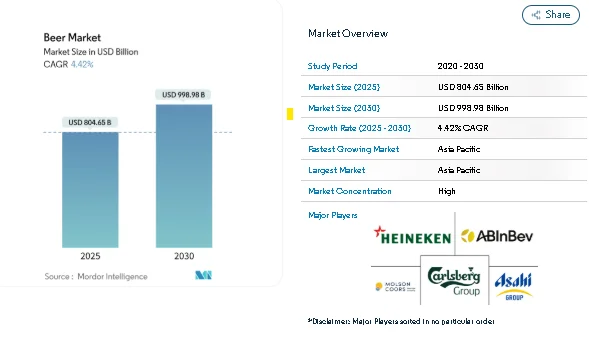
The global beer market is valued at USD 804.65 billion in 2025 and is projected to reach USD 998.98 billion by 2030, supported by consistent consumer demand, higher spending capacity, widening product portfolios, and expanding on-trade and off-trade channels. Market growth is driven by premium beer offerings, low-alcohol varieties, and functional beverage formats that attract younger demographics. Increased digital commerce adoption and the expanding middle-income population in Asia-Pacific further support the market’s stability. Europe’s mature craft beer landscape, North America’s hospitality revival, and sustainable packaging adoption also contribute to the overall outlook.
Key Trends in the Global Beer Market
Growing Craft Brewery Expansion
One of the strongest beer market trends is the rapid expansion of craft breweries. Regions such as New York now host hundreds of independent breweries, supported by regulatory updates that streamline licensing and reduce compliance-related expenses. Craft breweries are strengthening regional market penetration through direct-to-consumer experiences, seasonal batches, and locally inspired flavor profiles. Younger consumers increasingly prefer India Pale Ales, wheat beers, stouts, and fruit-infused seasonal varieties, shifting demand from traditional lagers to more experimental options. Microbreweries in India and the United States are incorporating local ingredients such as citrus, mango, kokum, and herbs to appeal to the evolving palate of millennial and Gen Z consumers.
Tourism and Hospitality Boosting Beer Consumption
Tourism and hospitality play a major role in beer market performance. Countries including Vietnam, Thailand, Hong Kong, and Singapore maintain high on-trade consumption, supported by bars, resorts, restaurants, and entertainment venues. Beer festivals, brewery tours, and cultural events attract domestic and international visitors, raising awareness of regional beer styles and generating additional revenue for local brewers. Destinations such as Belgium, with its popular brewery tours and events, highlight the strong link between beer tourism and market expansion.
Ingredient and Formulation Innovation
Beer makers are increasing experimentation with new formulations to meet consumer expectations for diverse flavor experiences. Examples include limited-edition pilot brews, botanicals, herbs, spices, gluten-free ingredients, and fruit-based beers. Innovation platforms are enabling producers to develop customizable brews, enhance foam stability, and introduce lighter, refreshing variants suitable for extended consumption. Manufacturers are also developing beers aligned with wellness preferences, including gluten-free and reduced-calorie products.
Gluten-Free Beer Demand Driven by Health Awareness
Greater awareness of celiac disease and dietary restrictions is increasing demand for gluten-free beer alternatives. Breweries worldwide now offer gluten-free, low-carb, and low-calorie options that appeal to consumers following ketogenic, paleo, or restricted diets. Gluten-free beer festivals and public events support market education, helping consumers understand dietary needs while increasing visibility for specialty products.
Regulatory Influence on Advertising, Labelling, and Distribution
Regulations continue to shape product development, manufacturing, and distribution. Updated labeling standards require malt beverages to display alcohol facts, nutritional details, and serving information. Excise duties and restricted sales hours influence affordability and accessibility in several markets. In regions like India, varied state-level taxation systems increase operational complexity, affecting pricing and distribution.
Shift Toward No-Alcohol and Low-Alcohol Products
Health-focused purchasing habits and reduced alcohol consumption trends, especially among younger consumers, are encouraging beer makers to expand zero-alcohol and low-alcohol product lines. Popular products such as taste-preserving non-alcoholic beers are improving acceptance within this segment. Increasing adoption is also supported by stricter driving regulations and wellness goals across multiple countries.
Market Segmentation – Beer Market Industry Report Overview
Beer Market Segmentation
The beer market is segmented by product type, category, packaging, distribution channel, and region. Key segments include:
By Product Type
-
Lager
-
Ale
-
Non/Low Alcohol Beer
-
Other Beer Types
By Category
-
Standard
-
Premium
By Packaging Type
-
Bottles
-
Cans
-
Others
By Distribution Channel
-
On-Trade
-
Off-Trade
By Geography
-
North America
-
Europe
-
Asia-Pacific
-
South America
-
Middle East & Africa
This structure reflects the key operational segments used in beverages market analysis and supports businesses assessing beverages market size within global and regional contexts.
Key Players in the Global Beer Market
The global beer market features a concentrated competitive landscape, with multinational brewers managing vast brand portfolios and efficient distribution networks. Companies maintain competitiveness through premium product strategies, digital platforms, sustainability efforts, and market-specific product development. Leading brands focus on expanding low-alcohol alternatives, craft-inspired seasonal brews, and premium offerings tailored to consumer preferences across different regions.
Key participants include:
-
Heineken N.V.
-
Anheuser-Busch InBev SA/NV
-
Carlsberg Group
-
Molson Coors Beverage Company
-
Asahi Group Holdings Ltd
These companies continue to implement digital supply chain systems, pilot-batch innovation platforms, regional acquisitions, and eco-friendly packaging solutions to strengthen their market position.
Conclusion
The global beer market continues to evolve as consumer preferences shift toward premium choices, diverse flavor profiles, low-alcohol alternatives, and ingredient-specific formulations. Markets across Asia-Pacific, Europe, and North America maintain steady demand supported by tourism, hospitality, local craft breweries, and broad retail networks. Regulations, sustainability initiatives, and digital commerce advancements shape market strategies for both global brewers and regional producers. As consumer expectations move toward higher quality, transparency, and variety, the beer market remains firmly integrated within the broader beverages market, with sustained momentum through 2030.
About Mordor Intelligence:
Mordor Intelligence is a trusted partner for businesses seeking comprehensive and actionable market intelligence. Our global reach, expert team, and tailored solutions empower organizations and individuals to make informed decisions, navigate complex markets, and achieve their strategic goals.
With a team of over 550 domain experts and on-ground specialists spanning 150+ countries, Mordor Intelligence possesses a unique understanding of the global business landscape. This expertise translates into comprehensive syndicated and custom research reports covering a wide spectrum of industries, including aerospace & defense, agriculture, animal nutrition and wellness, automation, automotive, chemicals & materials, consumer goods & services, electronics, energy & power, financial services, food & beverages, healthcare, hospitality & tourism, information & communications technology, investment opportunities, and logistics.