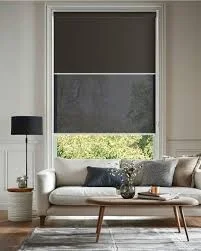
In the evolving landscape of interior design, few window treatments offer the clean aesthetic, simplicity, and functionality of roller-blinds. They have long been a design staple, praised for their ability to disappear almost completely when retracted, offering unobstructed views and maximum natural light. Their minimalist profile makes them the preferred choice for contemporary architecture and smart homes, providing a simple yet powerful way to manage light, privacy, and thermal comfort. This guide delves into everything you need to know about selecting, customizing, and maximizing the performance of your roller-blinds.
1. The Power of Simplicity: Why Roller Blinds Dominate
The core appeal of roller-blinds lies in their straightforward operation and sleek visual impact. Composed of a single piece of material that rolls up onto a tube (or cassette) and flows down, they eliminate the visual clutter associated with curtains or horizontal slat blinds.
-
Minimalist Aesthetic: When retracted, roller blinds virtually vanish into the headrail, preserving clean window lines and maximizing natural light. When lowered, they provide a smooth, continuous surface that acts as a simple, modern backdrop to the room’s décor.
-
Space Efficiency: Unlike drapes that require stacking space on the sides of the window, roller blinds fit snugly within or just outside the window recess, making them ideal for small rooms or areas where space is a premium, such as kitchens and bathrooms.
2. Fabric Opacity: Tailoring Light Control to Every Room
The functionality of roller-blinds is defined by the fabric chosen, allowing them to be customized for the specific needs of each room:
-
Sheer/Screen Fabrics: These fabrics are designed to maintain the view outside while offering privacy during the day. They are essential for protecting furnishings and artwork from harsh UV rays, making them perfect for living rooms or offices where diffused light is preferred.
-
Light-Filtering Fabrics: Offering a balance between privacy and light, these fabrics diffuse natural light, softening the glare and filling the room with ambient light without compromising daytime privacy. These are excellent for dining rooms and hallways.
-
Blackout Fabrics: For bedrooms, nurseries, or home theaters, blackout roller-blinds are indispensable. They feature an opaque coating that completely blocks light transmission, ensuring total privacy and allowing for optimal sleep or viewing conditions, even during bright daylight hours.
3. Durability and Material Choice
Modern manufacturing has expanded the material options for roller-blinds, providing treatments that are durable, cleanable, and resistant to environmental factors:
-
Vinyl and PVC: These moisture-resistant materials are best suited for wet areas like bathrooms and kitchens. They are extremely easy to wipe clean, resisting mildew and stains.
-
Polyester and Blends: Offering a vast range of colours, patterns, and textures, polyester blends provide excellent value and can be treated for UV protection and enhanced thermal performance.
-
Solar Reflective Fabrics: For properties in sunny climates, specialized fabrics are available that feature a metallic backing to reflect solar heat, significantly improving the thermal efficiency of the room and reducing cooling costs. This makes high-quality roller-blinds a smart energy-saving investment.
4. Customization and Operation Methods
The evolution of roller-blinds includes significant advancements in how they are operated, moving far beyond the traditional pull chain:
-
Motorization (Smart Blinds): The most popular modern upgrade, motorized roller-blinds can be controlled via remote, wall switch, smartphone app, or integrated into a smart home system. This offers unparalleled convenience and is a great safety feature, eliminating pull cords entirely.
-
Cordless/Spring-Loaded Systems: These systems use a spring mechanism, allowing the user to gently push or pull the blind to the desired position. They are inherently child-safe, as there are no dangling cords, addressing a major safety concern.
-
Cassette and Side Channels: For total light exclusion, especially in bedrooms, the blind can be fitted into a cassette headbox and side channels. This minimizes the gaps around the edges, maximizing the blackout effect of the roller-blinds fabric.
5. Seamless Integration in Design
Due to their simple form, roller-blinds are incredibly versatile in pairing with other window treatments. They can be installed close to the glass (within the recess) to handle light and privacy, leaving the outside area free for decorative drapes or pelmets. This layered approach allows for maximizing functionality without sacrificing aesthetic softness. When clean lines and practicality are paramount, few solutions rival the efficiency and quiet sophistication of roller-blinds.