

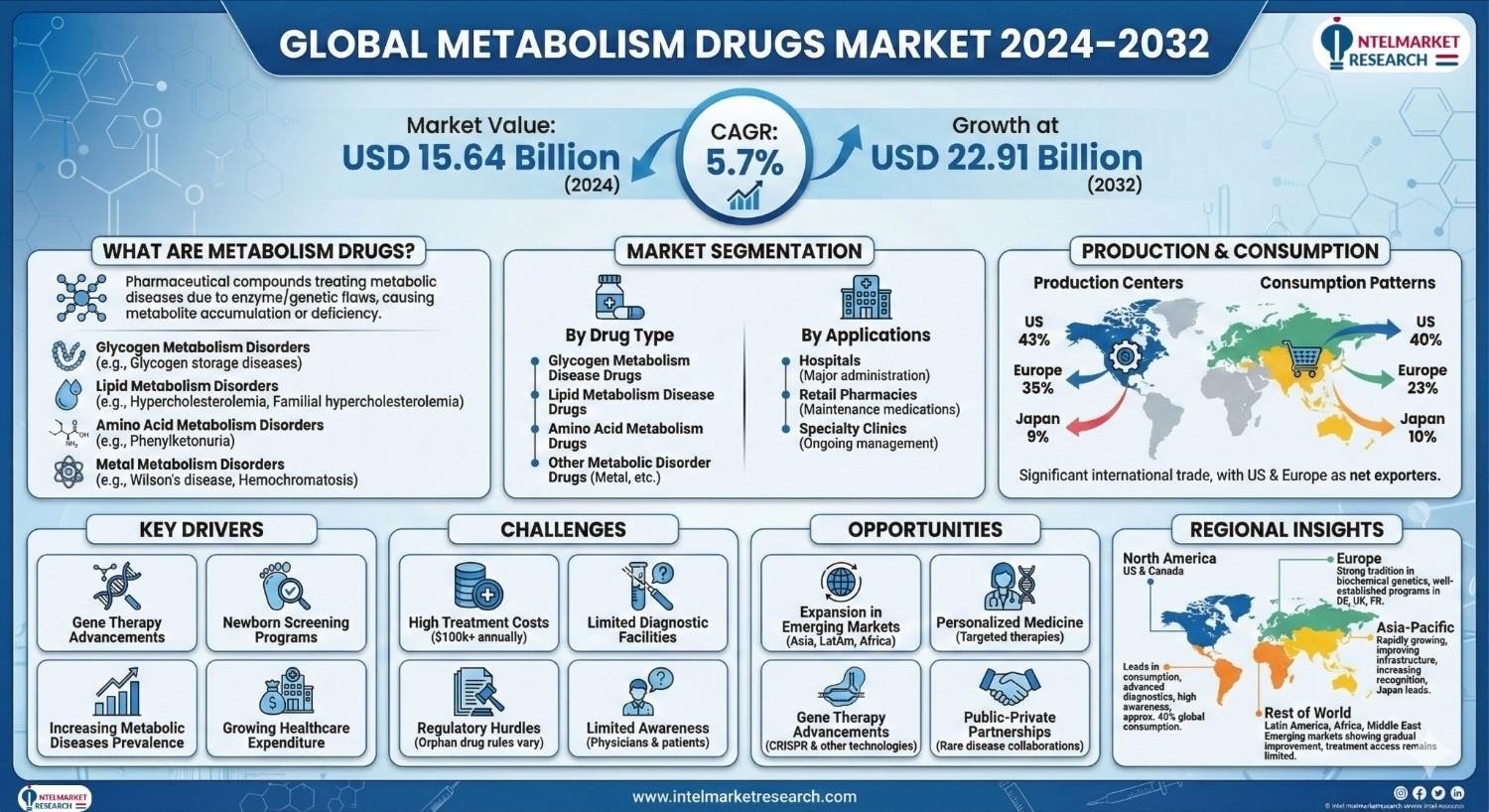
According to a new report from Intel Market Research, the global Metabolism Drugs market was valued at USD 15,640 million in 2024 and is projected to reach USD 22,910 million by 2032, growing at a CAGR of 5.7% during the forecast period (2025-2032). This growth is propelled by increasing prevalence of metabolic disorders, advancements in targeted therapies, and growing healthcare expenditure worldwide.
What are Metabolism Drugs?
Metabolism Drugs are pharmaceutical compounds used to treat metabolic diseases in humans. These diseases primarily include:
- Glycogen Metabolism Disorders (e.g., Glycogen storage diseases)
- Lipid Metabolism Disorders (e.g., Hypercholesterolemia, Familial hypercholesterolemia)
- Amino Acid Metabolism Disorders (e.g., Phenylketonuria)
- Metal Metabolism Disorders (e.g., Wilson's disease, Hemochromatosis)
- Other related metabolic conditions
These conditions result from enzyme deficiencies or genetic mutations affecting metabolic pathways, leading to accumulation of toxic metabolites or deficiency of essential molecules.
Market Overview and Distribution
The global metabolism drugs market exhibits distinct production and consumption patterns:
Production Centers:
- United States: Largest producer with 43% of global production revenue
- Europe: Second largest producer with 35% market share
- Japan: Significant producer with 9% market share
Consumption Patterns:
- United States: Largest consumer with 40% of global sales revenue
- Europe: Important market with 23% sales revenue share
- Japan: Accounts for 10% of global sales revenue
This disparity between production and consumption patterns indicates significant international trade in metabolism drugs, with the United States and Europe being net exporters while Japan and other regions are net importers.
Market Segmentation
By Drug Type:
- Glycogen Metabolism Disease Drugs: Target glycogen storage diseases like Pompe disease
- Lipid Metabolism Disease Drugs: Address hyperlipidemias and cholesterol disorders
- Amino Acid Metabolism Drugs: Treat disorders like phenylketonuria (PKU)
- Other Metabolic Disorder Drugs: Include metal metabolism and other rare disorders
By Application:
- Hospitals: Major administration centers for these specialized treatments
- Retail Pharmacies: Dispensing points for maintenance medications
- Specialty Clinics: For ongoing management of chronic metabolic conditions
Key Market Drivers
- Increasing Disease Prevalence: Rising incidence of inherited metabolic disorders worldwide, particularly in regions with high consanguinity rates
- Newborn Screening Programs: Expansion of newborn screening allows early detection and intervention
- Advancements in Gene Therapy: Emerging treatments for monogenic metabolic disorders
- Orphan Drug Designations: Government incentives for rare disease drug development
- Growing Healthcare Expenditure: Increased spending on rare disease treatments in developed economies
Market Challenges
- High Treatment Costs: Many therapies cost over $100,000 annually, limiting access in developing regions
- Diagnostic Limitations: Many regions lack facilities for early and accurate diagnosis
- Regulatory Hurdles: Orphan drug regulations vary significantly between countries
- Limited Awareness: Both physicians and patients are often unaware of rare metabolic disorders
Opportunities Ahead
The market presents significant growth opportunities through:
- Expansion in Emerging Markets: Increasing diagnosis and treatment rates in Asia, Latin America, and Africa
- Personalized Medicine: Development of targeted therapies based on genetic profiling
- Gene Therapy Advancements: CRISPR and other technologies offering potential cures
- Public-Private Partnerships: Collaborations to address unmet needs in rare diseases
Regional Market Analysis
North America: Leads in consumption due to comprehensive insurance coverage, advanced diagnostics, and high awareness. The U.S. alone accounts for approximately 40% of global consumption.
Europe: Strong tradition in biochemical genetics and metabolic disease management. Countries like Germany, UK, and France have well-established programs.
Asia-Pacific: Rapidly growing due to improving healthcare infrastructure and increasing disease recognition. Japan leads the region with advanced treatment protocols.
Rest of World: Emerging markets showing gradual improvement in diagnosis and management, though treatment access remains limited in many areas.
Competitive Landscape
The market features several key players specializing in different aspects of metabolic disease treatment:
- Merck & Co.: Leader in cholesterol management drugs with global distribution
- Novartis: Diverse portfolio including therapies for rare metabolic diseases
- Takeda Pharmaceutical: Strong presence in Asian markets with specialized metabolic products
- AstraZeneca: Expanding portfolio in metabolic syndrome and related areas
- Sanofi: Significant player in enzyme replacement therapies
- Other Key Players: AbbVie, Pfizer, Bayer, and emerging biotech companies focusing on orphan drugs
Competition is intensifying as companies invest in novel therapies for rare diseases, though the market remains relatively consolidated with the top five companies holding approximately 70% market share.
Future Outlook
The metabolism drugs market is expected to continue its growth trajectory, driven by:
- Expanding newborn screening programs worldwide
- Increasing diagnosis rates in developing countries
- Advancements in personalized medicine approaches
- Growing investment in orphan drug development
- International collaboration on rare disease research and treatment
By 2032, the market is projected to reach USD 22.91 billion, though growth could accelerate further with breakthroughs in gene therapy and international efforts to address rare diseases.
Research Methodology
This report is based on:
- Primary research with key manufacturers and distributors
- Extensive analysis of clinical trial data and regulatory filings
- Market research in key countries across North America, Europe, and Asia-Pacific
- Review of scientific literature on metabolic disease epidemiology
- Analysis of healthcare policies and reimbursement scenarios
For detailed information on specific market segments, regional analysis, and competitive landscape, please refer to the full report.
Download FREE Sample Report: Metabolism Drugs Market - Detailed Research Report
Get Full Report Here: Metabolism Drugs Market - Complete Analysis
About Intel Market Research
Intel Market Research is a leading provider of strategic intelligence across healthcare and life sciences sectors. Our reports offer:
- Comprehensive market sizing and forecasting
- Competitive intelligence on key players
- Analysis of regulatory environments
- Insights into clinical development pipelines
- Assessment of market access and reimbursement scenarios
For more information, visit our website or contact our team for custom research solutions.
Website: https://www.intelmarketresearch.com
📞 International: +1 (332) 2424 294
📞 Asia-Pacific: +91 9169164321
🔗 LinkedIn: Follow Us