Introduction: Growing Interest in Natural Carotenoid Ingredients
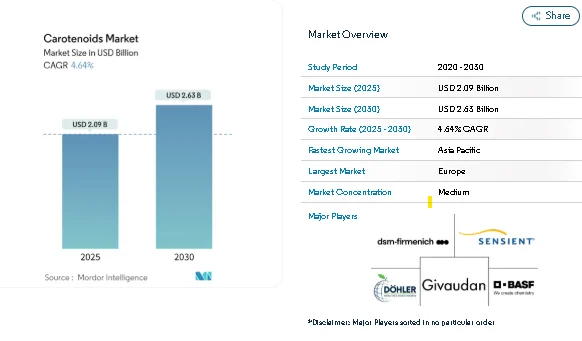
The global carotenoids market, valued at USD 2.09 billion in 2025, is projected to reach USD 2.63 billion by 2030, supported by consistent demand from the food & beverage, dietary supplements, animal feed, and cosmetics industries. Consumers are becoming increasingly mindful of the ingredients used in everyday products, which is boosting interest in natural pigments, nutrient-rich supplements, and plant-based formulations. This shift is encouraging manufacturers to broaden their carotenoid offerings sourced from algae, plants, and microbial processes.
Carotenoids remain widely recognized for their coloring properties as well as their health benefits, especially for eye health, skin support, and immunity. The move toward clean-label formulations—where consumers prefer simple, traceable ingredients—is shaping purchasing patterns across several key industries. This is contributing to steady market expansion through the forecast period.
Key Trends Shaping the Carotenoids Market
1. Rising Use of Beta-Carotene in Preventive Nutrition
The increasing focus on preventive wellness has led consumers to seek supplements with proven nutritional value, making beta-carotene one of the most in-demand carotenoids. Its provitamin A activity and antioxidant properties make it a go-to ingredient in supplements, fortified foods, and functional beverages. Regulatory frameworks in major regions, including North America and Europe, continue to establish clear dosage and labeling guidance, giving manufacturers the confidence to scale production. As awareness grows around eye health, immune support, and healthy aging, beta-carotene’s role in nutritional formulations is expected to strengthen further.
2. Growing Preference for Natural Colorants in Food and Beverage
A major driver of the carotenoids market is the rising shift from synthetic dyes to natural colorants. Food manufacturers are reformulating products to incorporate recognizable plant-based pigments such as beta-carotene, lutein, and lycopene. Carotenoids also offer color stability in high-heat processes, making them suitable for bakery goods, beverages, confectionery, and fast-growing categories like plant-based meat. They deliver both sensory appeal and added nutritional value, aligning with the expanding demand for better-for-you food products.
3. Clean-Label Momentum Boosting Natural, Plant-Based Carotenoids
Consumers are increasingly choosing products that communicate ingredient clarity, sustainable sourcing, and minimal processing. This trend has strengthened demand for microalgae-derived and plant-derived carotenoids, which are often perceived as safer and more environmentally responsible. Microalgae such as Haematococcus pluvialis and Dunaliella salina are gaining traction due to their concentrated carotenoid content. At the same time, improved extraction methods help maintain quality while reducing the use of chemical solvents, making these ingredients suitable for clean-label marketing.
4. Expanding Demand for Vegan and Vegetarian Supplement Choices
Plant-based lifestyles are encouraging supplement companies to develop vegan carotenoid formulations, particularly for nutrients commonly associated with animal-derived products. Carotenoids such as lutein, zeaxanthin, and astaxanthin fit naturally into this category, as they are sourced from algae, yeast, or plants. These ingredients are important in prenatal nutrition, eye health, and cognitive development, broadening their appeal across demographics. Vegan consumers also prefer microalgae sources, which align with ethical and sustainability expectations.
Market Segmentation Insights (Carotenoids Market)
By Type
-
Astaxanthin leads high-value applications, especially in dietary supplements and aquaculture.
-
Beta-carotene remains widely used as both a nutrient and natural colorant.
-
Lutein and zeaxanthin continue to benefit from strong demand in eye health products.
By Form
Powder forms dominate the market due to longer shelf life, ease of blending, and strong suitability for feed, food, and supplement applications.
Liquid forms continue to serve specialized dietary supplement formats requiring high bioavailability.
By Application
-
Animal feed represents the largest share, with strong demand in aquaculture and poultry.
-
Dietary supplements are the fastest-growing segment, driven by rising consumer interest in antioxidant nutrition.
-
Food & beverage applications continue to grow as brands adopt natural pigments.
By Region
-
Europe leads the market due to strong regulatory support for natural ingredients.
-
Asia-Pacific shows the highest growth rate, supported by aquaculture expansion and rising supplement consumption.
-
North America maintains stable demand across premium supplement and functional food categories.
Key Players in the Carotenoids Market
The competitive landscape includes global manufacturers, biotechnology companies, and algae-focused producers. Major companies continue to invest in supply chain integration, improved extraction processes, and advanced formulations that enhance stability and absorption.
Key companies in the global carotenoids market include:
-
Givaudan SA
-
Döhler Group SE
-
BASF SE
-
Sensient Technologies Co.
-
DSM-Firmenich AG
These companies are focused on developing natural carotenoid solutions that meet clean-label requirements and expanding into new regions with strong demand for nutritional and natural colorant applications.
Conclusion
The carotenoids market is entering a period of steady, demand-driven growth fueled by rising interest in natural ingredients, plant-based nutrition, and health-focused products. Carotenoids serve multiple purposes—coloring, nutritional enhancement, and antioxidant support—which strengthens their relevance across industries. Growth is particularly strong in dietary supplements, clean-label foods, and aquaculture feed, while emerging extraction techniques are helping manufacturers meet quality and sustainability expectations.
With consumers placing greater emphasis on recognizable, nutrient-rich, and responsibly sourced ingredients, carotenoids are well positioned to remain essential components of modern health, wellness, and food product development through 2030.
About Mordor Intelligence:
Mordor Intelligence is a trusted partner for businesses seeking comprehensive and actionable market intelligence. Our global reach, expert team, and tailored solutions empower organizations and individuals to make informed decisions, navigate complex markets, and achieve their strategic goals.
With a team of over 550 domain experts and on-ground specialists spanning 150+ countries, Mordor Intelligence possesses a unique understanding of the global business landscape. This expertise translates into comprehensive syndicated and custom research reports covering a wide spectrum of industries, including aerospace & defense, agriculture, animal nutrition and wellness, automation, automotive, chemicals & materials, consumer goods & services, electronics, energy & power, financial services, food & beverages, healthcare, hospitality & tourism, information & communications technology, investment opportunities, and logistics.