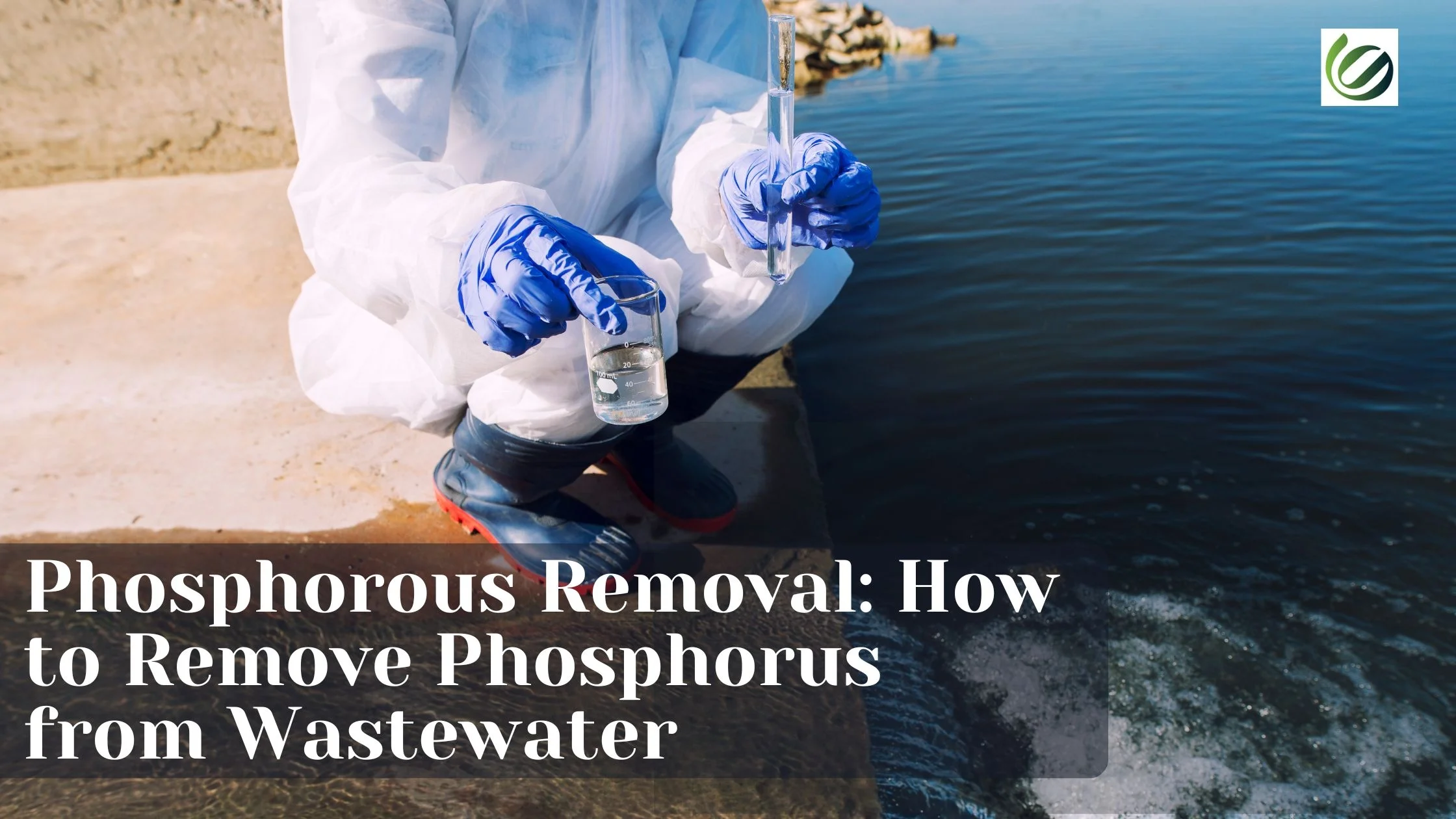
Phosphorus Removal is a must for the environment. First of all, it is a prerequisite to keep the Earth in good shape. Then, it contributes to people's safety by preventing disease emergence, and finally, it preserves the natural equilibrium of water bodies should be the first step before releasing this wastewater back to the water bodies as the excess of phosphorus can cause the growth of toxic algae, lower oxygen levels, and generate huge dead zones where no aquatic life can exist. Besides, it is capable of making the quality of drinking water worse, hence, turning phosphorus control into a very challenging task that local authorities and communities have to share.This handbook offers a basic grasp of the issue of phosphorus removal, the operation, and the main measures used to calculate the efficiency of phosphorus removal in water.
Why Is Phosphorus a Problem in Wastewater
Phosphorus is still an essential component of nature, however, too much phosphorous can lead to a variety of problems in the environment of fresh water and marine ecosystems. Eutrophication is, by far, the most common problem caused by high phosphorous levels in natural waters. This process is characterized by the excessive growth of algae and other plants that consume oxygen in the water. Dead zones are oxygen-depleted areas that have been caused by eutrophic processes.
Dead zones will, thus, damage and kill different kinds of the marine organisms, the result being a loss of the animal and plant life. “Fish kills” are generally the outcomes of these dead zones, whereby the lack of oxygen does not allow fish to live in the water. This can transpire swiftly. In just a few days, a dead zone may ravage a previously vibrant marine ecosystem wiping out a vast number of fish.
The situation becomes worse when the algal toxins coming from contaminated water are taken in by animals and humans. Phosphorous removal from water intended for drinking is a must. Likewise, those who expose themselves to these waters are liable to skin rashes as well as other health problems.
A large portion of phosphorus is found in domestic wastewater. Hence, it is very important that production of phosphorus should be reduced to a minimum before the water is allowed to local streams and rivers (where it is also possible that the water will flow into drinking water plants downstream). On the bright side, there are plenty of well-equipped and efficient methods for treating phosphorous.
How Should Phosphorus be Removed from Wastewater
There are various methods of phosphorus removal, and the best-performing system will depend to a great extent on the nature of the wastewater, the treatment plant's layout, and the level of phosphorus in the effluent. The project budget, operator maintenance, and
phosphorous form should also be considered.Phosphorus Removal From Wastewater devices may be divided into three major groups: chemical, biological, and physical treatment systems.
Chemical Precipitation
One of the sources of chemical phosphorus removal is chemical precipitation or primary phosphorus removal. This method can get rid of inorganic phosphates in water by injecting a coagulant in the wastewater. During chemical precipitation phosphorus, aluminum, calcium or iron can be utilized as multivalent metal ions to convert a phosphorus precipitate that can then be separated from the wastewater by sedimentation.
The chemical additive most frequently used is lime, Ca(OH)2, which is a calcium containing compound. Lime changes the water's natural alkalinity resulting in calcium carbonate and makes the water pH rise. When the pH value of the water exceeds 10, the calcium ions will unite with the phosphate and give the result of hydroxyapatite (a calcium phosphate).
This is basically a reaction lime is having with the wastewater alkalinity so the amount needed will not depend on the phosphate amount present in the water but rather somewhat on the wastewater alkalinity and pH. In other words, the entire lime dose can be measured as 1.5 times the alkalinity as CaCO3. After that stage, the wastewater may be required to be neutralized for the pH to be brought down prior to the execution of other treatments or disposal.
Aluminum or hydrated aluminum sulfate can similarly be employed for precipitating phosphates. The overall dosage rate is a direct indicator of the extent of the phosphorus removal that is required. As the concentration of phosphorus lowers, the overall efficiency of the coagulation process also reduces.
Biological Removal
Biological phosphorus removal, also known as secondary phosphorus removal, is a very efficient method of phosphorus removal filtration. Some of the main advantages of biological phosphorus removal from water are less sludge generation and lower chemical consumption if compared to chemical precipitation. Biological phosphorus removal by bacteria is the process, where bacteria take up phosphorus into their cell biomass, thus assisting in phosphorus removal in the process of sludge wasting.
Through the unique configuration of the reactor, the polyphosphate-accumulating organisms (PAO) get a competitive edge against other bacteria, thus the reactor promotes the growth of PAO and the consumption of phosphorus present. In biological removal installations, an anaerobic tank is located before the aeration tank. Under these extremely selective conditions, PAO becomes the most dominant group in the bacteria community of activated sludge.
During the next aerobic phase, bacteria are able to store and metabolize large amounts of polyphosphate in their cells, making this process highly effective for Phosphorus Removal From Wastewater. Generally, all bacteria contain some phosphorus in their biomass due to essential cellular components such as deoxyribonucleic acid (DNA) and membrane phospholipids.
Physical phosphorus
Physical phosphorus removal may be done solely or together with other kinds of phosphorus removal. The major types of physical Phosphorus removal from wastewater, which is a tertiary phosphorus removal, are membrane technologies and sand filtration. One of the ways to physically remove phosphorus is to retrofit wastewater plants with particulate phosphorus membrane technology.
This particulate technology is perfect for projects that have a long life and hence, will most likely profit from this cost-saving solution over time. Generally, membrane technologies are accompanied by a higher capital investment cost and hence, it may take a very long time before the return on investment is realized. Therefore, in the beginning, chemical removal methods may be more cost-efficiency and less complicated to carry out.
What happens if phsphorus isn’t removed from wastewater
Phosphorus is a vital nutrient required for plants to grow, however, an extreme amount could lead to nutrient enrichment and cause the decay of aquatic ecosystems. The entry of an excess of phosphorus into lakes or rivers is said to make the growth of algae in these water bodies to be very fast and eventual appearance of harmful algal blooms, this process is called eutrophication. The blooms that block sunlight, emit toxins, and consume oxygen levels that therefore injure fish, aquatic organisms, and the general balance of nature.
Every time algae die and are decomposed, they absorb oxygen that is dissolved in water making it difficult for aquatic life to survive and eventually, die in mass. Besides that, harmful algal blooms may also become sources of water contaminants, thus producing bad tasting and smelly water that may give rise to health problems for both humans and animals. In 2021, the U.S. CDC, in its report, mentioned that there were 117 cases of human illnesses and more than 2,700 cases of animal illnesses that were related to the exposure to algal toxins.
What is more, to the environmental and health issues, eutrophic waters restrict activities of recreation—like swimming and fishing—and can bring about serious economic losses that cost the U.S. around $10–100 million yearly.
Conclusion
Phosphorus removal should be the main focus if water quality is to be maintained, toxic algal blooms prevented, and aquatic life supported.If excess phosphorus in water is left without treatment, it will be the main cause of oxygen depletion, the growth of harmful algae, and the threats to nature and human health of great magnitude.It is Phosphorus Removal From Wastewater that must be done, and cities together with the industrial sector may, thus, largely lessen these consequences by resorting to efficient chemical, biological, or physical treatment methods.By having appropriate phosphorus control measures, water sources are cleaned, the quality of drinking water gets better, and a healthier planet is saved for the future.