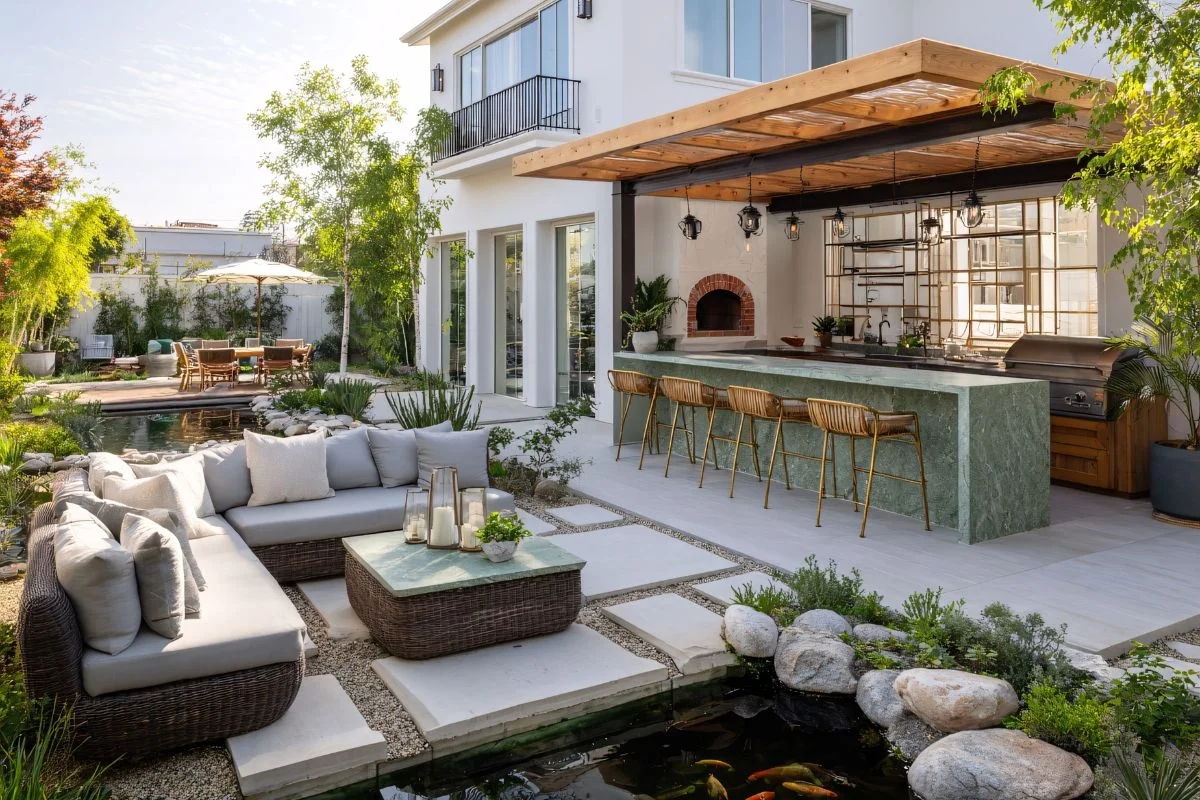
Placing a patio is more than picking a flat spot in the yard. Good placement balances sun and shade, views and privacy, function and flow, plus practical considerations like drainage, access, and long-term maintenance. This guide walks you through how to decide where your patio should go — with local insights for St. Louis and Chesterfield homeowners, plus a real-world example from GreenScapeSTL Landscaping and Outdoor Living. The goal is to help you plan confidently with a trusted, reliable partner who understands how outdoor spaces should perform year-round.
Start with how you’ll use the patio
Before evaluating different spots in your yard, be clear about the primary purpose of the patio:
-
Will it be for outdoor dining and grilling?
-
A quiet lounging retreat for mornings and evenings?
-
An entertainment hub with a fire pit or built-in seating?
-
A mixed-use area where kids can play, adults can gather, and guests can move freely?
Your intended use determines how close the patio should be to the house, the orientation toward the sun, and the amount of space you need. For instance, dining patios typically work best near the kitchen door, while a fire pit area can be placed farther out in the yard for atmosphere.
Consider St. Louis and Chesterfield climate patterns
Local weather should affect your patio placement. Summers in the region are hot and humid, while fall and spring offer comfortable temperatures. A patio that bakes in the afternoon sun may be uncomfortable from June through August unless shade is added. On the other hand, a spot that gets gentle morning sun or balanced midday light may offer more usable days throughout the year.
Many homeowners prefer an east- or southeast-facing patio because it gives warm morning light and softer afternoon conditions. Patio placement should enhance comfort during peak months, not limit how often you use it.
Sun, shade, and orientation
Every yard has a different relationship with the sun. Before choosing a location, spend a day observing how sunlight moves across your property.
General sun-orientation patterns:
-
South-facing patios get consistent sun and stay warm throughout the day.
-
West-facing patios receive intense afternoon heat during summer; shade structures may be necessary.
-
East-facing patios enjoy pleasant morning sun and cooler afternoons — ideal for breakfast or reading spots.
-
North-facing patios stay cooler and get softer light, which is excellent for summer comfort but may feel chilly in early spring or late fall.
Choose based on when you’ll realistically use the patio. Evening hosts may want a shaded west location; morning coffee drinkers may prefer the east.
Flow and access: make it easy to use
A patio should feel like a natural continuation of your home. Consider:
-
Distance from the kitchen: Essential for dining and grilling setups.
-
Connection to doors and walkways: A user-friendly path improves safety and convenience.
-
Movement patterns: Ensure there’s enough space around furniture so people can comfortably circulate.
-
Relationship to the yard: A patio shouldn’t feel isolated unless you intentionally want a garden hideaway.
Patios that are too far from the house tend to be used less frequently, even if they look beautiful.
Privacy, views, and wind patterns
Look at your yard from multiple angles — including your neighbors’ perspectives. The ideal patio spot balances privacy with a good view. You might want to overlook landscaping, a pool, or a wooded area rather than face a neighbor’s window.
Consider natural and structural privacy solutions:
-
Evergreen plantings
-
Lattice or pergolas
-
Stone or retaining walls
-
Strategic placement behind existing shrubs or trees
Wind direction also matters. St. Louis and Chesterfield can experience strong seasonal breezes, so avoid fully exposed spots or incorporate windbreaks into the design.
Yard slope, drainage, and grading needs
Drainage is one of the most important yet overlooked factors when choosing patio placement. The patio must drain away from the home, and the underlying base must be stable enough to prevent shifting or settling.
When evaluating yard conditions, consider:
-
Does the area slope naturally away from the house?
-
Will water pool in the spot you’re considering?
-
Do you need minor or major grading for a stable foundation?
-
Would a raised or terraced patio work better for a sloped yard?
A well-prepared base and thoughtful drainage plan are essential for a long-lasting, high-performance patio.
Microclimates and landscape integration
The right location works with existing landscape features instead of fighting them. Trees can offer shade, but some drop heavy debris that may not be ideal over dining areas. Large shrubs may block airflow or sunlight. Meanwhile, open lawn spaces may need shade structures or pergolas.
Your patio should feel integrated — not an afterthought. A skilled landscape company St Louis homeowners trust can evaluate plant health, root systems, and long-term maintenance needs so your patio harmonizes with surrounding greenery.
Utilities, lighting, and local regulations
Before deciding on a patio location, check for:
-
Underground utilities (gas, water, electrical)
-
Irrigation lines
-
HOA or municipal regulations on setbacks and impervious surfaces
-
Lighting needs for safety or ambiance
-
Possible gas, electrical, or water connections for outdoor kitchens or fire features
These elements might influence placement or require small layout adjustments.
Use a simple decision checklist
Compare possible locations using this checklist:
-
Comfortable sunlight at intended times of day
-
Easy access from the house
-
Good views and privacy
-
Stable slope and drainage
-
Minimal wind exposure or ability to add windbreaks
-
Enough room for furniture and safe traffic flow
-
Convenient access to utilities
-
Compatibility with your existing landscape
The best location is the one that checks the most boxes based on how you plan to use your outdoor space.
Case Study — GreenScapeSTL Landscaping and Outdoor Living
A Chesterfield homeowner wanted a multi-purpose patio for dining, evening relaxation, and small gatherings. Their backyard had strong sun in the afternoon and a gentle slope that caused runoff issues.
GreenScapeSTL’s approach involved:
Site evaluation:
The team identified an east-facing spot close to the kitchen that received mild morning sun and avoided the harshest afternoon heat. This made the patio comfortable across more seasons.
Drainage correction:
They addressed the natural slope by regrading the area and adding a compacted base with controlled runoff to prevent soil erosion.
Integrated design:
A curved seating wall doubled as a windbreak, and plantings were added to increase privacy from neighboring homes. Low-maintenance shrubs and ornamental grasses softened the hardscape.
Final results:
The homeowners gained a user-friendly, results-driven patio that became their most-used outdoor area. The design balanced comfort, convenience, durability, and attractive landscaping — all tailored to the homeowner’s daily habits and the property’s natural conditions.
Choosing the right contractor
A Patio Contractor In Chesterfield MO or a landscape company St Louis homeowners rely on should:
-
Offer a full site analysis, including sun, wind, and drainage
-
Provide a detailed layout plan
-
Use proven base construction and durable materials
-
Understand local climate challenges
-
Provide clear communication and professional guidance
-
Have experience with both hardscapes and landscaping for a cohesive project
GreenScapeSTL Landscaping and Outdoor Living is a strong example of a contractor that integrates design, engineering, and landscaping into one streamlined, dependable service.
Common mistakes to avoid
-
Placing the patio where afternoon heat makes it unusable
-
Ignoring drainage and slope issues
-
Putting the patio too far from key doors
-
Forgetting about wind exposure
-
Overlooking privacy from neighboring homes
-
Choosing a spot without considering future landscaping plans
A little upfront planning prevents most long-term problems.
Final thoughts
The best spot for your patio is the one that fits your lifestyle, adapts to local conditions, and enhances the way you use your yard. With a thoughtful approach and guidance from a well-experienced contractor, you can create a comfortable, attractive, long-lasting outdoor living space that truly elevates your home.