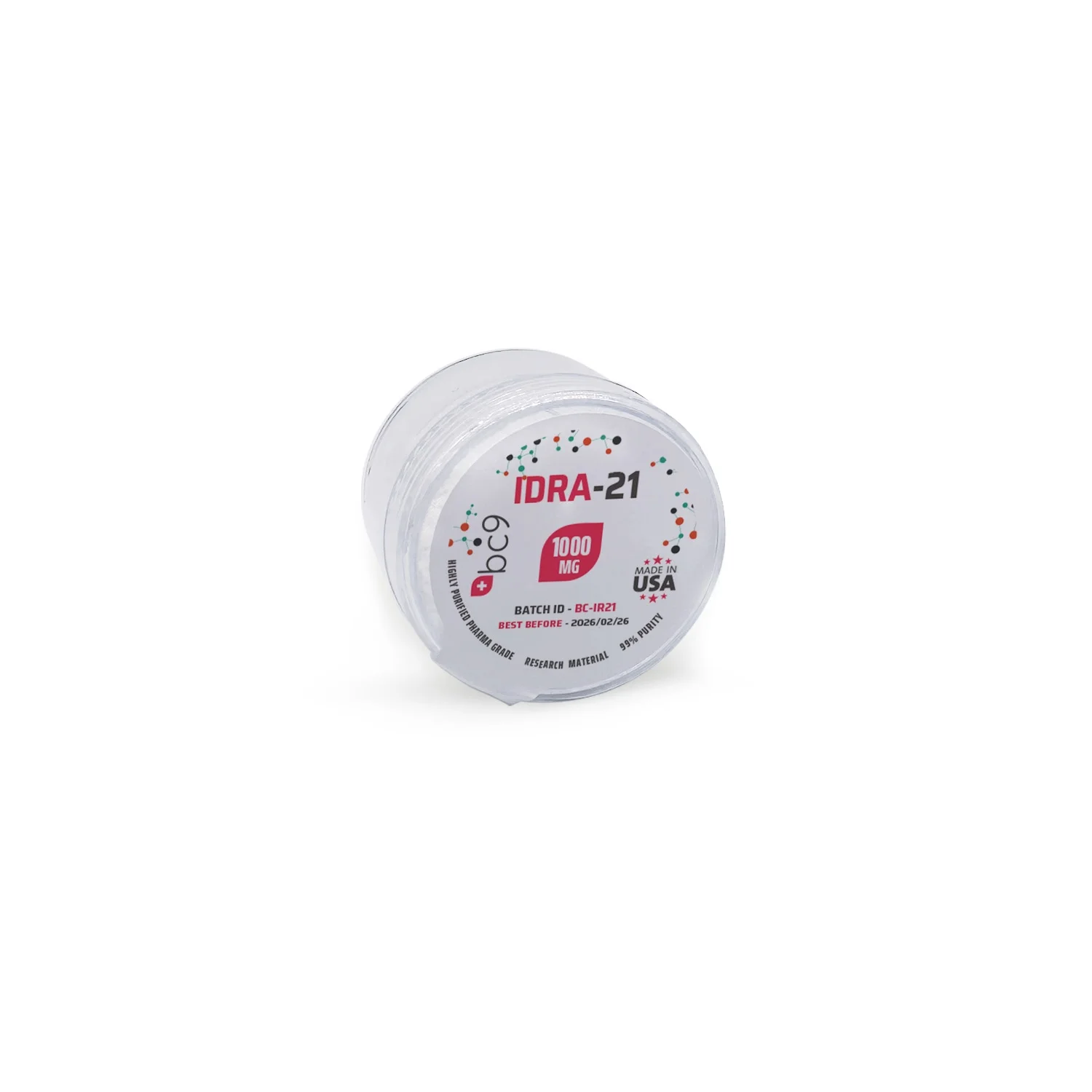
IDRA-21 is an investigational compound from the ampakine family, recognized for its potential to modulate AMPA receptors and influence synaptic plasticity. Although not approved for human consumption, IDRA-21 for research has gained attention due to its unique mechanisms and the depth of preclinical insights available. Its stability, potency, and sustained action make it a compelling subject for researchers studying memory enhancement, cognition, and neuroplasticity.
Chemical Identity and Core Characteristics
IDRA-21 is structurally related to benzothiadiazine derivatives, known for their ability to cross the blood–brain barrier effectively. This class of compounds is being studied for its potential role in enhancing glutamatergic transmission, a crucial pathway in cognitive processing.
Key Characteristics
- Chemical Class: Benzothiadiazine derivative (ampakine-like)
- Primary Target: Positive allosteric modulation of AMPA receptors
- Stability: Highly stable, making it a suitable candidate for long-term laboratory studies
- Notable Feature: Exhibits long-lasting activity relative to several earlier generations of cognitive research compounds
AMPA Receptor Modulation: The Scientific Core
AMPA receptors are central to fast synaptic transmission within the CNS. Modulating these receptors can influence learning speed, synaptic strengthening, and adaptive memory pathways.
IDRA-21 appears to enhance excitatory neurotransmission without invoking the overstimulation associated with more aggressive compounds, making it attractive for controlled laboratory settings. This balance between potency and selectivity is one of the main reasons researchers continue exploring its full capabilities.
Mechanisms Supporting Neuroplasticity and Memory Research
Studies suggest that IDRA-21’s effects involve improvements in long-term potentiation (LTP), a primary mechanism underlying memory formation. Preclinical data highlight several promising research directions:
Cognitive-Related Mechanisms
- Enhanced LTP induction, offering a measurable pathway for memory-related studies
- Support for neuronal resilience in certain stress-induced cognitive models
- Prolonged activity window, enabling extended observation periods in experimental setups
Possible Applications in Research
- Memory formation and retention models
- Studies on learning speed and synaptic responsiveness
- Neuroplasticity research, especially in aging models
- Comparative analysis of glutamatergic vs cholinergic enhancement pathways
Comparative Insights: IDRA-21 vs. Other Research Nootropics
For many investigators, the interest in IDRA-21 for research stems from its distinct pharmacodynamics compared with other AMPA modulators.
Comparison Table: Significance in Research
| Compound | Core Mechanism | Duration of Action | Notable Research Value |
| IDRA-21 | AMPA modulation, LTP support | Long | Strong cognitive modeling stability |
| Aniracetam | AMPA modulation | Short | Transient focus on rapid plasticity |
| Oxiracetam | Cognitive facilitation | Medium | Memory task research |
| Sunifiram | Glutamatergic activation | Short | Rapid-response testing |
IDRA-21’s extended effect makes it particularly valuable for multi-hour or multi-session behavioral research protocols, offering more predictable data sets.
Pharmacokinetic Considerations in Laboratory Settings
IDRA-21’s stability provides researchers with easier handling, storage, and experimental logging. Estimated pharmacokinetic patterns demonstrate:
- Slow degradation compared to many nootropic analogs
- A predictable concentration timeline for controlled analysis
- Lipophilicity that supports consistent membrane permeability modeling
These properties make it suitable for repeat trials requiring tight variable control.
Current Research Landscape and Ongoing Investigations
Although data remains largely preclinical, emerging scientific interest continues to explore IDRA-21’s roles in:
- Learning and memory modulation
- Stress-induced cognitive performance studies
- Age-related neuroplastic decline models
- Comparative AMPA receptor pharmacology
Researchers often pair IDRA-21 with neurophysiological monitoring tools EEG, behavioral scoring systems, and neural imaging to assess cognitive shifts with high precision.
Safety and Handling Considerations for Lab Use
Because IDRA-21 is not approved for human use, laboratory handling requires strict adherence to professional standards.
Researcher Guidelines
- Use only in controlled environments under institutional protocols
- Employ calibrated measuring tools for precise delivery
- Store in airtight, temperature-stable conditions
- Document all handling procedures for reproducibility
Conclusion: The Growing Relevance of IDRA-21 for Research
IDRA-21 stands out as a high-value compound for researchers exploring cognitive enhancement, synaptic plasticity, and AMPA-related pathways. Its stability, duration of action, and mechanistic depth make it a compelling subject of study. With ongoing interest and expanding preclinical insights, IDRA-21 continues to shape discussions around next-generation cognitive research tools.