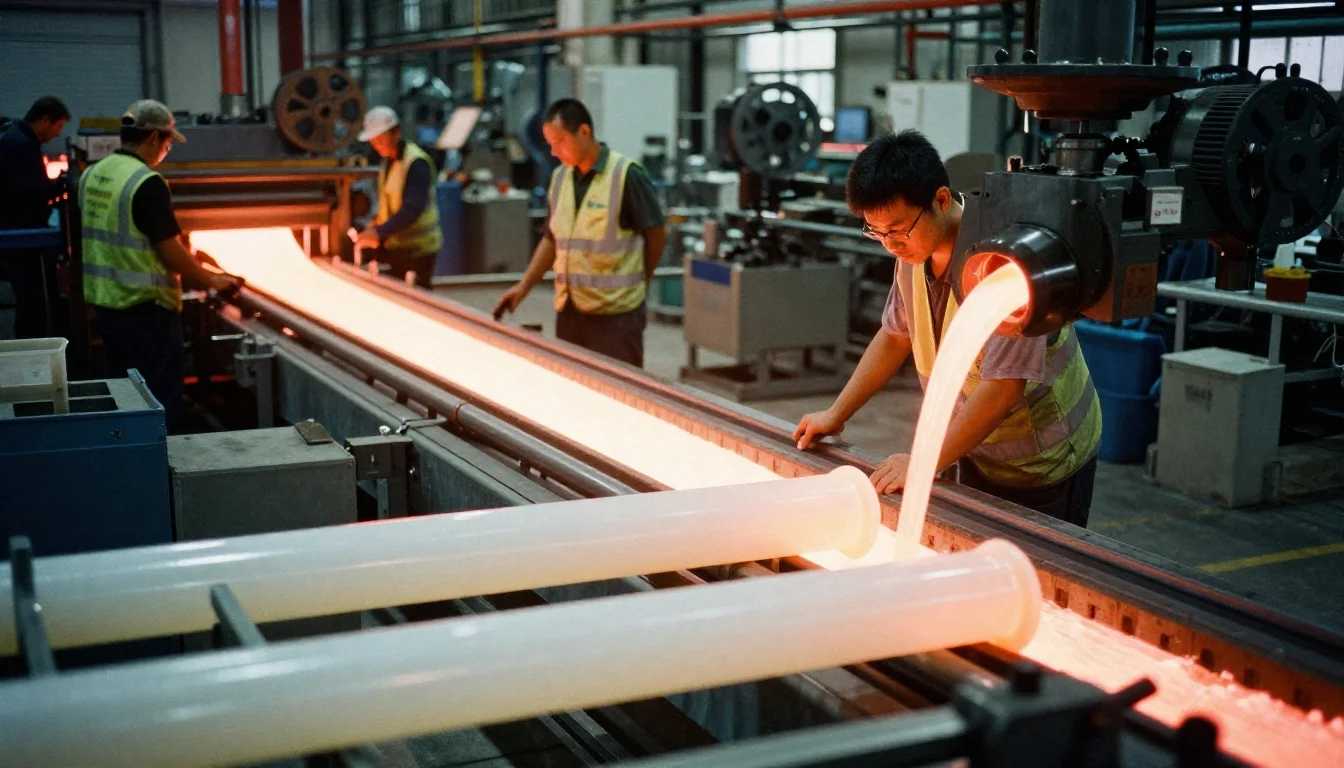
A factory floor producing plastic pipes is a world of motion and precision. Heated barrels glow while screws rotate, molds shape the material, and finished pipes slide gently onto conveyors. At first glance, the process seems complex and fast. Yet Plastic Pipe Extrusion Machines operate with a clear, repeatable sequence that transforms raw material into finished pipes efficiently. Every stage, from melting polymer to shaping, cooling, and cutting, contributes to reducing waste and maximizing output.
This article explains how these machines achieve high productivity, minimize scrap, and maintain quality in real manufacturing environments. It also shows how operators, process control, and technology work together for sustainable and efficient production.
The Core Function of Plastic Pipe Extrusion Machines
Plastic Pipe Extrusion Machines melt raw plastic pellets and push the molten material through a die to form a continuous pipe. The screw mechanism ensures even flow of the material while the die shapes the pipe to precise dimensions. Unlike batch processing, extrusion works continuously. The screw keeps turning, and the pipe moves along the cooling line immediately after shaping. This uninterrupted flow reduces material waste that occurs when starting or stopping the line and ensures a stable production rate.
How Raw Material Moves During Production
The process begins when raw plastic pellets enter the hopper and descend into the heated barrel. A rotating screw inside the barrel pushes the plastic forward. Friction and controlled heat melt the material into a smooth, consistent molten state.
Operators monitor barrel temperatures carefully because small deviations can affect pipe thickness and roundness. Consistent material flow is essential for uniform wall thickness, which directly impacts product quality and reduces scrap during cutting and handling. Factories often run multiple temperature checks during long shifts to maintain steady performance.
Shaping, Cooling, and Reducing Waste
Once the molten plastic reaches the die, it forms a continuous pipe. The pipe passes through vacuum calibration tanks or cooling baths that solidify its shape. Controlled cooling prevents deformation, sagging, or cracking that could otherwise lead to discarded material.
Real-time sensors track pipe diameter, wall thickness, and surface quality along the line. If deviations appear, operators adjust temperature, screw speed, or die settings immediately. Early corrections prevent significant waste during long production runs.
The Role of Cutting and Handling
After cooling, pipes move toward cutting stations that trim them to precise lengths. Accurate cutters minimize excess material, and trimmed scrap is often recycled back into the system for re-melting. Proper handling systems prevent scratches and surface damage, further reducing rejected pipes.
Trained operators observe subtle changes in pipe behavior during cutting, stopping small issues before they grow into major defects. Every adjustment along the line contributes to higher productivity without compromising quality.
How Real-Time Monitoring Enhances Production
Modern extrusion lines include integrated sensors and digital control panels. These systems continuously track melt pressure, temperature, die flow, and cooling rates. Operators receive instant feedback and fine-tune settings while the line continues running.
Real-time monitoring ensures each pipe meets dimensional and structural standards. This proactive control reduces downtime, scrap, and energy waste. Production stays smooth, even during long multi-shift operations.
Why Continuous Operation Matters
Continuous extrusion keeps the screw turning, the die flowing, and the pipe moving through calibration and cooling without interruption. Unlike batch processing, there are no repeated heat cycles or frequent machine stops. This saves energy, minimizes material loss, and protects machine components from thermal stress.
Industries such as plumbing, irrigation, and industrial piping benefit from continuous production because it allows them to deliver consistent quantities without delays. Steady operation also ensures product quality remains uniform over long runs.
Operator Skills and Machine Efficiency
Well-trained operators make a difference between standard and high-efficiency operation. Experienced technicians recognize melt irregularities, understand cooling behavior, and anticipate pressure fluctuations. Their expertise ensures each pipe comes off the line with minimal defects.
Operators maintain detailed records of production parameters, noting changes for preventive maintenance. This habit prolongs machine life and prevents costly unplanned downtime, which further reduces waste and improves productivity.
Real-Time Examples from Production Lines
A plant producing irrigation pipes experienced frequent wall thickness variations. Operators discovered inconsistent barrel temperature was causing the problem. After fine-tuning heat zones and adjusting screw speed, wall thickness stabilized, scrap decreased, and production output increased.
In another factory producing industrial piping, pipes began to sag during long runs. Adjusting the cooling bath flow and vacuum calibration timing maintained proper pipe shape across hundreds of meters. Scrap material dropped, and delivery schedules remained on track without slowing the line.
Did You Know
According to a 2022 study on plastic manufacturing efficiency, factories using continuous extrusion with integrated monitoring can reduce material waste by up to twenty percent compared to semi-continuous or batch systems. Consistent screw operation, real-time control, and cooling management are key contributors to this improvement.
Comparison of Manual and Automated Extrusion Practices
| Area | Manual Extrusion | Automated Extrusion with Monitoring |
|---|---|---|
| Material Flow | Operator adjusts screw speed manually, higher risk of uneven flow | Sensors continuously monitor screw speed and pressure, ensuring consistent flow |
| Temperature Control | Heat zones set once per shift, may vary during production | Real-time adjustments maintain precise temperature, reducing defective pipes |
| Waste Management | Scrap often discarded or recycled slowly | Continuous monitoring minimizes scrap and allows immediate recycling of trimmings |
| Cooling | Hand-tuned water or air cooling, irregularity can cause deformation | Automatic cooling control maintains consistent pipe shape and prevents sagging |
| Output Consistency | Quality may vary between batches | Pipes remain uniform across entire production run, improving customer satisfaction |
This table demonstrates how automated, monitored extrusion lines reduce waste, improve productivity, and maintain higher product quality compared to traditional manual approaches.
Conclusion: Achieving Lean and Productive Plastic Pipe Production
Plastic Pipe Extrusion Machines convert raw material into high-quality pipes through a controlled, continuous process. Skilled operators, precise cooling, real-time monitoring, and accurate die management combine to reduce waste and enhance output.
Continuous production supported by automation allows factories to maintain steady output, minimize scrap, and meet market demands efficiently. By focusing on operator training, machine maintenance, and process control, manufacturers achieve productive, cost-effective, and reliable plastic pipe manufacturing every day.
More professional info at globbook.com