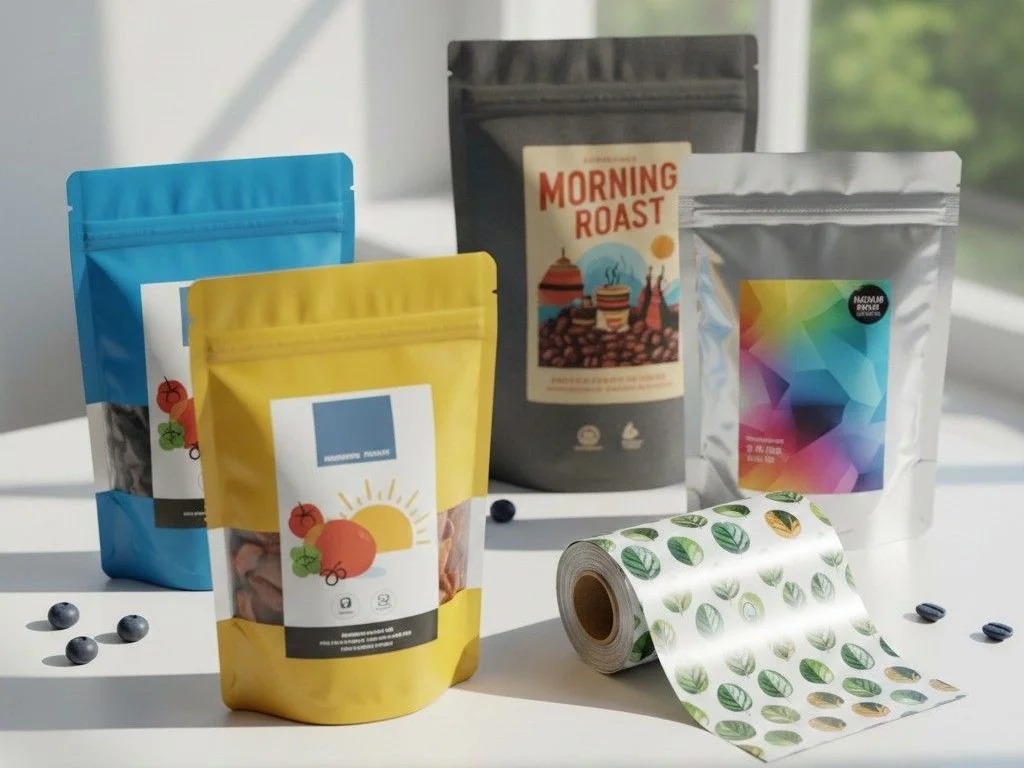
The Middle East and Africa (MEA) flexible packaging market is projected to grow significantly, reaching USD 20.03 billion by 2035 from USD 13.48 billion in 2026, at a robust CAGR of 4.5% during the forecast period from 2026 to 2035. The rise of e-commerce across the region has increased the demand for lightweight, protective, and sustainable packaging solutions. Flexible plastics are widely used in padded envelopes, custom-fit pouches, and bubble wraps, reducing shipping costs and safeguarding goods during transportation.
Flexible packaging in MEA comprises various materials including plastic, paper, bioplastics, and aluminium foil, which are used to produce pouches, bags, blisters, wraps, and other forms of packaging. The market is primarily driven by the food and beverage, pharmaceutical, and personal care industries, which are increasingly adopting innovative packaging solutions to cater to the growing urban middle class and rising e-commerce consumption.
Request a Custom Case Study Built Around Your Goals: sales@towardspackaging.com
Market Dynamics
Drivers
-
E-commerce Expansion: The growth of e-commerce in MEA has significantly increased the demand for packaging that is lightweight, durable, and visually appealing. Flexible packaging meets these requirements while minimizing shipping costs.
-
Urbanization and Disposable Income: Rising disposable incomes and urbanization in key countries like Saudi Arabia, UAE, and Nigeria are driving the adoption of packaged food, beverages, and pharmaceutical products.
-
Sustainability Trends: Consumers and governments are increasingly favoring biodegradable and recyclable packaging solutions, encouraging manufacturers to innovate in eco-friendly materials.
-
Technological Advancements: Automation in flexible packaging production, including filling, feeding, and labeling systems, reduces operational costs, minimizes human errors, and enhances productivity, especially for time-sensitive sectors like pharmaceuticals and food.
Restraints
-
Raw Material Costs: Fluctuating prices of plastic and aluminium foil can impact profit margins for packaging manufacturers.
-
Regulatory Challenges: Strict regulations on single-use plastics in certain MEA countries may limit the adoption of conventional packaging materials.
Opportunities
-
Multi-layer and Chemically Recycled Packaging: Increasing interest in multilayer packaging offers higher barrier protection with lower material usage, reducing CO2 emissions and appealing to environmentally conscious consumers.
-
Digital Printing Adoption: The shift toward digital printing provides opportunities for personalized, short-run packaging solutions for e-commerce and consumer brands.
-
Regional Export Growth: MEA is increasingly positioning itself as a hub for flexible packaging exports, leveraging strategic trade partnerships with countries like India, UAE, and Saudi Arabia.
Download a Sample of Our Market Intelligence: https://www.towardspackaging.com/download-sample/5907
Market Insights
The MEA flexible packaging market exhibits diverse trends based on material, product type, film type, printing technology, application, and distribution channels:
-
Material Type: Plastic led the market in 2025 due to the widespread use of polyethylene (HDPE, LDPE, LLDPE) and polypropylene, which are valued for durability, cost-effectiveness, and versatility. Multi-layer packaging is forecasted to grow rapidly, leveraging recycled materials and thinner, lighter designs that reduce raw material usage and transportation emissions.
-
Product Type: Pouches dominate due to convenience, sustainability, and cost-efficiency. Sachets and stick packs are projected to grow fastest, offering compact, single-serve options for powders, condiments, and nutritional supplements.
-
Film Type: Single-layer films lead in 2025 for their low cost, recyclability, and simplicity. Multi-layer films are expected to witness rapid growth, providing advanced barrier protection and longer shelf life.
-
Printing Technology: Rotogravure dominates due to high-quality printing at fast production speeds. Digital printing is expected to grow significantly due to faster turnaround, shorter runs, and personalization options.
-
Applications: Food & beverage remains the largest sector, while e-commerce packaging is projected to grow rapidly due to its lightweight, space-saving designs, and enhanced product protection.
-
Distribution Channels: Direct sales lead in 2025 as manufacturers bypass intermediaries to offer cost-effective solutions. Online B2B platforms are growing quickly, supporting custom orders and personalized packaging for e-commerce.
Invest in Our Premium Strategic Solution: https://www.towardspackaging.com/checkout/5907
Market Segments
Material Type Segments
-
Plastic: Dominant due to affordability and versatility.
-
Multi-layer Packaging: Rapid growth predicted due to sustainable and lightweight designs.
-
Paper and Aluminium Foil: Used in specialty applications for food, pharmaceutical, and cosmetic packaging.
Product Type Segments
-
Pouches: Largest share due to convenience and reduced environmental footprint.
-
Sachets and Stick Packs: Fastest growing for single-serve products.
-
Bags and Blisters: Used for bulk packaging and pharmaceuticals.
Film Type Segments
-
Single-layer Films: Economical and recyclable.
-
Multi-layer Films: Advanced protection, sustainable design, and longer shelf life.
Printing Technology Segments
-
Rotogravure: Bulk production with high-quality prints.
-
Digital Printing: Fast turnaround and customizable printing.
Application Segments
-
Food & Beverage: Largest market share.
-
E-commerce Packaging: Fastest growth due to rising online retail.
Distribution Channel Segments
-
Direct Sales: Largest revenue share.
-
Online B2B Platforms: Fastest growth due to customization and direct access to manufacturers.
Regional Data and Country Insights
Middle East
The Middle East dominates the market, driven by high disposable income, urbanization, and expansion of food, beverage, and pharmaceutical industries. UAE and Saudi Arabia are key importers, with UAE serving as a major business and trading hub. Saudi Arabia leads in revenue contribution due to increasing packaged food consumption and healthcare infrastructure investment.
Africa and Nigeria
Africa, particularly Nigeria, is expected to witness the fastest CAGR. Urbanization, growing middle class, and demand for ready-to-eat food, beverages, and pharmaceutical products are driving the growth. Flexible packaging ensures product safety, extends shelf life, and reduces transportation costs.
Trade Analysis
-
Top Exporters: UAE, India, and Vietnam.
-
UAE Exports: 90,340 shipments from June 2024 to May 2025.
-
Global Export Growth: 15% increase over the previous year.
Importing Countries
-
UAE, Saudi Arabia, South Africa: Leading importers of flexible packaging in MEA.
-
Trends: Dual-language packaging (Arabic and English) in UAE, high demand for barrier and e-commerce-friendly packaging.
Competitive Analysis
The MEA flexible packaging market is highly competitive with both global and regional players investing in production, collaborations, and technological advancements:
Top Companies
Huhtamaki Oyj
-
About: Finland-based packaging company specializing in sustainable food and drink packaging solutions.
-
Products: Flexible films, cartons, pouches, and paper-based packaging.
-
Market Cap: USD 6.2 billion (approximate 2025).
ENPI Group
-
About: MEA-focused flexible packaging manufacturer known for customized solutions for food and industrial applications.
-
Products: Polypropylene films, laminated packaging, and high-barrier pouches.
-
Market Cap: USD 1.1 billion (estimated 2025).
Napco National
-
About: Leading packaging company in the Middle East and Africa with strong regional presence.
-
Products: Pouches, laminates, bags, and specialty packaging.
-
Market Cap: USD 800 million (approximate 2025).
Hotpack Packaging Industries LLC
-
About: UAE-based manufacturer providing a wide range of packaging products for food and industrial applications.
-
Products: Flexible pouches, films, and bags.
-
Market Cap: USD 550 million (estimated 2025).
Mondi Group
-
About: Global packaging and paper company operating in the MEA region with a focus on sustainable solutions.
-
Products: Multi-layer films, flexible packaging, and paper-based packaging.
-
Market Cap: USD 10.5 billion (approximate 2025).
Technological Developments
-
Automation and integration of filling, feeding, and labeling systems.
-
Introduction of multi-layer films with recyclable and chemically recycled materials.
-
Growth in digital printing for personalization and fast turnaround.
Value Chain Analysis
-
Raw Material Sourcing: Plastics (biobased and fossil-based), aluminium, and paper foils.
-
Component Manufacturing: Producing durable, versatile, and visually appealing packaging.
-
Logistics and Distribution: Flexible packaging supports e-commerce and bulk shipping, ensuring product safety and quality.
Recent Developments
-
August 2025: PrimeFiber Global Paper Solutions launched, partnering with European paper mills to supply MEA and South Asia.
-
August 2025: Napco National acquired Arabian Flexible Packaging to expand regional footprint.
-
June 2025: Siegwerk opened a new facility in Dubai to strengthen its presence in Middle East packaging inks and coatings.
Frequently Asked Questions
-
What is driving the growth of the MEA flexible packaging market?
The growth is driven by e-commerce expansion, urbanization, rising disposable income, and sustainability trends promoting recyclable and biodegradable packaging. -
Which product type leads the market?
Flexible pouches dominate due to cost-effectiveness, sustainability, and convenience, while sachets and stick packs are expected to grow fastest. -
Which countries are key exporters and importers?
UAE, India, and Vietnam are top exporters. UAE, Saudi Arabia, and South Africa are leading importers in the MEA region. -
What is the role of technology in this market?
Automation reduces labor costs and errors. Multi-layer films and digital printing enhance protection, shelf life, and personalization options. -
Who are the major players in the MEA flexible packaging market?
Key players include Huhtamaki Oyj, ENPI Group, Napco National, Hotpack Packaging Industries LLC, and Mondi Group.
Source : https://www.towardspackaging.com/insights/mea-flexible-packaging-market-sizing