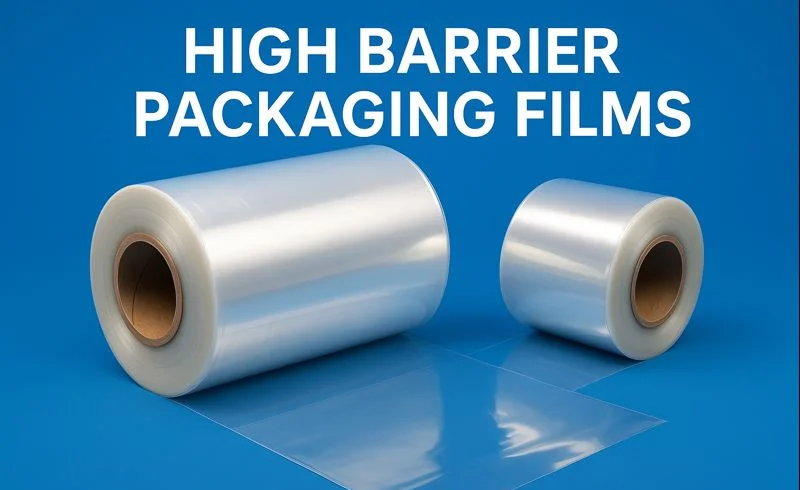
The high-barrier packaging films market is undergoing significant growth, driven by technological advancements, increasing demand for food and pharmaceutical safety, and evolving sustainability trends. These advanced multilayer films provide superior protection against moisture, oxygen, light, and other environmental factors, ensuring product quality and extending shelf life. Applications span across the food and beverage, pharmaceutical, industrial, and personal care sectors. This article provides a detailed analysis of market overview, dynamics, insights, market segments, leading companies, and future growth opportunities.
Market Overview
High-barrier packaging films are multilayer films designed to protect sensitive products from environmental damage. The market, valued at USD 36.62 billion in 2025, is projected to reach USD 66.51 billion by 2035, growing at a CAGR of 6.15%. Asia Pacific dominates the market, holding a share of approximately 40% in 2024, followed by North America and Europe.
Materials include plastic polymers such as PET, bio-based films, and aluminum layers, often combined through co-extrusion, lamination, or metallization processes. Food and beverages, particularly snacks and confectionery, account for the largest consumption, while pharmaceuticals and medical applications are emerging as high-growth sectors.
The global installed capacity of high-barrier packaging films reached 12.3 million tons in 2025, with actual annual production of 10.7 million tons. Multilayer films dominate output, followed by metallized films, co-extruded barrier films, EVOH-based films, PVdC-based films, and Nylon/PA barrier films. Average plant production is 19,300 tons per year, with 5,460 production lines globally, reflecting a capacity utilization rate of 86.9%.
Request a Custom Case Study Built Around Your Goals: sales@towardspackaging.com
Market Dynamics
Drivers
-
Technological Advancement: Innovations in multilayer films, nanocoatings, and smart barrier technologies enhance mechanical strength, oxygen and moisture resistance, and extend shelf life.
-
Sustainability Demand: Rising environmental concerns have fueled demand for recyclable and bio-based films, including PLA and PHA-based solutions.
-
E-commerce Growth: With increasing online retail, there is a higher demand for durable, puncture-resistant films that maintain product quality during shipping.
-
Food Safety Regulations: Stricter regulatory guidelines globally encourage adoption of high-barrier films to ensure compliance and product safety.
Restraints
-
Presence of Alternatives: Metals and glass can serve as substitutes for long-term storage, which may limit market growth.
-
Higher Production Costs: Advanced films require additional investment in technology and materials, making them less cost-effective for price-sensitive applications.
Opportunities
-
Product Innovation: Continuous launches of pouches, lidding films, and multilayer solutions expand market adoption.
-
Bio-based Films: Growing interest in eco-friendly alternatives creates opportunities for sustainable product development.
-
AI Integration: AI technology improves material selection, defect detection, and predictive maintenance, enhancing efficiency and product quality.
Download a Sample of Our Market Intelligence: https://www.towardspackaging.com/download-sample/5806
Market Insights
Emerging Technologies
-
Nanocoatings and Multilayer Laminates: Provide enhanced barrier performance against oxygen and moisture.
-
Biodegradable Films: Using PLA, PHA, and cellulose for sustainable packaging.
-
Active Barrier Films: Incorporate antioxidants and antimicrobials to extend product shelf life.
-
High-Clarity Films: Ideal for e-commerce and retail visibility.
-
Functional Printable Layers: Support product authentication and traceability.
-
Microwave and Heat-Resistant Films: Suitable for ready-to-eat meals and convenience packaging.
Sustainability and Compliance
Manufacturers increasingly adopt mono-material barrier solutions compatible with recycling streams. Water-based and bio-based coatings replace solvent-based technologies, ensuring compliance with food safety regulations and environmental standards. Life cycle assessment and eco-labeling practices are widely implemented to meet regulatory and consumer expectations.
Market Segments
Material Insights
-
Plastics (PET): Largest share in 2024 at 35% due to clarity, chemical resistance, and barrier properties.
-
Bio-based Films: Fastest-growing segment; driven by sustainability trends and research into polymer blends offering enhanced mechanical and barrier properties.
Technology Insights
-
Co-extrusion: Largest share at 30% in 2024; provides superior barrier resistance against air, light, and moisture.
-
Metallization & SiOx/AlOx Coating: Expected to expand rapidly; offers transparency, high recyclability, and microwave-safe properties.
Product Type Insights
-
Pouches: Dominant in 2024 with 40% market share; lightweight, flexible, and ideal for food and pharmaceuticals.
-
Lidding Films: Fastest-growing segment; extend product shelf life in tubs, trays, and cups.
Application Insights
-
Food & Beverage: Largest segment with 45% market share in 2024; snacks and confectionery lead consumption.
-
Pharmaceuticals & Medical: Rapidly growing due to stringent quality and safety requirements.
End-Use Insights
-
Food Manufacturers: Accounted for 50% of the market in 2024; focus on maintaining freshness and reducing waste.
-
Pharmaceutical Companies: Fastest-growing end users due to need for protection against moisture, light, and oxygen.
Regional Insights
-
Asia Pacific: Largest market; rapid growth driven by food, pharmaceutical, and e-commerce sectors.
-
North America: Well-established packaging industries and strict regulations fuel market growth.
-
Europe: Focus on sustainability and regulatory compliance shapes demand.
-
India: Fastest-growing market in Asia; increasing pharmaceutical production and packaged foods adoption.
-
China: Continuous industrial development and high consumption rates drive growth.
Top Companies in High-Barrier Packaging Films Market
1. Amcor Plc
-
About: A global packaging leader headquartered in Melbourne, Australia, providing sustainable packaging solutions.
-
Products: Flexible and rigid packaging solutions, including high-barrier films, PET containers, and pouches.
-
Market Cap: USD 17.2 billion.
2. Sealed Air Corporation
-
About: A US-based company specializing in protective packaging, automation, and food safety solutions.
-
Products: Bubble wrap, Cryovac food packaging, high-barrier films, and cushioning solutions.
-
Market Cap: USD 9.5 billion.
3. Berry Global Group Inc
-
About: An American manufacturer of plastic packaging products serving various end-use industries.
-
Products: Flexible packaging, high-barrier films, nonwoven materials, and hygiene products.
-
Market Cap: USD 11.3 billion.
4. Mondi Group
-
About: A UK-based global leader in sustainable packaging and paper solutions.
-
Products: High-barrier films, flexible packaging, paper-based packaging, and specialty products.
-
Market Cap: USD 8.6 billion.
5. Huhtamaki Oyj
-
About: Finland-based global packaging company delivering sustainable and innovative packaging solutions.
-
Products: Flexible packaging, molded fiber products, high-barrier films, and food service packaging.
-
Market Cap: USD 6.2 billion.
Invest in Our Premium Strategic Solution: https://www.towardspackaging.com/checkout/5806
FAQs
What are high-barrier packaging films?
High-barrier packaging films are multilayer films designed to protect products from oxygen, moisture, light, and other environmental factors, extending shelf life and ensuring product quality.
Which industries use high-barrier packaging films?
Major applications include food and beverages, pharmaceuticals, medical devices, electronics, industrial packaging, and personal care products.
What is driving the growth of high-barrier packaging films?
Technological advancements, e-commerce growth, increasing demand for sustainable packaging, and strict food and pharmaceutical regulations are primary growth drivers.
Which materials dominate the high-barrier packaging films market?
Plastic polymers such as PET hold the largest market share, while bio-based films are rapidly growing due to sustainability initiatives.
Which regions are key markets for high-barrier packaging films?
Asia Pacific leads the market, followed by North America and Europe. India and China are the fastest-growing markets due to rising demand for packaged foods and pharmaceuticals.
Source : https://www.towardspackaging.com/insights/high-barrier-packaging-films-market-sizing