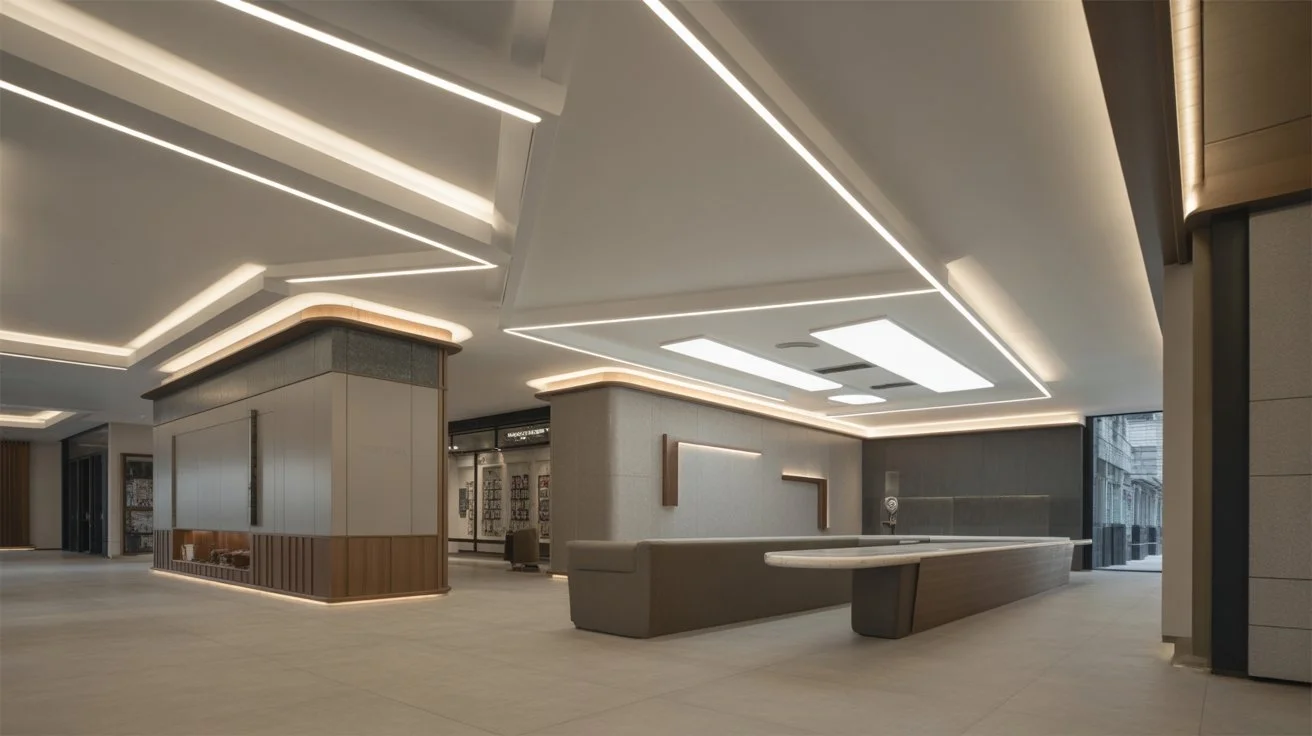
Modern lighting in 2026 is no longer just about illuminating spaces but it’s also about creating environments that feel more natural, more indulgent, and more emotionally resonating to how people live and work. Lighting has become one of the most transformative elements in interior design since the design shifted towards well-being, energy efficiency, and sensory experience.
Homes, offices, clinics, and retail spaces are already opting for smarter, softer, more adaptive lighting solutions, and 2026 is going to be the year these lighting ideas move from luxury to must-have. If this is something that interests you then read more to know top trends defining modern lighting in 2026.
Trend 1: Modern Lights Change Indoor Environments
Smart home ideas are a massive change in lighting design implementation in spaces. People want lighting that responds to them. Modern systems adjust brightness based on time of day, shift color temperature to support circadian rhythm, and personalize lighting for work, rest, creativity, and entertainment.
This is also where advanced technologies are playing their role. It is due to integrated technology that virtual skylight ceilings are growing in popularity regarding transforming indoor spaces. It brings a combination of light, depth, color, and visual imagery to make the ceiling feel open and dynamic.
Whether it's in a basement gym, windowless office, or interior clinic space, these ceilings add a psychological sense of openness and reduce the fatigue related to closed environments.
What makes these lightings stand out today is how simply and easily they integrate with voice assistants, smart thermostats, and environmental sensors. In 2026, lighting is going to be part of a system that works quietly in the background to save energy, and create ambiance.
Trend 2: The Growing Concept of Invisible Lighting
One of the most amazing design shifts of lighting in 2026 is the growing trend of lighting that does not require attention. Such a virtual skylight ceiling changes a space quietly. Interior designers are choosing the concealed fixtures, recessed channels, diffused lines, and soft-edge glows that highlight architecture without adding cluttered look in a space.
Instead of giant fixtures, people see ceiling slot lights, wall washers, and ambient coves that also create mood and set tone of a space. Invisible lighting helps reduce visual noise or clutter which is a major step in achieving elegant and wellness design elements.
In homes, it’s used to create peaceful nighttime environments, wake-up settings, and calm working zones. In commercial settings, it produces visual comfort that makes long working hours feel less stressful and more energizing.
Trend 3: Using Modern Lighting for Well-Being
In 2026, emotional lighting will become an interior trend. Spaces are designed to support how people feel, not just how they look. New technologies allow people to shift their environment from cool, focused light during work hours to warm, soft tones that help their body wind down in the evening.
This matters because scientific research continues to support the impact of light on mental alertness, sleep quality, and emotional balance. Workplaces using adaptive lighting report higher employee satisfaction. Homes using white lighting that can be tuned, experience more natural sleep cycles. Retail spaces with dynamic lighting are seeing improved customer engagement. This shows that lighting is no longer decor but a core element of well-being.
Trend 4: Sustainability as a Lighting Priority in 2026
Sustainability is expected now which ensures it is no longer a feature of design only. In 2026, lighting manufacturers are going to focus on recyclable materials, long-life LEDs, and architectural systems that reduce replacement waste. Smart sensors and automation also ensure lights stay on only when necessary, significantly cutting energy use in both homes and commercial buildings.
The decorative fixtures are being redesigned with sustainable materials such as bamboo, recycled metals, glass composites, and biodegradable. The combination of eco-friendly materials and energy-efficient technologies is creating a new standard of responsible lighting systems.
Factors Making Modern Light Essential in 2026
One of the biggest reasons lighting has become important is the rapid change of ceiling lights, including advanced artificial skylights that mimic the warmth and diffusion of natural daylight. Instead of relying on harsh overhead bulbs or flat panel LEDs, designers now use lighting to recreate outdoor openness in indoor environments. This shift has changed how people feel in enclosed rooms, improving comfort, productivity, and mood. This is why lighting has become part of early planning in architecture and interior design, not just a finishing touch.
Want Modern Lighting in the Coming Year?
If you want lighting that feels natural, smart, and advanced, now is the perfect time to explore these new trends. Clearly define the type of lighting you are looking for and turn your space into an area that is inviting and inspiring. Because, whether it is about designing a home office or updating a commercial interior, modern lighting is now a strategic choice that affects well-being, sustainability, and space value.