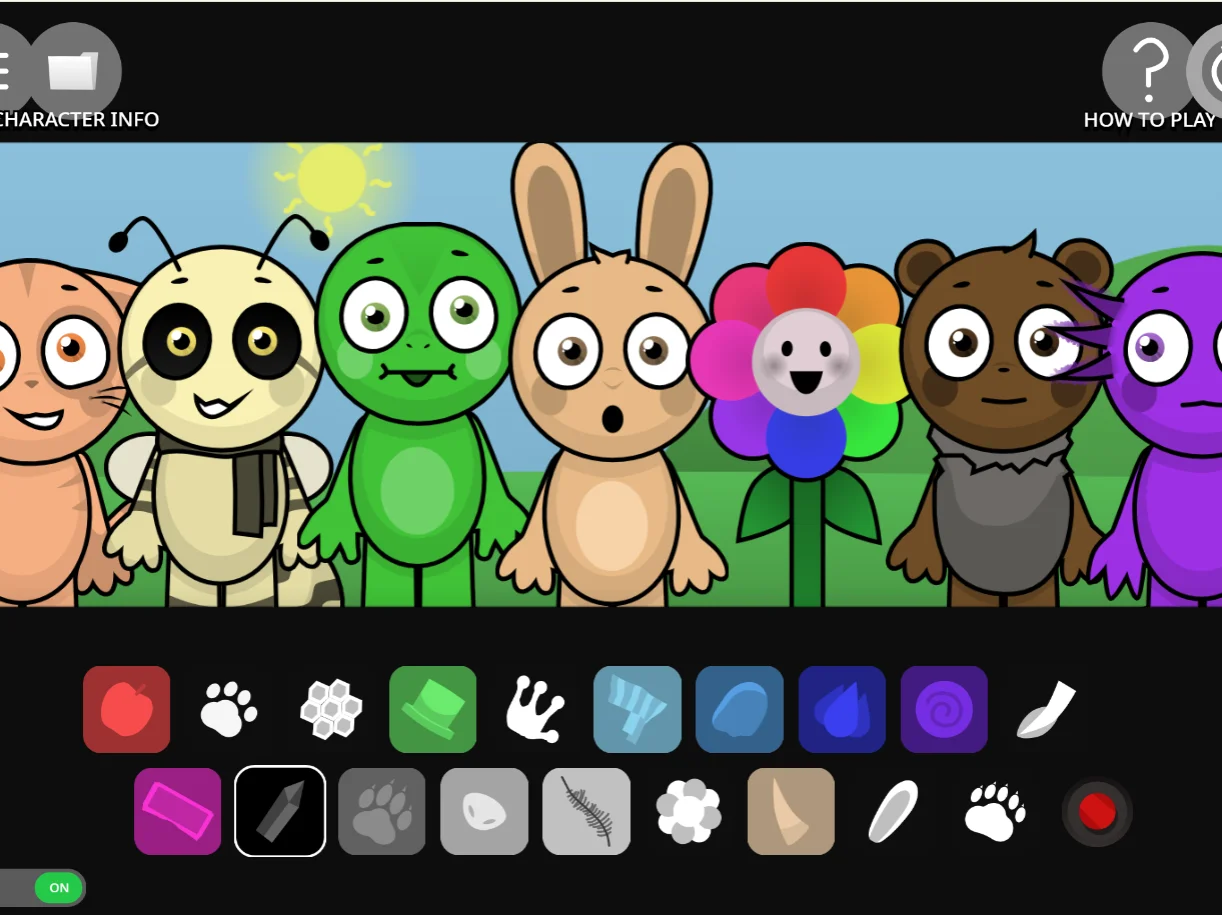
To understand the explosive rise of Sprunki, you have to look away from the high-end gaming setups of Twitch streamers and look instead at the humble, plastic-cased laptop sitting on a school desk.
While the gaming industry obsesses over ray-tracing, 4K resolution, and $70 console titles, a revolution has been brewing in the browser tabs of millions of students. Sprunki—the fan-made, horror-tinged mod of Incredibox—is not just a game. It is the flag-bearer for the resurrection of "Flash Game culture" and the new punk rock of Generation Alpha.
This article examines Sprunki through the lens of digital rebellion, exploring how it became the ultimate "schoolyard myth" of the 2020s and why its chaotic, lo-fi aesthetic appeals to a generation raised on polished corporate algorithms.
The Void Left by Flash
For nearly two decades, Adobe Flash was the wild west of the internet. It was a place where creators could make weird, violent, funny, or experimental games (like Fancy Pants Adventure or Salad Fingers) with zero oversight. When Flash died in 2020, it left a vacuum. The "casual web game" seemed extinct, replaced by predatory mobile games filled with microtransactions and ads.
Sprunki (specifically the Scratch-based versions) rushed in to fill this void. It is free. It requires no login. It runs on low-spec hardware (like school-issued Chromebooks). And, most importantly, it feels "unregulated."
In a digital world where YouTube Kids is sanitized and TikTok is algorithmically curated, Sprunki feels raw. The art is sketchy. The sound balancing is aggressive. The transition from the "Normal" mode to the blood-soaked "Horror" mode feels like a violation of the rules. For a 12-year-old playing this in a browser tab during math class, Sprunki offers the thrill of the forbidden—a digital equivalent of reading a comic book inside a textbook.
The Aesthetics of "Digital Decay"
One of the most unique aspects of Sprunki is its visual language. Most modern games strive for immersion; Sprunki strives for intrusion.
The game’s aesthetic relies heavily on "Glitch Art" and "Datamoshing." When the Horror Mode is activated, the characters don't just become scary; they look like the game code itself is breaking.
-
Visual Noise: The backgrounds often fill with static, Red Screen of Death imagery, or floating assets that shouldn't be there.
-
Audio Clipping: The horror tracks often push the volume into the "red," causing the audio to clip and distort. To an audiophile, this is a mistake. To the Sprunki fanbase, this is a stylistic choice.
This embraces a philosophy known as "cursed imagery." It’s the idea that the file itself is haunted. By looking "broken," Sprunki feels more authentic than a polished horror game. It taps into the modern anxiety that our digital devices are fragile and that there is something dark lurking behind the pristine glass of our screens.
The "Gray" Complex: A Hero for the Anxious
If you analyze the character popularity polls within the Sprunki community (found on Discord servers and Wikis), one character stands head and shoulders above the rest: Gray.
In the lore, Gray is usually depicted as the one character who sees the horror coming but is powerless to stop it. While other characters (like Black or Red) turn into monsters, Gray usually turns into a nervous wreck—shaking, crying, or staring in shock.
Gray is the avatar for the "Anxious Generation." In the 90s, gaming mascots were about attitude and power (Sonic, Duke Nukem). In the 2020s, the mascot is a traumatized beatboxer.
Players identify with Gray because he represents the feeling of being overwhelmed by the noise of the internet. The game essentially says: The world is turning into a loud, scary nightmare, and the only thing you can do is keep the beat going. This "Trauma Fantasy" is a stark departure from the "Power Fantasies" of traditional gaming, making Sprunki a unique sociological artifact.
The "Unblocked" Cat-and-Mouse Game
A massive part of the "What is Sprunki?" answer lies in its distribution method. Sprunki is not a single file; it is a hydra.
Because the game originated on Scratch (a coding platform for kids), it is technically educational software. This makes it a nightmare for school IT administrators to block. If a school blocks the main Sprunki link, five new "remixes" pop up under different names within an hour.
This cat-and-mouse game has turned finding and playing Sprunki into a social activity. It is the modern equivalent of passing notes in class. Kids share links to "unblocked" versions on Google Sites or obscure GitHub repositories. This scarcity and secrecy fuel the hype. The game isn't just served to you on a platter like Fortnite; you have to hunt for it. This active participation makes the player feel like they are part of an underground club.
The "Gross-Out" Renaissance
Culturally, Sprunki is also bringing back the "Gross-Out" humor that dominated the early 2000s. Think of Ren & Stimpy, Invader Zim, or the Garbage Pail Kids.
For the last decade, children’s media has been dominated by "CalArts style"—round, safe, bean-mouth shapes with soft colors (think Steven Universe or Adventure Time). Sprunki violently rejects this.
The "Horror Mode" transformations are visceral. They feature:
-
Exposed skulls.
-
Hyper-realistic human eyes on cartoon bodies.
-
Melting flesh.
It is grotesque, but it is also silly. It walks the fine line of "Spooky-Funny." It allows kids to test their boundaries with horror in a low-stakes environment. It’s "gateway horror." It’s scary enough to make you jump, but ridiculous enough that you can laugh about it with your friends five seconds later. It serves a developmental purpose: it is a safe space to practice feeling fear.
Conclusion: The New Folk Art
Ultimately, Sprunki games challenge the definition of what a "hit game" looks like. It has no marketing budget. It has no publisher. It has no roadmap.
It is a piece of digital folk art. It is a collage of sounds and images pasted together by a teenager, then remixed by thousands of other teenagers. It represents a shift in how Gen Alpha consumes media: they don't want to just watch; they want to break, remix, and share.
Sprunki is the punk rock of the browser generation—loud, distorted, a little bit offensive, and impossible to ignore. It reminds us that no matter how advanced graphics technology becomes, there will always be a primal appeal to a simple, catchy beat that slowly descends into madness.