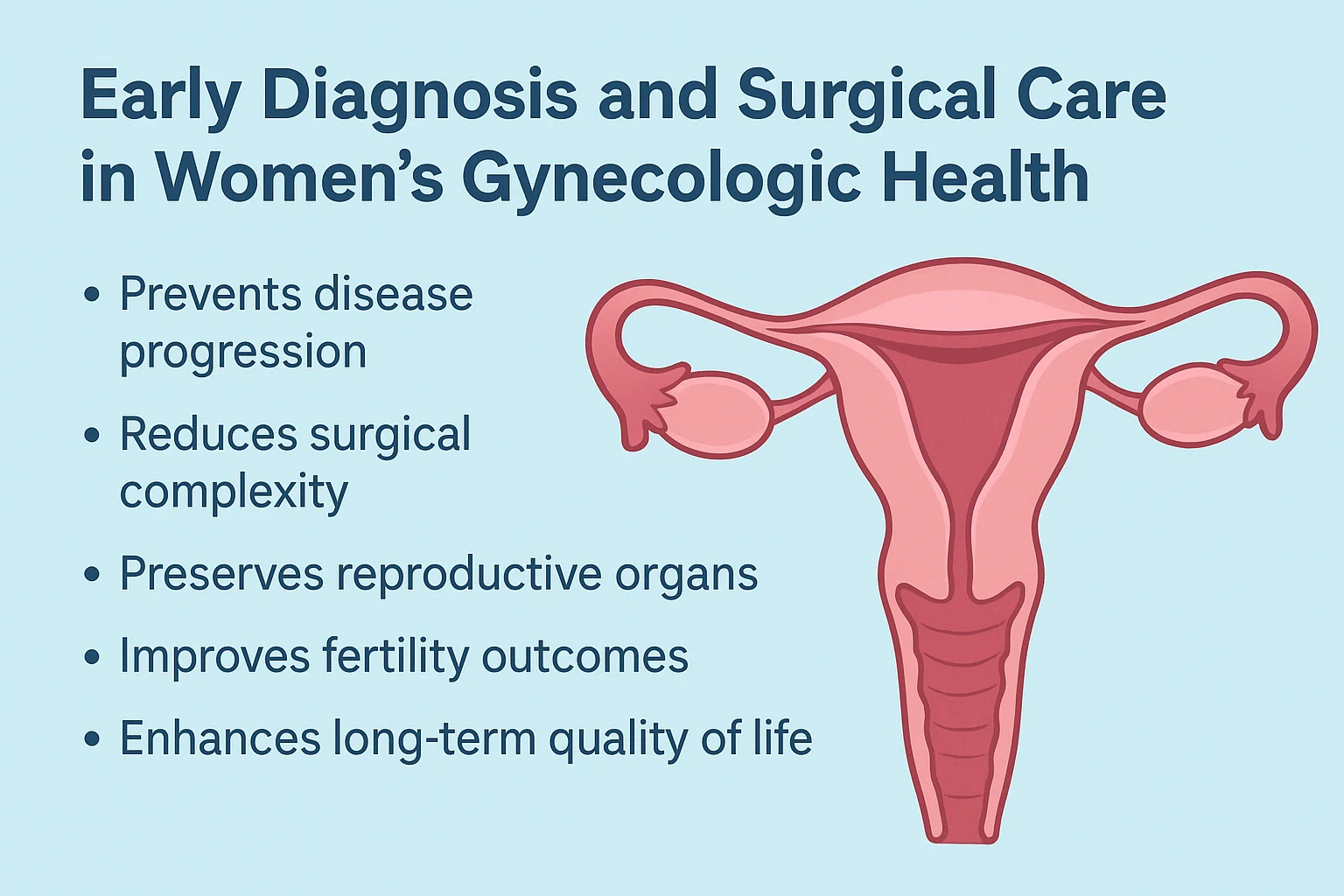
Women often ignore early gynecologic symptoms, assuming they are a normal part of life. However, conditions affecting the uterus, ovaries, cervix, and pelvic organs can silently progress if left untreated. Early diagnosis followed by appropriate surgical care plays a critical role in protecting a woman’s reproductive health, fertility, and overall well-being.
With advancements in medical imaging and surgical techniques, gynecologic conditions can now be detected earlier and treated more effectively than ever before.
1. Why Early Detection Matters in Gynecologic Conditions
Gynecologic disorders such as fibroids, ovarian cysts, endometriosis, and gynecologic cancers often develop gradually. Early symptoms may include irregular periods, pelvic pain, bloating, abnormal bleeding, or discomfort during intercourse.
Detecting these conditions early helps:
-
Prevent disease progression
-
Reduce surgical complexity
-
Preserve reproductive organs
-
Improve fertility outcomes
-
Enhance long-term quality of life
Early diagnosis allows doctors to choose conservative or minimally invasive surgical options whenever possible.
2. Diagnostic Tools Used in Gynecology
Modern gynecology relies on advanced diagnostic tools to accurately identify underlying problems. Common diagnostic methods include:
-
Pelvic ultrasound
-
Transvaginal ultrasound
-
MRI scans
-
Hysteroscopy
-
Laparoscopy
-
Pap smear and HPV testing
These tools help determine the size, location, and severity of gynecologic conditions, allowing surgeons to plan precise and effective treatment.
3. Surgical Options for Common Gynecologic Disorders
Once a diagnosis is confirmed, surgery may be recommended if medical treatment is ineffective or if the condition threatens fertility or health.
Common gynecologic surgeries include:
-
Removal of ovarian cysts
-
Fibroid removal procedures
-
Treatment of endometriosis
-
Surgical management of abnormal uterine bleeding
-
Cancer-related gynecologic surgeries
Advances in surgical care have significantly reduced recovery time and postoperative complications, making surgery safer and more patient-friendly.
4. Fertility Preservation Through Timely Surgery
One of the most important benefits of early surgical intervention is fertility preservation. Conditions such as fibroids or ovarian cysts can interfere with ovulation, implantation, or normal uterine function.
Timely surgery helps:
-
Restore reproductive anatomy
-
Improve ovulatory function
-
Reduce inflammation and scarring
-
Increase chances of natural conception
Women planning pregnancy benefit greatly when treatment is performed before complications arise.
5. Recovery and Post-Surgical Care
Post-surgical recovery is just as important as the surgery itself. Proper care ensures faster healing and lowers the risk of complications.
Key recovery guidelines include:
-
Adequate rest and hydration
-
Gradual return to physical activity
-
Monitoring for unusual pain or bleeding
-
Attending follow-up appointments
-
Maintaining emotional well-being
Most women resume normal routines within a few weeks, especially after minimally invasive procedures.
6. Emotional and Psychological Impact of Surgery
Gynecologic surgery can bring emotional stress, fear, and anxiety, particularly when fertility or long-term health is involved. Emotional support, counseling, and clear communication with healthcare providers help women cope better during recovery.
Understanding the condition, treatment options, and expected outcomes empowers women and reduces anxiety.
7. Long-Term Health Monitoring
Even after successful surgery, long-term monitoring is essential. Regular check-ups help detect recurrence, manage hormonal health, and maintain reproductive wellness.
Preventive gynecologic care ensures that women remain healthy, confident, and informed throughout every stage of life.
Conclusion
Early diagnosis combined with appropriate surgical care plays a vital role in protecting women’s gynecologic and reproductive health. By addressing conditions at the right time, women can preserve fertility, recover faster, and maintain long-term wellness. Awareness, timely action, and expert care empower women to take control of their health with confidence.