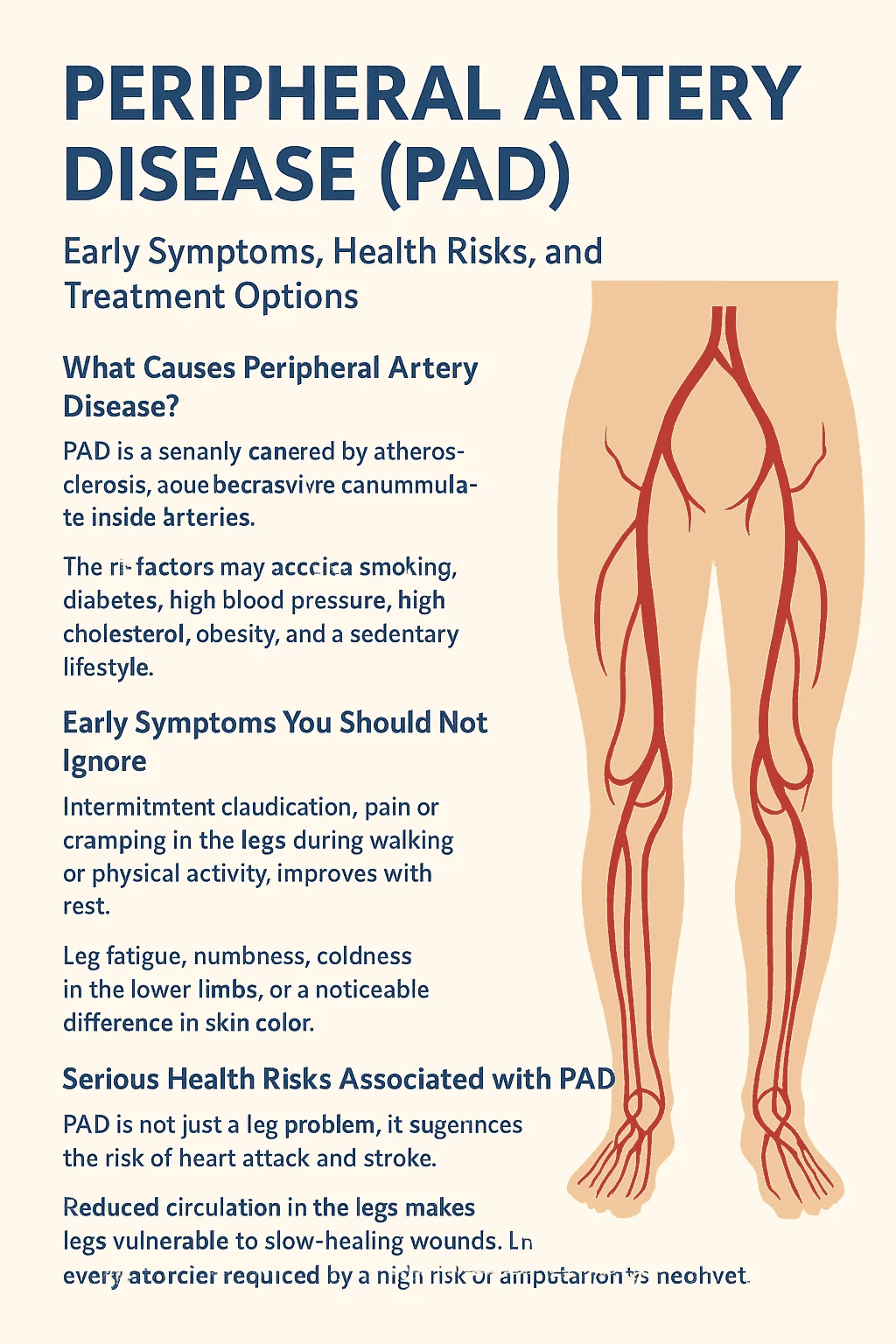
Peripheral Artery Disease (PAD) is a common but often underdiagnosed vascular condition that affects blood flow to the legs and feet. It occurs when arteries become narrowed or blocked due to plaque buildup, reducing the supply of oxygen-rich blood to the muscles and tissues. If left untreated, PAD can progress to serious complications, including chronic pain, non-healing wounds, and limb-threatening conditions.
What Causes Peripheral Artery Disease?
The primary cause of PAD is atherosclerosis, a process where fatty deposits accumulate inside the arteries. Over time, these deposits harden and restrict blood flow. Several risk factors increase the likelihood of developing PAD, including smoking, diabetes, high blood pressure, high cholesterol, obesity, and a sedentary lifestyle. Age and family history of vascular disease also play a significant role.
Early Symptoms You Should Not Ignore
One of the earliest signs of PAD is intermittent claudication, which refers to pain or cramping in the legs during walking or physical activity that improves with rest. Other symptoms may include leg fatigue, numbness, coldness in the lower limbs, or a noticeable difference in skin color. As the disease progresses, pain may occur even at rest, signaling severe circulation impairment.
Ignoring these symptoms can be dangerous, as PAD is often a warning sign of widespread vascular disease affecting the heart and brain.
Serious Health Risks Associated with PAD
PAD is not just a leg problem—it significantly increases the risk of heart attack and stroke. Reduced circulation also makes the legs vulnerable to slow-healing wounds and infections. In advanced stages, PAD may progress to Critical Limb Ischemia, where tissue damage, ulcers, and gangrene develop due to severely reduced blood flow. This stage carries a high risk of amputation if timely treatment is not provided.
How PAD Is Diagnosed
Diagnosis begins with a physical examination and assessment of pulses in the legs and feet. Doctors may use the Ankle-Brachial Index (ABI) test to compare blood pressure in the arms and legs. Imaging studies such as Doppler ultrasound, CT angiography, or MR angiography help identify the location and severity of arterial blockages. Early diagnosis allows effective treatment before irreversible damage occurs.
Treatment Options for Peripheral Artery Disease
Treatment depends on the severity of the condition and the patient’s overall health. Early-stage PAD can often be managed with lifestyle changes, including smoking cessation, regular exercise, and dietary improvements. Medications may be prescribed to control blood pressure, cholesterol, and blood thinning.
For moderate to severe PAD, minimally invasive procedures such as angioplasty and stenting are used to restore blood flow. In advanced cases, surgical bypass may be required to reroute blood around blocked arteries. Modern vascular treatments focus on improving circulation while minimizing recovery time.
Preventing Disease Progression
Prevention and early management are key to avoiding serious complications. Regular physical activity, strict diabetes control, maintaining healthy cholesterol levels, and routine vascular checkups are essential, especially for high-risk individuals. Early medical attention can significantly improve quality of life and reduce long-term risks.