

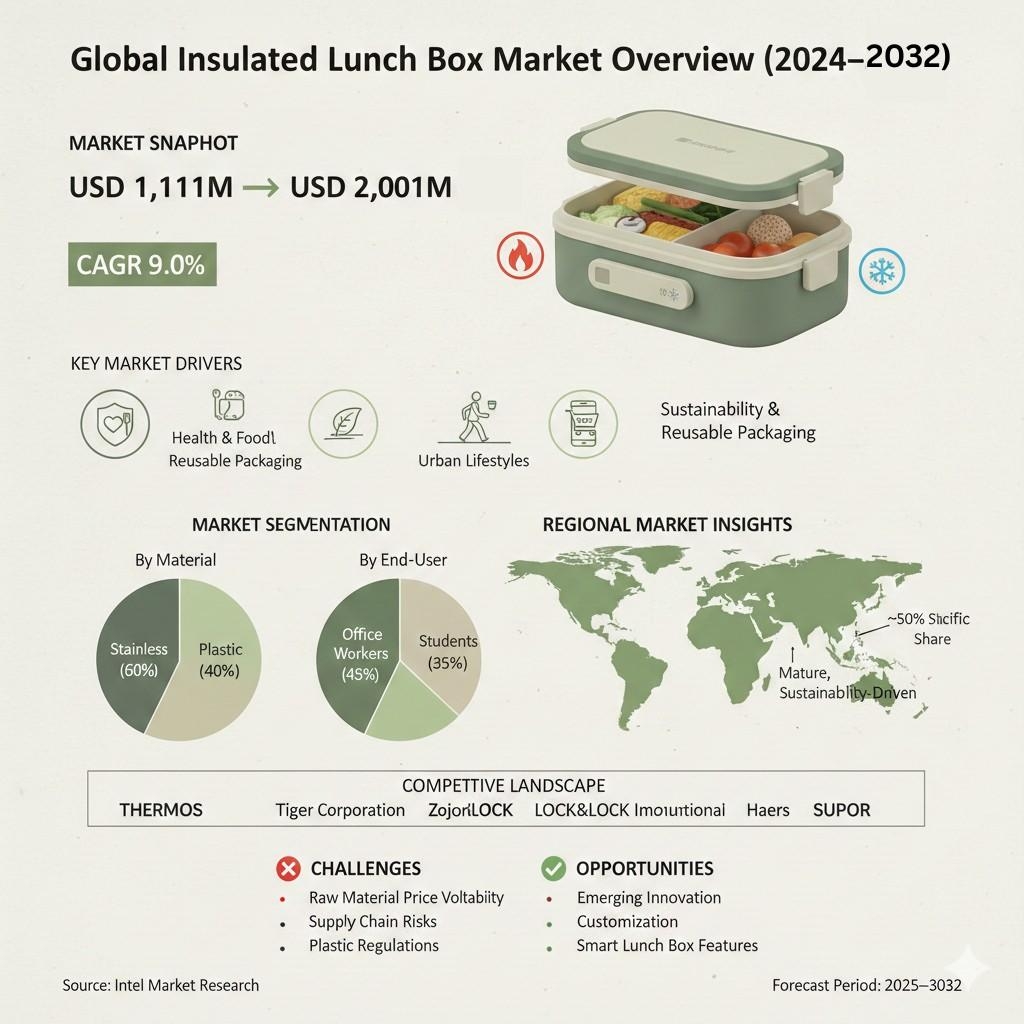
According to a new report from Intel Market Research, the global Insulated Lunch Box market was valued at USD 1,111 million in 2024 and is projected to reach USD 2,001 million by 2032, growing at a CAGR of 9.0% during the forecast period (2025–2032). Insulated lunch boxes are specialized food containers designed to maintain the temperature of stored food items for extended periods. While they share some thermal principles with insulated bottles, their design and construction differ significantly to accommodate larger food volumes and different usage patterns.
What is an Insulated Lunch Box?
An insulated lunch box is a portable food container designed with insulating materials that help maintain the temperature of the food inside. These containers typically consist of an outer shell (made from stainless steel or plastic) and an inner lining, with an insulating layer (usually foam or vacuum insulation) in between. This design effectively slows down heat transfer, keeping hot foods hot and cold foods cold for several hours.
While these containers share some design principles with insulated bottles (such as vacuum insulation or foam layers), they differ in their shape and capacity. Insulated lunch boxes are generally more spacious, with compartments designed to hold various food items, utensils, and sometimes even drinks. They are widely used by students, office workers, and outdoor enthusiasts.
Market Drivers and Industry Trends
The global insulated lunch box market has been growing steadily due to several key factors:
- Health and Sustainability Awareness: Increasing awareness of the environmental impact of single-use packaging has driven demand for reusable food containers. Insulated lunch boxes offer an eco-friendly alternative to disposable packaging.
- Changing Lifestyles: The rise of on-the-go eating habits among urban populations, students, and working professionals has increased the need for portable, efficient food storage solutions.
- Food Safety Concerns: With growing awareness of foodborne illnesses, consumers are increasingly seeking solutions that maintain food at safe temperatures, particularly in regions with warmer climates.
- Customization and Personalization: The market has seen a trend toward customizable designs, colors, and sizes, catering to different demographic groups, especially children and young professionals.
Market Segmentation
The insulated lunch box market can be segmented in several ways:
By Material Type:
- Stainless Steel Insulated Lunch Box: These are the most common type, known for their durability, ease of cleaning, and resistance to corrosion. They are preferred for their premium feel and long lifespan.
- Plastic Insulated Lunch Box: Generally more affordable and lightweight, plastic models often feature vibrant designs and are popular among children and budget-conscious consumers.
By End-User:
- Office Workers: Professionals who commute or have limited lunch options nearby. These consumers prioritize durability, capacity, and professional appearance.
- Students: This segment includes school-going children and university students. Products for this group often focus on durability, ease of use, and attractive designs.
- Others: This includes travelers, hikers, and other outdoor enthusiasts who need portable food storage solutions.
By Region: The market is global, with significant variations in demand and product preferences across different regions.
Regional Market Analysis
The Asia-Pacific region dominates the global insulated lunch box market, accounting for approximately 50% of global sales. This is due to several factors:
- High Population Density: Countries like China, India, and Japan have large populations, with many students and office workers using lunch boxes daily.
- Cultural Factors: In many Asian cultures, home-cooked meals are preferred, and carrying lunch is common.
- Rising Disposable Income: As disposable income increases, consumers are willing to invest in higher-quality, reusable products rather than single-use alternatives.
Europe and North America each hold about 20% of the market. These regions have well-established markets with high consumer awareness about sustainability and food safety.
Competitive Landscape
The global insulated lunch box market is fragmented, with several key players competing for market share. The top four manufacturers account for approximately 20% of the market. Key players include:
- THERMOS: A global leader known for its wide range of products and strong brand presence.
- Tiger Corporation: Specializes in high-quality stainless steel containers with innovative designs.
- Zojirushi: Known for its vacuum insulation technology and durable products.
- LOCK&LOCK: Offers a wide range of food storage solutions, including insulated lunch boxes.
Other notable players include Pacific Market International, Gipfel, Asvel, Zebra, Bentology, Kitchen Art, Haers, TAFUCO, SUPOR, ASD, and several others. Each competitor focuses on different aspects such as pricing, material innovation, distribution network, or product customization.
Market Forecast and Growth Opportunities
The market is projected to grow at a CAGR of 9.0% from 2025 to 2032. This growth will be driven by:
- Emerging Markets: Countries in Latin America, Middle East, and Africa are showing increased adoption of insulated lunch boxes as disposable income rises and consumer awareness grows.
- Product Innovation: Advances in materials science are allowing manufacturers to create lighter, more efficient, and more affordable products. For example, the use of new polymers and composites can reduce costs while improving thermal retention.
- E-commerce and Distribution Channels: The growth of online retail has made these products more accessible globally, even in regions without strong retail infrastructure.
Challenges and Threats
Despite the positive outlook, the industry faces some challenges:
- Raw Material Price Volatility: The prices of stainless steel and plastic resins fluctuate, affecting manufacturing costs.
- Supply Chain Disruptions: Events like the COVID-19 pandemic highlighted vulnerabilities in global supply chains, affecting everything from raw material availability to finished product distribution.
- Regulatory Environment: Regulations regarding plastic use and recycling are becoming stricter in many regions, potentially increasing compliance costs.
Future Outlook
The future of the insulated lunch box market looks promising, with several trends likely to shape its development:
- Sustainability: Consumers are increasingly seeking eco-friendly products, pushing manufacturers to develop more sustainable materials and processes.
- Customization: Demand for personalized products is growing, especially in mature markets where consumers seek unique designs and features.
- Technology Integration: Some companies are exploring smart features, such as temperature indicators or tracking devices, though these are still niche.
Conclusion
The insulated lunch box market is a dynamic and growing industry. While Asia-Pacific remains the dominant region, growth in other parts of the world will be driven by increasing consumer awareness, the shift toward reusable products, and the need for food safety. Manufacturers and retailers should focus on innovation, sustainability, and understanding regional preferences to capitalize on opportunities in this market.
For a more detailed analysis, you can download the sample report here: Insulated Lunch Box Market - View in Detailed Research Report
About Intel Market Research
Intel Market Research is a leading provider of strategic intelligence, offering actionable insights in the consumer goods, packaging, and related industries. Our research capabilities include:
- Real-time competitive benchmarking
- Global supply chain analysis
- Consumer behavior studies
- Market forecasting and trend analysis
Trusted by Fortune 500 companies, our insights empower decision-makers to drive innovation with confidence.
International: +1 (332) 2424 294
📞 Asia-Pacific: +91 9169164321
🔗 LinkedIn: Follow Us <|begin▁of▁sentence|>