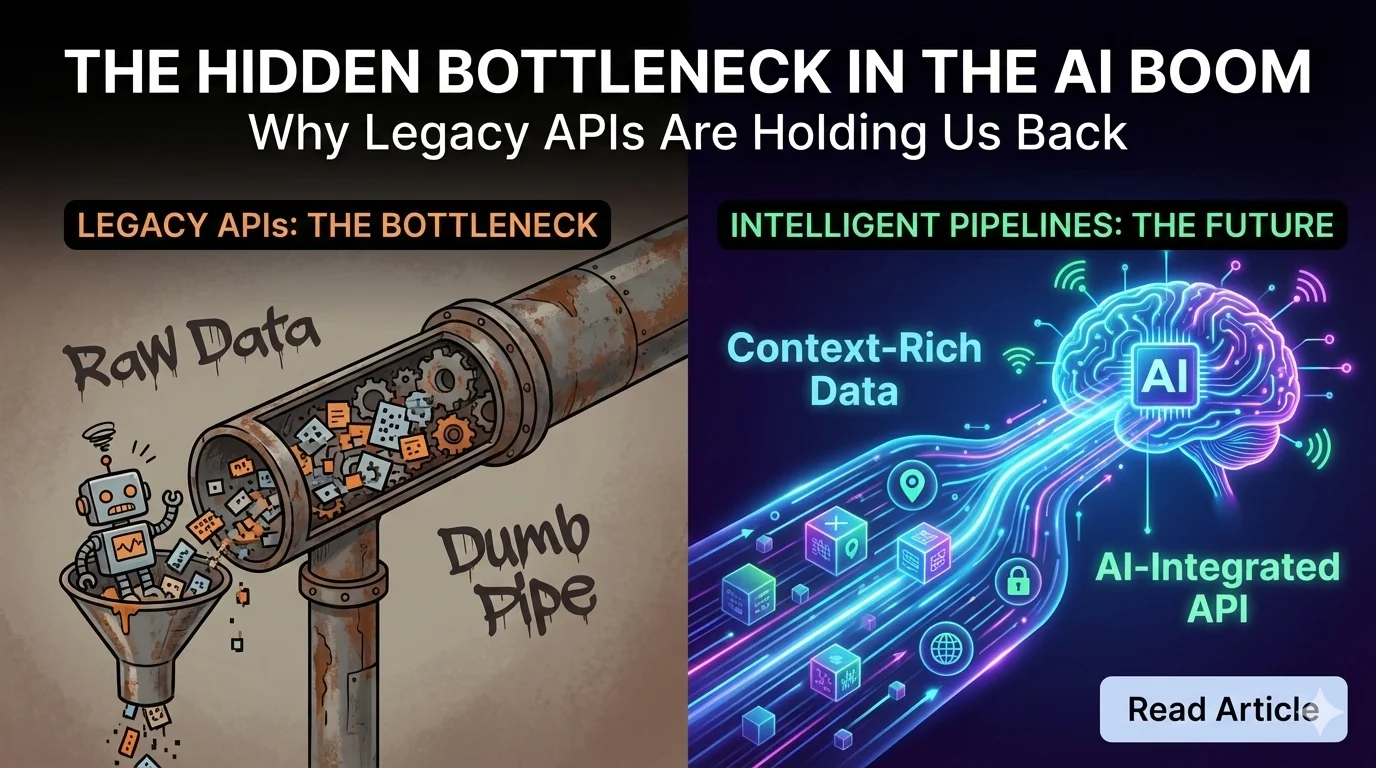
We are currently living through the single greatest technological shift since the invention of the internet: the AI Revolution. Every day, new startups launch "smart" agents, chatbots, and predictive models that promise to change the way we live.
But there is a problem that very few people are talking about. While everyone is obsessed with the "brain" (the AI models), almost no one is paying attention to the "nerves" (the data connections).
If you try to run a Ferrari engine on low-grade fuel, it won’t perform. Similarly, if you try to run a modern AI agent on 2010-era data infrastructure, it fails.
I recently read a thought-provoking article on the APILayer Blog that perfectly diagnoses this issue. The piece, titled “APIs Without AI Are Just Dead Endpoints,” argues that the way we currently handle data is obsolete.
The Era of the "Dumb Pipe" is Over
For a long time, software development was about plumbing. You built a pipe (an API) to connect a database to a user's screen. The pipe didn't care what flowed through it; it just moved the information.
The article highlights a critical flaw in this approach for the modern era. When you feed raw, messy, "dumb" data into an AI system, the AI has to waste valuable computing power just trying to understand what it is looking at.
The author of the blog post coins the term "Dead Endpoint" to describe these legacy connections. A Dead Endpoint delivers data, but it delivers it without context.
- It gives you a phone number, but doesn't tell you if it's a landline or mobile.
- It gives you a set of coordinates, but doesn't tell you the local time zone or weather conditions.
The Shift to "Context-First" Data
What I found most compelling about this article is the solution it proposes: The Intelligent Pipeline.
We are moving toward a world where APIs are no longer passive. They are active participants in the software. As the article explains, the new standard for APIs involves embedded intelligence.
Imagine an API that acts like a bouncer at a club. Instead of letting everyone in (delivering all data), it checks IDs, assesses risk, and informs the security team, all in milliseconds. This is what AI-integrated APIs do. They validate, enrich, and score data before it ever reaches the main application.
For developers and tech leaders, this is a massive paradigm shift. It means you can stop writing code to clean up messy data and start focusing on building features. It means your AI agents get clean, context-rich fuel, allowing them to make faster and more accurate decisions.
Why This Reading is Essential
If you are involved in the tech world, whether you are writing code, managing a product, or just investing in the future, you need to understand the infrastructure that powers AI.
We often get distracted by flashy new tools, but the real innovation happens in the plumbing. The APILayer blog post offers a clear, hype-free look at how that plumbing is being upgraded for the 21st century. It’s a sobering reminder that "good enough" connectivity is no longer good enough.
If you want to understand why some AI applications feel "magic" while others feel sluggish and dumb, the answer usually lies in the API strategy.
I highly recommend giving this piece a read. It’s a deep dive into the architecture of the future.
👉 Read the full analysis here: APIs Without AI Are Just Dead Endpoints