Imagine a treatment so precise it can target a single rogue protein in a vast human body, or a vaccine developed not from weakened pathogens but from instructions delivered to our own cells. These are not future fantasies but present-day realities, thanks to a revolutionary class of medicines known as biologics. Unlike traditional pharmaceuticals synthesized from chemicals, biologics are complex molecules produced by living systems, proteins, antibodies, nucleic acids that intervene in disease with extraordinary specificity. From monoclonal antibodies combating cancer and autoimmune disorders to mRNA vaccines and advanced gene therapies, biologics represent the cutting edge of therapeutic science. Their promise, however, hinges on a challenge far more intricate than discovering them: the monumental task of producing them at scale, with unwavering purity, consistency, and safety.
This monumental task defines the critical, yet often unseen, discipline of manufacturing these life-changing compounds. Creating a small-molecule drug involves predictable chemical reactions, but coaxing living cells, mammalian, bacterial, or yeast to reliably fabricate a perfect, functional biological molecule is an endeavor of profound complexity. It requires mastering a symphony of biological and engineering processes, where the smallest deviation in temperature, nutrient balance, or pH can alter the final product. This field moves beyond simple fabrication; it is the art and science of replicating nature's own machinery on an industrial scale, under tightly controlled conditions. The success of every biologic therapy, and by extension the patients who rely on them, is fundamentally dependent on the robustness, innovation, and precision of this production paradigm, making it the indispensable backbone of the biotech revolution.
Unparalleled Challenge of Biological Manufacturing
Why is producing a biological drug so vastly different from a conventional one? The answer lies in the inherent complexity of the products themselves. A traditional pill contains identical small molecules with a simple, reproducible structure. A biologic, such as a therapeutic antibody, is a large, three-dimensional protein with intricate folding patterns and subtle modifications that are essential for its function. These molecules are not manufactured through chemical synthesis but are instead expressed by genetically engineered living cells. The cell itself becomes the factory, and its health, environment, and genetic instructions must be perfectly orchestrated. Any variance in this process can lead to changes in the protein's structure, known as post-translational modifications, which might render it ineffective or, worse, trigger an immune response. Consequently, the entire production process from the single vial of engineered cells to the final filled drug product is not just a manufacturing protocol but a tightly regulated biological cultivation, demanding control over countless variables to ensure the molecule produced today is identical to the one produced tomorrow and next year.
Multi-Stage Journey from Cell Line to Vial
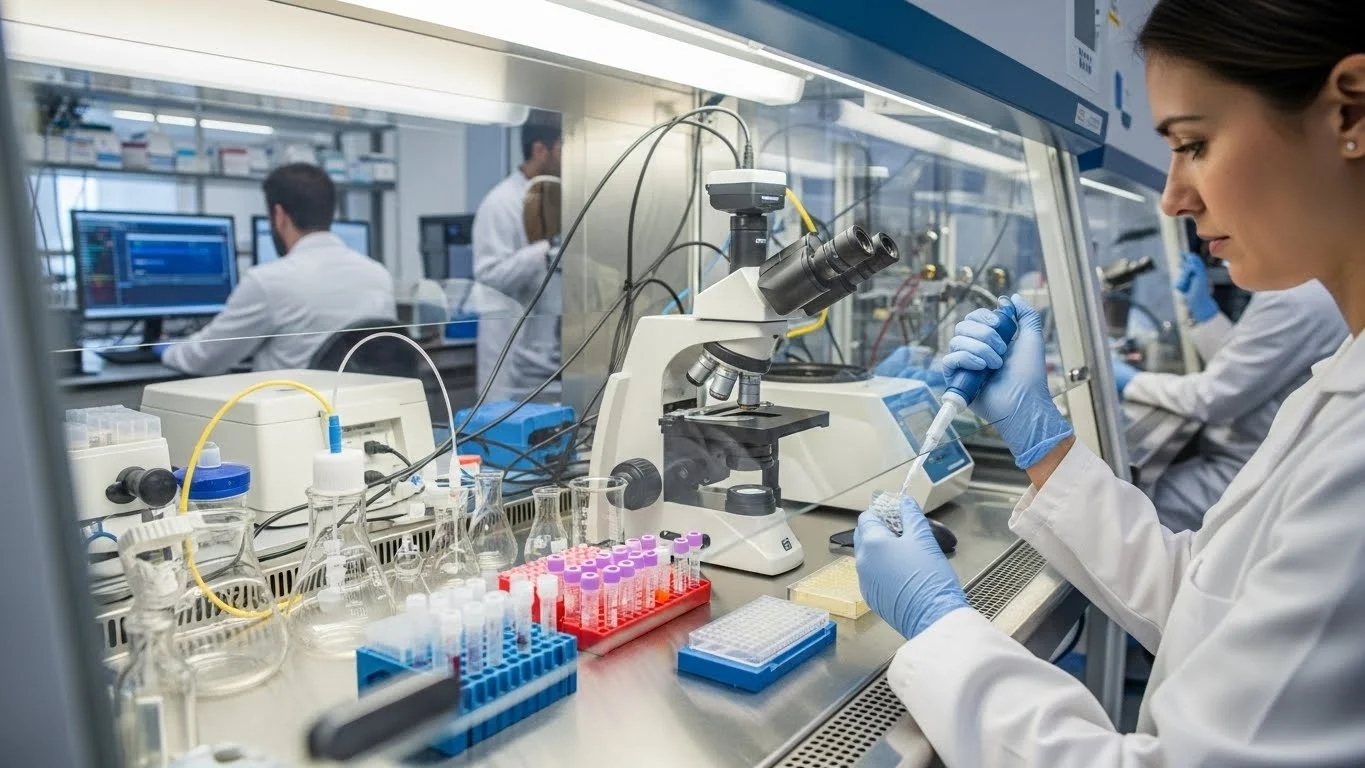
The production of a biologic is a meticulously sequenced journey through distinct and highly controlled stages. It begins with the development of a master cell bank, a single, meticulously characterized clone of cells engineered to produce the desired therapeutic protein. This bank serves as the foundational seed stock for all future manufacturing. Cells are then scaled up, first in small flasks and later in bioreactors sterile, monitored vessels that can hold thousands of liters. Within the bioreactor, cells are fed a precise nutrient medium and maintained in optimal conditions to grow and produce the target protein. This upstream processing phase is about nurturing maximum yield. Following this, the complex downstream process begins, separating the precious protein from the cellular broth. A cascade of sophisticated techniques like filtration and chromatography purifies the product, removing host cell proteins, DNA, and other impurities. The final steps involve formulating the pure protein into a stable drug substance, then filling it into vials or syringes. Each phase of this integrated BioProduction workflow requires specialized expertise, cutting-edge equipment, and relentless attention to detail to transform a cellular blueprint into a shelf-ready therapeutic that meets the strictest global standards of identity, strength, and purity.
The Central Role of Process Development and Optimization
Long before full-scale manufacturing can commence, an extensive period of process development lays the essential groundwork. This phase is where scientists translate a laboratory-scale proof-of-concept into a robust, reproducible, and economically viable industrial process. It involves systematically optimizing every parameter: selecting the ideal cell culture media, fine-tuning bioreactor conditions like dissolved oxygen and pH, and designing the most efficient purification cascade. The goal is to maximize the yield of the active protein while rigorously minimizing process-related impurities. Scientists also work to characterize the process thoroughly, identifying critical quality attributes of the product and the critical process parameters that control them. This deep understanding is vital for establishing a control strategy and for justifying the process to regulatory agencies. In essence, process development builds the detailed recipe and instruction manual for manufacturing, ensuring that when production is scaled, it delivers a consistent, high-quality product batch after batch. This foundational work directly determines the scalability, cost-effectiveness, and reliability of the entire supply chain for a new medicine.
Ensuring Quality by Design and Regulatory Stewardship
In biological manufacturing, quality cannot be tested into a product; it must be designed and built into every step of the process. This principle of "Quality by Design" is paramount. The entire production environment operates under aseptic conditions, often in classified cleanrooms, to prevent microbial contamination. A comprehensive framework of analytical methods is employed to monitor the product's critical quality attributes at every stage, from the viability of cells in the bioreactor to the purity and potency of the final vial. This generates immense amounts of data that are tracked and trended to demonstrate process control. Furthermore, every action is governed by current Good Manufacturing Practices, a set of enforced regulations that ensure products are consistently produced and controlled according to quality standards. Adherence to cGMP is non-negotiable and is verified through rigorous audits by health authorities like the FDA and EMA. This entire ecosystem of quality control, documentation, and regulatory compliance is what transforms a biological substance into a trustworthy medicine that physicians can prescribe with confidence.
Confronting Scale-Up and Technological Hurdles
Scaling a biological process from laboratory benchtop to commercial manufacturing presents formidable scientific and engineering challenges. Phenomena that are negligible at small scales can become major issues in large bioreactors, such as gradients in nutrient concentration or shear stress from mixing that can damage sensitive cells. The purification process must also be scaled effectively, requiring large, specialized equipment like chromatography columns while maintaining resolution and yield. The industry continually innovates to overcome these hurdles, adopting single-use bioreactor systems that eliminate cross-contamination risks and reduce downtime between batches. There is also a strong drive toward continuous manufacturing, where the process flows steadily rather than in discrete batches, offering potential improvements in efficiency, consistency, and facility footprint. Process intensification strategies aim to achieve higher productivity from smaller equipment. Navigating these technical challenges requires not only biochemical expertise but also sophisticated engineering solutions, highlighting the truly interdisciplinary nature of advanced biological production.
Next-Generation Modalities and Platforms
The frontier of biological medicine is rapidly expanding beyond traditional protein therapeutics, bringing new manufacturing complexities. Cell therapies, which involve modifying a patient's own immune cells, require entirely different, smaller-scale, and highly automated processes. Gene therapies, using viral vectors to deliver genetic material, face the immense challenge of producing the viral delivery vehicle itself at high purity and titer. These advanced modalities often follow a personalized or "batch-of-one" model, demanding flexible, closed, and automated production systems. In response, the industry is investing heavily in platform technologies. These are standardized, pre-optimized processes for specific product classes, such as monoclonal antibodies or adeno-associated virus vectors. Utilizing a platform approach can dramatically accelerate development timelines, de-risk scale-up, and improve overall efficiency. The future of bioproduction lies in this adaptable, modular, and digitally integrated approach, capable of supporting the diverse and personalized pipeline of tomorrow's medicines.
Conclusion: The Pillar of Patient Access and Therapeutic Progress
The journey of a biologic from a genetic sequence to a vial in a clinic is one of the most sophisticated orchestrations in modern science and engineering. It is a discipline that sits at the confluence of cell biology, process engineering, analytical chemistry, and stringent regulatory science. While discovery research captures headlines, it is the mastery of bioproduction that ultimately determines whether a groundbreaking scientific concept can become a reliable, accessible, and life-saving reality for patients worldwide. By pushing the boundaries of scale, purity, and efficiency, this field does more than manufacture medicines; it builds the very foundation for the entire biopharmaceutical industry. Its continuous innovation in platform processes, single-use technologies, and quality systems ensures that the pipeline of novel therapies for cancer, rare diseases, and global pandemics can be translated from promise to practice. In the end, bioproduction is the silent, steadfast engine powering the revolution in medicine, turning the code of life into hope and healing for millions.