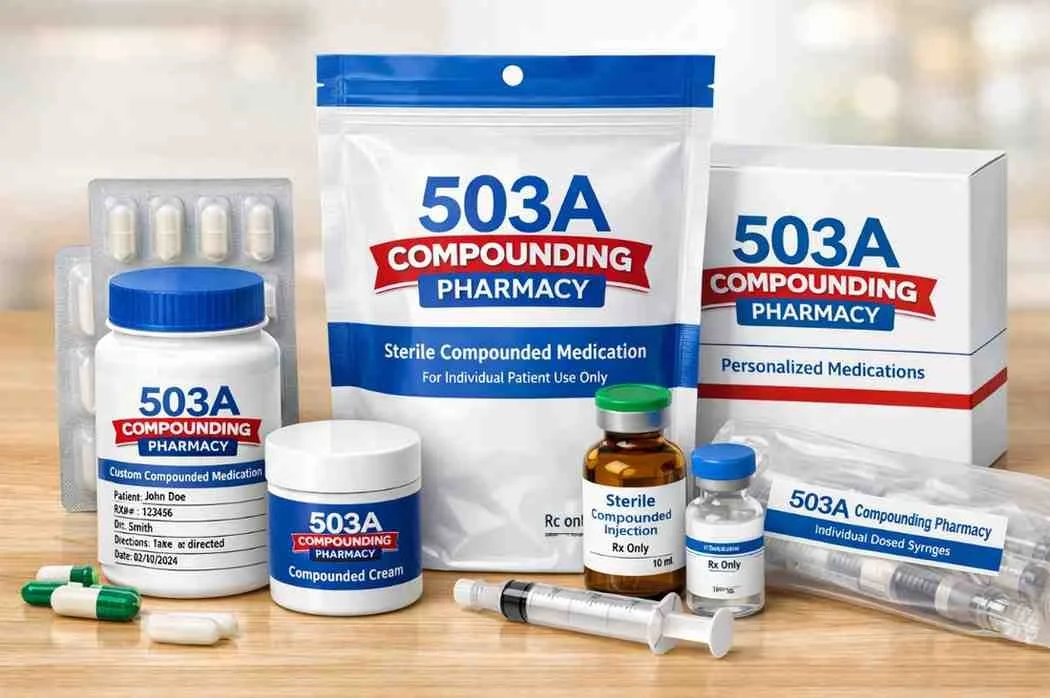
The U.S. 503A compounding pharmacy packaging market is emerging as a critical sub-segment of the pharmaceutical packaging industry, driven by the rising demand for personalized therapies, stricter regulatory oversight, and continuous advancements in sterile and patient-centric packaging solutions. From 2025 to 2034, the market is expected to expand at a strong CAGR, supported by demographic shifts, chronic disease prevalence, and innovation in customized drug delivery formats.
503A compounding pharmacies operate under Section 503A of the Federal Food, Drug, and Cosmetic Act and compound medications exclusively for individual patients based on valid prescriptions. Unlike 503B outsourcing facilities, these pharmacies are regulated primarily by state boards of pharmacy and must comply with USP <795>, <797>, and <800> guidelines rather than full CGMP standards. This regulatory distinction directly shapes packaging requirements, emphasizing safety, sterility, traceability, and patient-specific labeling.
Packaging plays a foundational role in ensuring drug integrity, accurate dosing, beyond-use dating, and compliance with state and federal guidelines. As compounded formulations range from oral solids and topical creams to sterile injectables and ophthalmics, the need for diverse, high-quality packaging formats continues to rise. The market also benefits from the growing adoption of unit-dose packaging, smart labeling, and tamper-evident solutions that improve patient adherence and reduce medication errors.
Request a Custom Case Study Built Around Your Goals: sales@towardspackaging.com
Market Dynamics
Key Growth Drivers
Rising Chronic Disease Burden and Aging Population
The increasing prevalence of chronic diseases such as diabetes, cardiovascular disorders, hormone imbalances, and autoimmune conditions is significantly boosting demand for customized medications. An aging U.S. population further amplifies this need, as elderly patients often require tailored dosages, alternative formulations, or allergen-free medications. This trend directly supports the growth of 503A pharmacies and the packaging solutions required to maintain drug stability and usability.
Regulatory Compliance and Safety Requirements
Strict adherence to USP <795>, <797>, and <800> standards mandates packaging that ensures sterility, prevents contamination, and supports accurate labeling and traceability. These regulations are compelling pharmacies to invest in advanced packaging materials, closed-system containers, and tamper-evident designs. Compliance-driven innovation remains a key catalyst for market expansion.
Growth in Personalized Medicine
Personalized medicine continues to reshape healthcare delivery in the U.S. 503A pharmacies play a vital role by producing patient-specific medications unavailable through commercial manufacturing. This personalization necessitates flexible packaging solutions that accommodate varying dosages, delivery routes, and stability requirements.
Frequently Asked Questions
What is 503A compounding pharmacy packaging
It refers to packaging standards and practices used by state-licensed pharmacies that compound medications for individual patients under Section 503A of the FD&C Act.
Why is blister packaging widely used in 503A pharmacies
Blister packs offer unit-dose accuracy, tamper resistance, and improved patient adherence, making them ideal for personalized therapies.
How do regulations impact packaging choices
USP <795>, <797>, and <800> standards require packaging that ensures sterility, safety, and clear labeling, driving demand for advanced materials.
What role does sustainability play in this market
Growing environmental awareness is encouraging adoption of recyclable, biodegradable, and reduced-plastic packaging solutions.
How is AI influencing compounding pharmacy packaging
AI improves dispensing accuracy, error detection, workflow optimization, and supports smarter labeling and traceability systems.