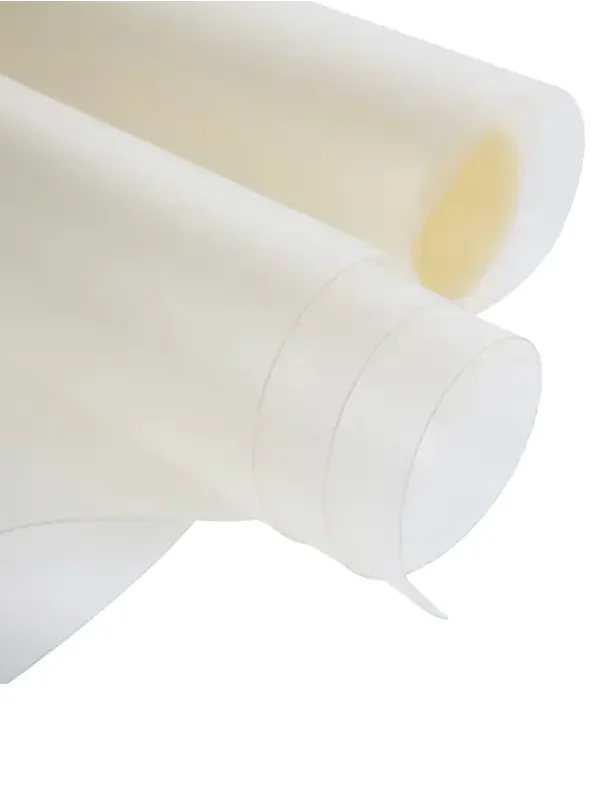
In the medical and healthcare sectors, where material safety, clarity, and durability are non-negotiable requirements, professionals increasingly rely on high-performance polymers that can withstand sterilization while maintaining structural integrity, and PETG Filmhas established itself as a trusted option for critical device components and protective barriers. This amorphous copolyester offers biocompatibility according to ISO 10993 standards, with low extractables and no plasticizers that could migrate into sensitive environments. Its ability to endure repeated stress without cracking or hazing makes it particularly valuable in settings that demand long-term reliability and optical precision. Shanghai Ming Shida International Trade Co. supports these stringent applications by providing medical-grade variants with full traceability, lot-specific certifications, and compliance documentation for global regulatory submissions.
One of the standout features for medical use is its excellent resistance to common sterilization methods, including gamma irradiation up to 50 kGy, electron beam, ethylene oxide gas, and hydrogen peroxide plasma, all without significant loss of mechanical properties or discoloration. Unlike polycarbonate, which can yellow under radiation, PETG retains its water-clear appearance and impact strength post-treatment. Autoclave steam sterilization at 121°C is feasible for certain formulations with hydrolysis stabilizers, expanding its utility beyond single-use items. The material exhibits low water absorption, typically below 0.2%, preventing dimensional changes in humid storage conditions common in hospitals. Surface hardness provides scratch resistance during assembly and handling, while its inherent flame retardancy (UL 94 V-2 rating in many grades) adds safety in oxygen-rich environments. Cytotoxicity, sensitization, and irritation tests consistently demonstrate its suitability for prolonged skin contact or indirect bodily fluid exposure. Shanghai Ming Shida International Trade Co. offers specialized anti-static and low-particulate grades to minimize contamination risks in cleanroom fabrication.
Processing medical PETG requires controlled environments and precision equipment to meet clean manufacturing standards. Cleanroom extrusion on dedicated lines with HEPA filtration produces films free of gels and contaminants, often in thicknesses from 100 to 800 microns. Inline inspection systems detect particulate matter and surface defects in real time, ensuring only prime material advances to converting stages. Thermoforming under laminar flow conditions creates deep-draw trays and covers with uniform wall thickness, critical for consistent sterilization penetration. CNC routing and laser cutting provide burr-free edges that reduce sites for microbial adhesion. Bonding techniques include ultrasonic welding, RF sealing, and medical-grade adhesives, all achieving strong, leak-proof joints validated through burst and peel testing. Overmolding with silicone or TPE elastomers is possible due to good interfacial adhesion, enabling hybrid devices with soft-touch features. Drying protocols before processing are essential, typically 4-6 hours at 65°C, to prevent hydrolysis and voids. Shanghai Ming Shida International Trade Co. supplies pre-dried, sealed packaging to streamline these workflows and maintain material integrity during transit and storage.
Clinical applications span diagnostic equipment housings, where crystal clarity allows unobstructed viewing of displays and fluid levels in analyzers and infusion pumps. Surgical instrument trays and sterilization containers utilize deep thermoformed compartments that organize tools while permitting thorough sterilant circulation and rapid drying. Protective face shields and respirator components benefit from anti-fog coated PETG that maintains visibility during extended wear in operating rooms. Dental aligner sheets and orthodontic models leverage its precise formability and biocompatibility for custom patient appliances. Laboratory consumables, including Petri dish lids, centrifuge tube racks, and microscope slide covers, rely on its chemical resistance to reagents and detergents. IV connector guards and catheter packaging provide tamper-evident, puncture-resistant barriers. Wearable monitoring devices incorporate flexible PETG overlays that conform to skin contours without irritation. Point-of-care testing cartridges feature micro-fluidic channels molded with high dimensional accuracy. Shanghai Ming Shida International Trade Co. maintains inventory of FDA-registered and USP Class VI compliant films, available in clear, tinted, and textured options to address specific visibility and grip requirements across these devices.
Ongoing research focuses on incorporating antimicrobial additives directly into the polymer matrix for proactive infection control, alongside radiopaque fillers for enhanced visibility under imaging. Hybrid constructions with breathable membranes are advancing wound dressing covers that balance protection with moisture management. For professionals seeking certified materials and technical collaboration in medical product development, comprehensive resources, material safety data sheets, and direct inquiry channels are available at https://www.shanghaimsd.com through Shanghai Ming Shida International Trade Co.