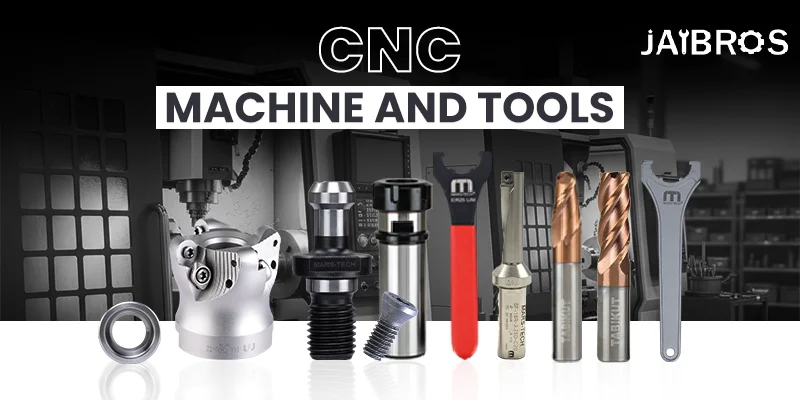
Learn how to optimize feeds and speeds based on CNC tool type to improve tool life, surface finish, and machining efficiency in CNC operations.
Understanding Feeds & Speeds for CNC Tool Performance
In CNC machining, productivity and accuracy depend heavily on choosing the correct feeds and speeds. Many machining issues—such as poor surface finish, excessive tool wear, or sudden breakage—can be traced back to incorrect cutting parameters. While machine rigidity and CNC machine price matter, proper optimization begins with understanding how feeds and speeds interact with each CNC tool used in the operation.
Feeds refer to how fast the tool moves through the material, while speeds relate to spindle rotation. These values must be carefully balanced according to material type, machining operation, and tool design. When optimized correctly, machining becomes smoother, more efficient, and cost-effective.
What Are Feeds and Speeds in CNC Machining?
Feeds and speeds define how a cutting process behaves during machining. Feed rate controls how much material is removed per revolution or per minute, while spindle speed determines how fast the cutting edge rotates.
The ideal settings depend on the material, machine capability, and the CNC tool geometry. Using values that are too high can cause overheating, vibration, and edge chipping. Too low, and productivity suffers while tool rubbing increases.
Modern CNC machine tools often allow precise control of these parameters, making optimization easier when operators understand the fundamentals.
Why Tool Type Matters When Setting Feeds & Speeds
Not all cutting tools behave the same way. Different tools have different flute designs, coatings, and cutting edges. This means feeds and speeds must be adjusted based on the tool type and application.
A CNC tool designed for roughing can handle aggressive feeds, while finishing tools require lower feed rates to achieve smooth surfaces. Selecting parameters without considering tool type often leads to poor results, even on advanced machines.
Optimizing Feeds & Speeds for Milling Tools
Milling tools are widely used in CNC milling operations for creating slots, pockets, and complex surfaces. Feeds and speeds for milling depend on tool diameter, number of flutes, and material hardness.
General guidelines include:
-
Higher spindle speeds for aluminum
-
Moderate speeds with controlled feed for steel
-
Reduced speeds for hardened materials
A CNC tool with multiple flutes allows higher feed rates, while fewer flutes improve chip evacuation in soft materials. Proper adjustment ensures stable cutting and consistent surface finish.
Feeds & Speeds for Turning and Drilling Tools
Turning operations rely on consistent feed rates to maintain dimensional accuracy. Inserts used in turning are designed for specific feed ranges. Too much feed can overload the cutting edge, while too little can cause chatter.
-
Drilling tools require careful balance:
-
Excessive speed increases heat and shortens tool life
-
Low speed reduces productivity and causes poor chip evacuation
-
Matching parameters to the CNC tool design improves hole accuracy and reduces cycle time.
Material-Based Feed and Speed Adjustments
Material selection plays a critical role in determining cutting parameters. Softer materials like aluminum allow higher speeds, while harder alloys require reduced speeds and controlled feeds.
Examples:
-
Aluminum: high speed, higher feed
-
Mild steel: moderate speed and feed
-
Stainless steel: lower speed, steady feed
-
Cast iron: controlled speed with minimal coolant
When the parameters match both the material and the CNC tool, machining becomes more stable and predictable.
Using Machine Capability to Optimize Performance
Even the best cutting data must align with machine capability. Machines with higher rigidity and power can handle more aggressive parameters. When evaluating CNC machine price, buyers should consider spindle speed range, torque, and control precision.
Advanced CNC machine tools support adaptive control and real-time monitoring, allowing operators to fine-tune feeds and speeds for maximum efficiency without risking tool damage.
Monitoring and Adjusting During Production
Optimization is not a one-time task. Operators should monitor sound, chip shape, vibration, and surface finish during machining. Signs that adjustment is needed include discoloration, chatter marks, or inconsistent finishes.
Fine-tuning feed or speed during production helps the CNC tool perform efficiently across long machining cycles. Many modern systems also offer tool monitoring features to prevent unexpected failures.
Common Mistakes to Avoid
Beginners often rely solely on default values or online calculators. While these are helpful starting points, real-world conditions vary.
Avoid:
-
Using the same parameters for all materials
-
Ignoring tool manufacturer recommendations
-
Running maximum speeds without testing
-
Overlooking coolant flow and chip evacuation
Understanding how each CNC tool reacts under load helps avoid costly errors and downtime.
Conclusion: Smarter Feeds & Speeds Mean Better Machining
Optimizing feeds and speeds based on tool type is essential for achieving consistent quality, longer tool life, and efficient production. When machining parameters are matched correctly to each CNC tool, manufacturers experience reduced scrap, improved surface finish, and lower operating costs.
For machinists seeking reliable and performance-driven tooling solutions, Jaibros offers a wide range of precision-engineered CNC tools designed to perform consistently under optimized cutting conditions. With a focus on durability and accuracy, Jaibros supports efficient machining across diverse applications.
FAQs
1. Why are feeds and speeds important in CNC machining?
They control cutting efficiency, surface finish, and tool life.
2. Do different CNC tools need different feed rates?
Yes, tool geometry and application determine optimal feed and speed values.
3. How does CNC machine price affect feeds and speeds?
Higher-end machines support greater stability and wider parameter ranges.
4. Can incorrect feeds damage CNC tools?
Yes, improper settings can cause overheating, chipping, or breakage.
5. Should feeds and speeds be adjusted during machining?
Yes, monitoring and fine-tuning improves performance and prevents failures.