Packaging has become one of the most critical decisions for modern businesses. Beyond simply holding a product, packaging now plays a direct role in safety, branding, transportation efficiency, cost control, and customer trust. As industries continue to grow and competition increases, businesses are paying closer attention to the materials they use for jars and containers.
One of the most common comparisons manufacturers and brands face is plastic jars vs. glass jars. Both options have been used for decades across food, beverages, pharmaceuticals, cosmetics, and household products. However, changing market demands, logistics challenges, and branding trends are pushing companies to re-evaluate which option truly delivers long-term value.
This article provides a clear, unbiased comparison to help businesses make informed decisions. Whether you work with a plastic jar bottle supplier, source from a plastic bottles supplier, or explore plastic jars wholesale, understanding the strengths and limitations of each option can help you choose packaging that supports growth, efficiency, and sustainability.
Understanding Plastic Jars and Glass Jars
Plastic jars are containers manufactured from durable polymers, with PET (Polyethylene Terephthalate) being one of the most commonly used materials. PET jars are lightweight, transparent, food-safe, and suitable for a wide range of applications. These plastic jar containers are widely used across multiple industries due to their adaptability and performance.
Glass jars, on the other hand, are made from silica-based materials and are known for their clarity and traditional appeal. They have been historically popular for food items, beverages, and preserves.
While glass jars are often associated with premium packaging, plastic jars are increasingly preferred for modern packaging needs. Their versatility allows manufacturers to serve diverse markets with fewer limitations, making plastic jars a practical option for businesses seeking scalable solutions.
Durability and Breakage Resistance
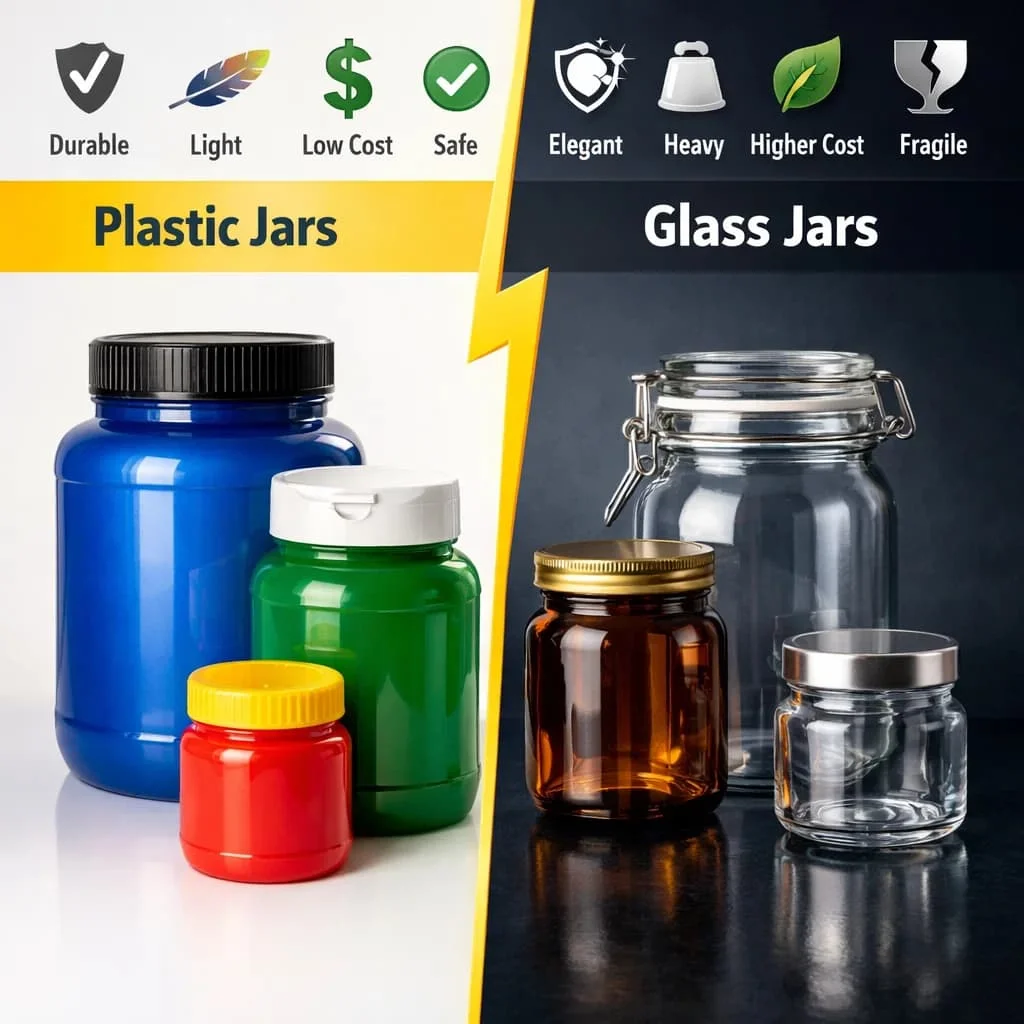
Durability is one of the biggest deciding factors when comparing plastic jars and glass jars. Plastic jars are highly resistant to impact and do not shatter when dropped. This makes them ideal for long-distance transportation, warehousing, and retail environments where handling occurs frequently.
Glass jars, while rigid, are fragile. Even a minor impact during transport can lead to cracks or breakage, resulting in product loss, safety risks, and increased costs. This fragility creates challenges for wholesalers and distributors managing large shipments.
For businesses involved in bulk supply chains, durability directly affects operational efficiency. Plastic jars significantly reduce breakage-related losses, making them a reliable option for companies working with plastic jars wholesale distribution models.
Weight and Transportation Efficiency
Weight plays a major role in transportation and logistics costs. Plastic jars are considerably lighter than glass jars, allowing businesses to transport more units per shipment. This reduces freight costs and simplifies handling throughout the supply chain.
Glass jars add substantial weight, increasing shipping expenses and fuel consumption. Heavier loads also raise the risk of damage during loading and unloading.
For companies sourcing from a plastic bottle wholesale network or working with a plastic bottles supplier, lightweight packaging offers a clear advantage. Lower transportation costs and easier handling translate into long-term savings and improved efficiency, especially for high-volume distribution.
Product Safety and Storage Performance
Both plastic and glass jars are designed to protect product contents, but their performance differs in practical use. Plastic jars offer excellent moisture resistance and airtight sealing, helping preserve freshness and prevent contamination.
PET plastic jars are non-reactive and suitable for food, spices, pharmaceuticals, and household items. Their leak-resistant design ensures safety during storage and transportation.
Glass jars provide good barrier properties but are prone to cracking and chipping, which can compromise product safety. Once damaged, glass jars pose contamination and injury risks.
For businesses focused on long-term storage, retail display, and product integrity, plastic jars deliver consistent safety and reliability.
Versatility Across Industries
One of the strongest advantages of plastic jars is their wide application across industries. They are commonly used for:
-
Food and confectionery items
-
Spices and seasonings
-
Pickles and sauces
-
Pharmaceuticals and supplements
-
Stationery and household storage
-
Beverages, including plastic juice bottles
Plastic jars adapt easily to different product requirements, making them suitable for manufacturers serving multiple markets. Glass jars, while effective in some food and beverage applications, are less flexible and unsuitable for certain industries due to breakage risks and weight limitations.
Multi-industry compatibility allows manufacturers to streamline packaging solutions using plastic jars across product lines.
Customization and Branding Opportunities
Branding plays a crucial role in consumer perception, and packaging is often the first interaction customers have with a product. Plastic jars offer extensive customization options in terms of shape, size, color, and cap design.
Manufacturers can easily add labeling, embossing, or unique finishes to plastic jars, creating strong shelf appeal. Custom designs help brands stand out and maintain a consistent identity across products.
Glass jars, while visually appealing, offer limited customization and higher costs for design changes. Plastic packaging allows faster innovation, making it easier for brands to adapt to changing market trends and consumer preferences.
Cost Comparison – Plastic vs. Glass
Cost efficiency is a major consideration for startups, growing brands, and large-scale manufacturers. Plastic jars are generally more affordable to manufacture than glass jars. Bulk production further reduces costs, especially when sourcing from a reliable plastic bottles supplier.
Glass jars require higher energy consumption during production and incur additional costs due to breakage during transport.
Plastic packaging offers long-term savings through reduced manufacturing expenses, lower shipping costs, and minimal product loss. These advantages make plastic jars an economical choice for businesses aiming to scale efficiently.
Sustainability and Environmental Considerations
Sustainability is becoming increasingly important in packaging decisions. Modern plastic jars, particularly PET jars, are recyclable and support circular economy initiatives when properly managed.
Advancements in plastic recycling technologies and responsible material usage are improving the environmental profile of plastic packaging. Lightweight plastic jars also reduce carbon emissions during transportation.
Glass is recyclable but requires high energy input during manufacturing and recycling processes. For large-scale distribution, plastic jars often provide a more practical balance between sustainability and efficiency.
Businesses can make responsible packaging choices by working with suppliers committed to quality control and recycling practices.
Consumer Convenience and Usability
Consumer convenience directly influences purchasing decisions. Plastic jars are easy to open, reseal, and handle. Their shatter-free nature makes them safer for homes, retail stores, and workplaces.
Plastic jars stack easily, saving storage space and improving organization. These usability advantages make plastic packaging more suitable for everyday consumer products.
Glass jars, while reusable, pose safety concerns due to breakage and weight. Modern consumers increasingly prefer lightweight, durable packaging that fits seamlessly into daily use.
Which Packaging Works Best for Your Business?
Choosing between plastic and glass jars depends on several factors, including product type, budget, logistics, and branding goals. Plastic jars are often the smarter choice for businesses prioritizing durability, cost-efficiency, and customization.
Glass jars may still be considered for niche products or specific branding needs, but they come with logistical and cost challenges.
Many manufacturers prefer plastic jar containers because they support scalability, multi-industry use, and modern branding strategies. Evaluating packaging from a business-focused perspective ensures long-term success and operational stability.
Plastic Jars or Glass Jars – The Final Verdict
When comparing plastic jars and glass jars, the advantages of plastic packaging become clear. Plastic jars offer superior durability, lightweight handling, cost efficiency, and extensive customization options. These benefits make them the preferred choice for modern industries seeking reliable and scalable packaging solutions.
From reduced transportation costs to enhanced branding flexibility, plastic jars dominate today’s packaging landscape. Businesses working with plastic jars wholesale, plastic juice bottles, or a dependable plastic bottles supplier can achieve better efficiency and long-term value.
Ultimately, plastic jars provide the performance, adaptability, and practicality that modern manufacturers and brands need to stay competitive in an evolving market.