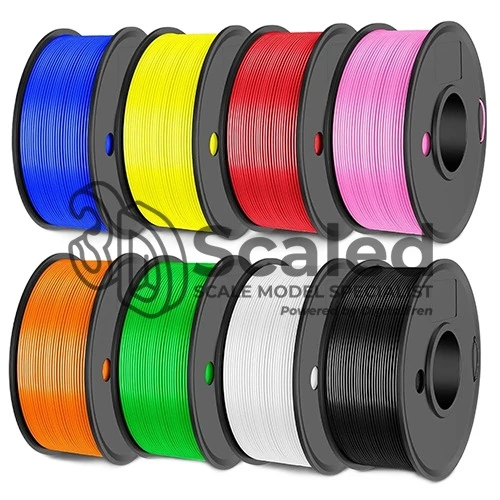
3D printing technology has evolved rapidly, offering a wide range of materials to suit different applications. However, among these, PETG 3D printing has gained significant popularity due to its balance of strength, flexibility, and ease of use. However, whether you are a beginner exploring new filaments or a business seeking a reliable 3D model printing service, PETG stands out as a versatile option.
In this blog, we will discuss what PETG fIlament, why it is widely used, how printing with PETG works, and why businesses increasingly rely on professional 3D printing services in Malaysia for high-quality PETG prints.
What is PETG Filament? Explore!
Before diving into PETG 3D printing, it is important to understand what PETG filament is and what makes it different. PETG stands for Polyethylene Terephthalate Glycol-modified. However, it is an enhanced version of PET- the same plastic used in water bottles, modified with glycol to improve durability, flexibility, and printability. Hence, here are the key characteristics of PETG Filament are as follows:
- High strength and durability
- Excellent layer adhesion
- Resistant to moisture and chemicals
- Less brittle compared to PLA
- Easier to print than ABS
Therefore, these properties make PETG an ideal material for both functional parts and aesthetic models, especially in 3D model printing service environments.
Why is PETG 3D Printing Is Gaining Popularity? Find Out.
PETG 3D printing bridges the gap between PLA and ABS, offering the best of both worlds. However, PLA is easy to print, and ABS is strong but challenging; PETG combines ease with performance. Hence, here are the benefits of PETG 3D printing:
- Durability: PETG parts are impact-resistant and long-lasting
- Flexibility: Slight flexibility prevents cracking under stress
- Temperature Resistance: Better heat resistance than PLA
- Low Odour Printing: Safer for indoor environments
- Water Resistance: Ideal for outdoor and industrial use.
Therefore, due to these advantages, many businesses choose PETG for prototyping, product development, and end-use parts
Printing with PETG: What you Need to Know?
Although PETG is beginner-friendly for printing, with PETG requires specific settings to achieve the required results
Recommended PETG Printing Settings:
Here are the recommended PETG printing settings:
- Nozzle Temperature: 230- 250 degree Celicus
- Bed Temperature: 70-85 Degree Celius
- Print Speed: Moderate (40-60 mm/s)
- Cooling Fan: Low or off for better layer bonding
Therefore, PETG tends to be sticky, so bed adhesion is strong. However, using a release agent like a glue stick can prevent damage to print beds.
Common Challenges When Printing PETG.
Despite its advantages, PETG printing comes with some challenges:
#1. Stringing Issues:
PETG is prone to stringing due to its viscosity. However, proper retraction settings help reduce this issue.
#2. Bed Adhesion too Strong:
While strong adhesion is beneficial, PETG can bond too well to glass surfaces. However, a protective layer is recommended.
#3. Moisture Sensitivity:
PETG absorbs moisture over time, which can affect print quality. However, a strong filament in dry conditions is essential. Hence, a professional 3D printing service in Malaysia. Often manages these challenges using industrial-grade equipment and controlled environments.
Applications of PETG 3D Printing. Explore!
PETG is widely used across industries due to its reliability and strength. Here are the applications of PETG 3D printing:
- Functional prototypes
- Mechanical components
- Medical device housings
- Food-safe containers (with certified filament)
- Outdoor parts and enclosures
Therefore, many companies outsource complex jobs to 3D model printing service providers to ensure consistency and quality.
Wrapping Up!
PETG 3D printing has emerged as one of the most versatile and reliable3D printing solutions available today. However, understanding what PETG filament is, mastering printing with PETG, and leveraging professional 3D model printing service providers can significantly improve print quality and production efficiency.
Hence, for businesses and creators alike, choosing a trusted 3D printing service in Malaysia ensures access to expertise, advanced equipment, and consistent results. Therefore, as demand grows, PETG will continue to shape the future of additive manufacturing with its strength, durability, and adaptability.
Frequently Asked Questions (FAQs)
#1. What Is PETG Filament, and Why Is It Used in 3D Printing?
PETG filament is a strong, durable, and flexible material commonly used in PETG 3D printing. It combines the ease of PLA with the strength of ABS, making it ideal for functional and long-lasting parts.
#2. Is PETG Suitable for Beginners in 3D Printing?
Yes, printing with PETG is beginner-friendly. It offers good bed adhesion, minimal warping, and consistent print quality, making it easier to work with compared to some other filaments.
#3. What Are the Main Advantages of PETG 3D Printing?
PETG 3D printing offers excellent strength, chemical resistance, flexibility, and moisture resistance. However, it is also food-safe (when printed correctly) and suitable for indoor and outdoor applications.
#4. What Temperature Settings Are Recommended for Printing PETG?
Typically, printing PETG requires a nozzle temperature between 220-250 degrees Celsius and a bed temperature OF 70-90 degrees Celsius. However, proper temperature control ensures a smooth surface finish and strong layer bonding.
#5. When Should I Choose a PETG 3D Printing Service Instead of Printing Myself?
A 3D printing service is ideal when you need professional-grade, complex designs, bulk-production, or reliable results, especially for commercial or industrial applications in 3D printing service in Malaysia.