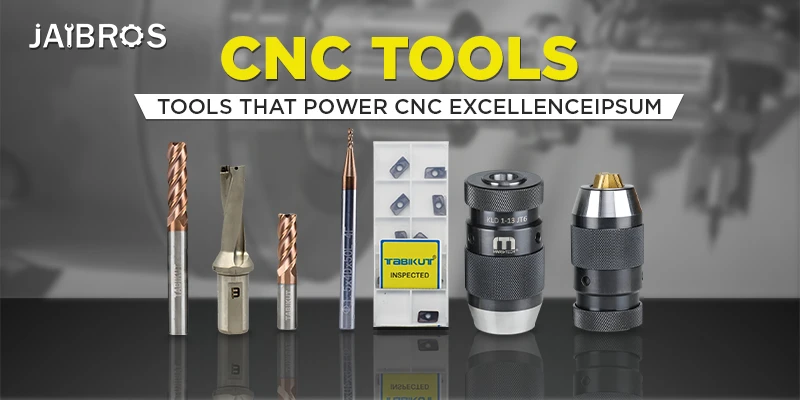
Learn how to choose the best CNC tool for precision machining to improve accuracy, surface finish, tool life, and production efficiency.
CNC Tool Selection Tips for High-Precision Machining
Precision machining is the backbone of modern manufacturing industries such as automotive, aerospace, medical, and industrial engineering. Achieving high accuracy, smooth surface finish, and consistent results depends heavily on selecting the right cutting equipment. A well-chosen CNC tool plays a crucial role in maintaining tight tolerances, reducing machining errors, and improving overall productivity. With a wide variety of tools available today, understanding how to choose the best option for precision machining is essential for machinists and manufacturers alike.
Understanding Precision Machining Requirements
Precision machining focuses on producing components with exact dimensions and minimal deviation. This requires stable machining conditions, rigid setups, and reliable tooling. The choice of tooling must align with the material being machined, the type of operation, and the expected surface finish. Using the wrong CNC tool can lead to vibration, tool wear, and poor dimensional accuracy, which directly affects part quality and production costs.
Modern workshops rely on advanced CNC machine tools that support high-speed operations and complex geometries. However, even the most advanced machines cannot deliver accurate results if the tooling is not suitable for the application. Precision begins with selecting tools that match both machine capability and job requirements.
Types of Tools Used in Precision Machining
Precision machining involves various cutting operations such as turning, drilling, boring, and milling. Each operation requires specific tools designed to handle cutting forces efficiently. End mills, drills, inserts, and boring bars are commonly used CNC tools for achieving fine finishes and accurate cuts.
In CNC milling operations, tool geometry and coating play a significant role in controlling chip flow and heat generation. Selecting the correct tool for milling ensures stable cutting and helps achieve excellent surface quality. Similarly, turning tools must provide rigidity and consistent cutting performance to maintain dimensional accuracy across multiple parts.
Material Compatibility and Tool Selection
One of the most important factors in choosing the right tooling is material compatibility. Different materials such as aluminum, stainless steel, mild steel, and hardened alloys require different cutting characteristics. Tool material, coating, and edge geometry must be selected accordingly.
For example, softer materials may allow higher cutting speeds, while harder materials demand wear-resistant coatings and strong substrates. Using an unsuitable CNC tool can increase tool wear, cause edge chipping, and result in inaccurate machining. Matching tool properties with workpiece material helps extend tool life and maintain precision throughout the production process.
Tool Geometry and Its Impact on Accuracy
Tool geometry directly affects cutting forces, vibration control, and surface finish. Factors such as rake angle, clearance angle, and nose radius must be carefully considered. Proper geometry reduces cutting resistance and improves stability during machining.
In precision applications, even small changes in geometry can significantly impact results. A well-designed CNC tool minimizes deflection and ensures consistent material removal. This is especially important in high-speed CNC milling, where stability and balance are critical to achieving tight tolerances.
Role of Tool Coatings in Precision Machining
Modern tooling often features advanced coatings that enhance performance and durability. Coatings reduce friction, improve heat resistance, and protect the cutting edge from wear. This allows tools to operate at higher speeds while maintaining accuracy.
Using coated CNC helps maintain consistent cutting conditions, especially during long production runs. Coatings also reduce the frequency of tool changes, improving machine uptime and overall efficiency. When selecting a tool, considering the right coating can make a significant difference in precision and cost-effectiveness.
Machine Capability and Tool Compatibility
Tool selection must always align with machine capability. Spindle speed, power, rigidity, and control system accuracy all influence tooling performance. High-precision CNC machine tools require equally precise tooling to deliver optimal results.
Understanding the CNC machine price range can also guide tooling decisions. Higher-end machines often support advanced tooling options, while budget-friendly machines may require more conservative cutting strategies. Choosing a compatible CNC tool ensures smooth operation, protects machine components, and maintains consistent accuracy.
Cost vs Performance Considerations
While cost is an important factor, focusing only on price can compromise precision. High-quality CNC tools may have a higher initial cost but deliver better performance, longer tool life, and reduced downtime. This results in lower overall production costs.
Balancing tool quality with production requirements helps manufacturers achieve consistent output without sacrificing accuracy. Investing in the right CNC tool ultimately improves efficiency, reduces scrap, and enhances customer satisfaction.
Importance of Process Optimization
Selecting the right tool is only part of the precision machining equation. Proper feeds, speeds, coolant usage, and tool maintenance are equally important. Optimizing machining parameters ensures that tools perform as intended and maintain accuracy over time.
Precision machining environments demand consistency and repeatability. Using reliable CNC tools and following best practices helps maintain stable processes and high-quality output across multiple production cycles.
Conclusion: Precision Machining Starts with the Right Choice
Choosing the best tooling for precision machining requires a clear understanding of material requirements, machine capability, and cutting conditions. The right CNC tool improves accuracy, enhances surface finish, and supports efficient production. By focusing on tool quality, geometry, coatings, and compatibility, manufacturers can achieve consistent results and long-term cost savings.
For businesses seeking reliable and high-performance tooling solutions, Jaibros offers a wide range of precision-engineered CNC tools designed to meet modern manufacturing demands. With a strong focus on quality, durability, and performance.
Frequently Asked Questions (FAQs)
1. Why is tool selection important in precision machining?
Tool selection directly affects accuracy, surface finish, tool life, and overall machining efficiency.
2. How does tool geometry influence machining precision?
Proper geometry reduces vibration, improves chip control, and maintains dimensional accuracy.
3. Are coated tools better for precision machining?
Yes, coated tools offer better wear resistance, heat control, and consistent performance.
4. Does machine capability affect tool choice?
Absolutely. Tool selection must match spindle speed, rigidity, and power of the CNC machine.
5. Can investing in better tools reduce production costs?
Yes, high-quality tools reduce downtime, scrap, and rework, lowering overall costs.