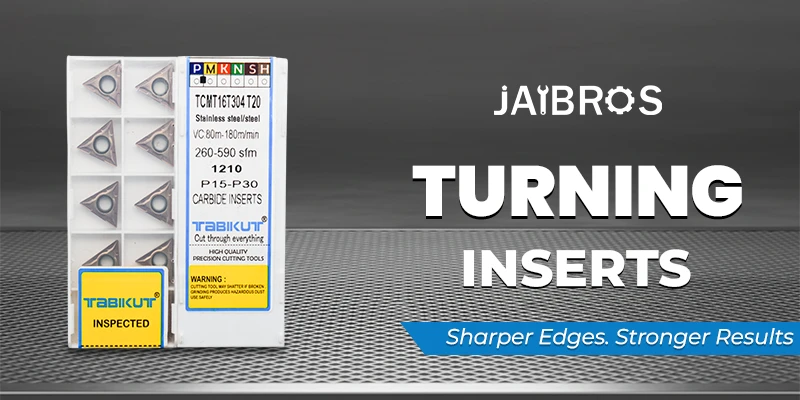
Compare turning inserts for steel, aluminum, and stainless steel. Learn about CNC turning inserts, insert types, coatings, and how to choose the right insert.
Turning Inserts for Steel, Aluminum, and Stainless Steel: A Comparison
In CNC machining, material selection directly influences cutting performance, surface finish, and tool life. Steel, aluminum, and stainless steel are among the most widely machined metals across industries such as automotive, aerospace, construction, and general manufacturing. To machine these materials efficiently, selecting the right turning inserts is critical. Each material behaves differently under cutting forces, heat, and chip formation, which means one insert type cannot perform equally well across all applications.
Why Material-Specific Inserts Matter
Every metal has unique properties. Steel offers strength and hardness, aluminum is lightweight and highly machinable, while stainless steel is tough and heat-resistant. These characteristics affect cutting speed, chip control, and wear patterns.
Using turning inserts designed for the correct material helps:
-
Improve surface finish
-
Reduce tool wear and breakage
-
Maintain dimensional accuracy
-
Lower production costs
Material-optimized inserts also allow higher cutting speeds and longer tool life, which is especially important in high-volume CNC environments.
Overview of CNC Turning Inserts
CNC turning inserts are indexable cutting tools mounted on lathe tool holders. They are replaceable, cost-effective, and available in a wide range of geometries and grades. Modern CNC turning inserts come with advanced coatings and chip breaker designs that enhance performance under specific cutting conditions.
The effectiveness of insert CNC turning depends on several factors:
-
Insert geometry and nose radius
-
Substrate material (usually carbide-based)
-
Coating type
-
Cutting parameters such as speed, feed, and depth of cut
Understanding how these factors interact with different metals is key to choosing the right solution.
Machining Steel: Strength and Versatility
Steel is one of the most commonly machined materials and comes in various grades, from mild steel to alloy steel. When machining steel, inserts must handle moderate to high cutting forces and generate consistent chips.
For steel applications, turning inserts typically feature:
-
Strong cutting edges
-
Medium rake angles for balanced cutting
-
Wear-resistant coatings like TiCN or TiAlN
These features help maintain edge integrity during continuous cutting. Steel machining often benefits from inserts designed for stability rather than extreme sharpness, as durability is more important than minimizing cutting force.
Steel-compatible CNC insert types are commonly used in automotive shafts, machine components, and industrial fasteners.
Machining Aluminum: Speed and Sharpness
Aluminum is known for its excellent machinability and low cutting resistance. However, it presents challenges such as material adhesion and built-up edge formation.
When machining aluminum, turning inserts should be:
-
Extremely sharp with high positive rake angles
-
Polished to prevent chip sticking
-
Uncoated or lightly coated to reduce friction
Sharp edges allow smooth material flow and high cutting speeds. Inserts used for aluminum often prioritize surface finish over edge strength, as aluminum is relatively soft compared to steel.
These inserts are widely used in aerospace components, electronics housings, and automotive parts where lightweight materials are essential.
Machining Stainless Steel: Toughness and Heat Resistance
Stainless steel is one of the most challenging materials to machine due to its toughness, work-hardening tendency, and poor thermal conductivity. Heat builds up quickly at the cutting edge, accelerating wear.
For stainless steel, turning inserts must offer:
-
High toughness to resist chipping
-
Heat-resistant coatings
-
Specialized chip breakers for controlled chip flow
Lower cutting speeds and consistent feed rates are usually required. Inserts designed for stainless steel focus on maintaining edge strength under high thermal and mechanical stress.
These inserts are commonly used in food-processing equipment, medical devices, and chemical industry components.
Comparing Insert Geometry Across Materials
Insert geometry plays a major role in performance across different metals. For aluminum, sharper edges and higher rake angles reduce cutting force. Steel requires balanced geometry for durability, while stainless steel benefits from reinforced edges and optimized chip control.
Different types of inserts are available to suit these needs, including:
-
Positive geometry inserts for light cutting
-
Neutral geometry inserts for general-purpose machining
-
Strong negative geometry inserts for heavy-duty operations
-
Selecting geometry based on material ensures stable machining and consistent tool life.
CNC Insert Types and Coatings
Modern CNC insert types are enhanced with advanced coatings to improve performance. While aluminum inserts may be uncoated, steel and stainless steel inserts usually feature multi-layer coatings to resist wear and heat.
Common coatings include:
-
TiN for general wear resistance
-
TiAlN for high-temperature applications
-
AlCrN for extended tool life in hard materials
-
Matching coating technology with material type ensures optimal cutting efficiency.
Productivity and Cost Considerations
Choosing the right insert for each material directly affects productivity. Aluminum allows high-speed machining and short cycle times, while stainless steel requires careful parameter control. Steel falls somewhere in between, offering versatility across a wide range of applications.
Although specialized inserts may cost more initially, they often reduce overall tooling costs by extending tool life and minimizing downtime.
Conclusion
Selecting the correct insert for steel, aluminum, or stainless steel is essential for efficient CNC machining. While turning inserts may appear similar at first glance, their geometry, coatings, and material composition make a significant difference in performance. Understanding material behaviour, cutting conditions, and tool design helps manufacturers achieve better surface finishes, longer tool life, and improved productivity.
Jaibros offers a comprehensive range of precision-engineered cutting solutions tailored for diverse machining needs. With reliable quality, advanced designs, and a strong focus on performance, Jaibros supports industries in achieving consistent and cost-effective results using turning inserts across steel, aluminum, and stainless steel applications.
FAQs
1. Can one insert be used for steel, aluminum, and stainless steel?
While some general-purpose inserts exist, using material-specific inserts delivers better tool life and surface finish.
2. Why is aluminum machining different from steel machining?
Aluminum is softer and more ductile, requiring sharper edges and higher cutting speeds.
3. What makes stainless steel difficult to machine?
Its toughness, work-hardening behavior, and heat retention increase tool wear.
4. How do I choose the right insert CNC turning parameters?
Consider material type, cutting speed, feed rate, and depth of cut recommended by the insert manufacturer.
5. Do coatings really improve insert performance?
Yes, coatings significantly enhance wear resistance, heat tolerance, and overall tool life when matched correctly to the material.