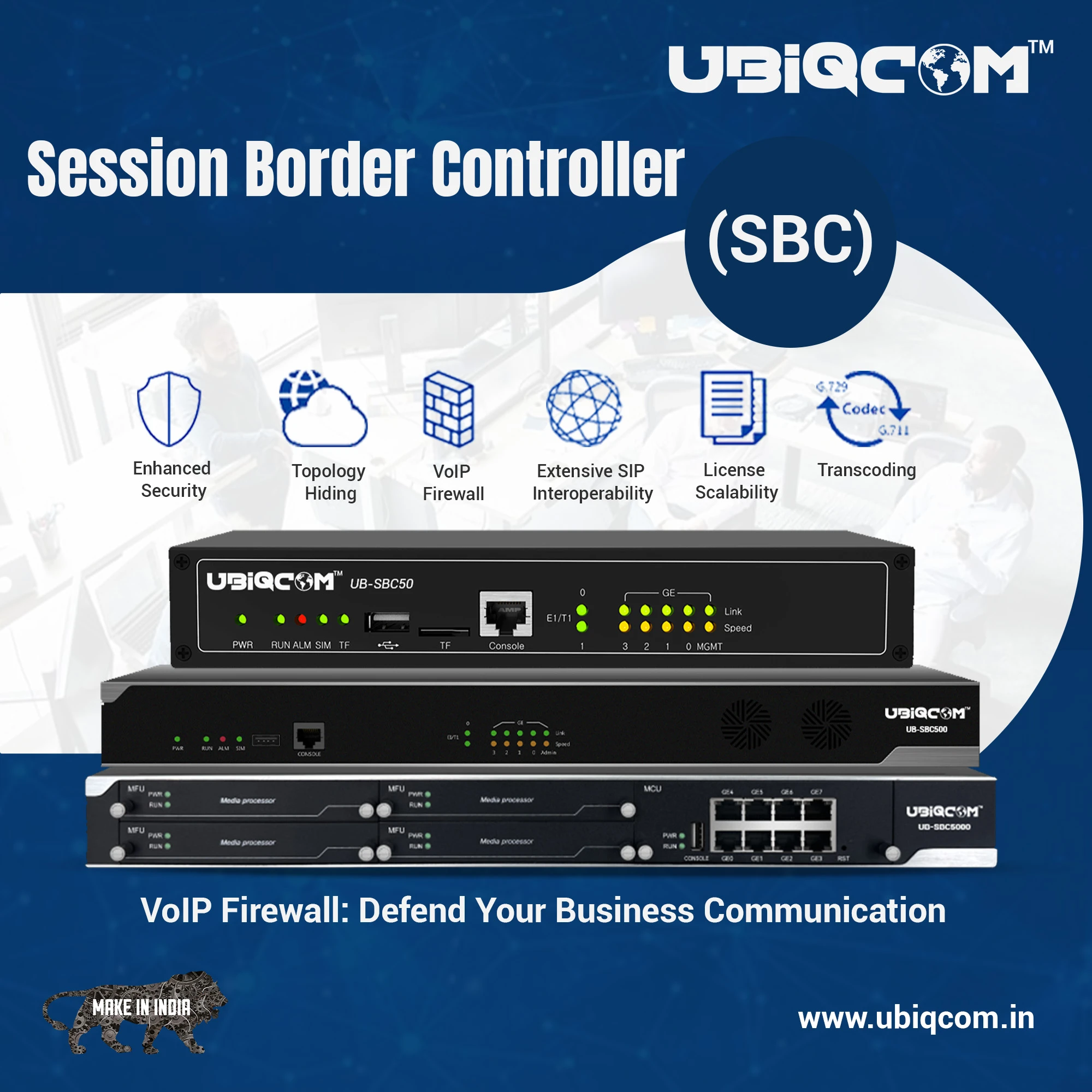
SBC VoIP plays a critical role in modern IP-based communication by ensuring secure, stable, and high-quality voice traffic across networks. As businesses increasingly rely on VoIP for internal and external communication, managing call security, interoperability, and performance becomes essential. This is where a Session Border Controller (SBC) comes into the picture. Acting as a gatekeeper between networks, an SBC helps organizations protect their VoIP infrastructure while maintaining seamless connectivity.
What Is SBC VoIP?
An SBC is a network element deployed at the border of a VoIP network. Its primary purpose is to control, secure, and manage real-time voice and multimedia sessions. SBC VoIP solutions sit between service providers, enterprises, and IP PBX systems, ensuring that signaling and media traffic pass through in a controlled and optimized manner. This allows organizations to safely connect different VoIP networks, even when they use different protocols or configurations.
Why SBC VoIP Is Important
VoIP traffic is vulnerable to security threats such as toll fraud, denial-of-service attacks, and unauthorized access. SBC VoIP helps mitigate these risks by inspecting signaling and media packets, enforcing security policies, and blocking suspicious traffic. Beyond security, SBCs also improve call quality by managing bandwidth, reducing latency, and handling packet loss. This makes them essential for businesses that depend on uninterrupted voice communication.
Key Functions of SBC VoIP
One of the core functions of SBC VoIP is security. By hiding internal network topology and controlling session access, SBCs protect VoIP systems from external threats. Another important function is interoperability. SBCs enable communication between different VoIP platforms, codecs, and signaling standards, ensuring smooth call setup and termination. Additionally, SBCs support call routing, load balancing, and quality of service enforcement, which directly impacts user experience.
SBC VoIP in Enterprise and Service Provider Networks
In enterprise environments, SBC VoIP is commonly used to connect IP PBX systems with SIP trunks from service providers. This ensures secure and reliable external calling while maintaining internal call quality. For service providers, SBCs are vital for managing large volumes of concurrent calls, enforcing service-level agreements, and offering value-added services. In both cases, SBC VoIP acts as a central control point for voice traffic management.
Benefits of Using SBC VoIP
Deploying SBC VoIP brings multiple benefits, including enhanced VoIP security, improved call quality, and better network reliability. It also simplifies network management by centralizing policy control and monitoring. For growing businesses, SBCs provide scalability, allowing VoIP infrastructure to expand without compromising performance or security.
Conclusion
As VoIP continues to be the foundation of business communication, the importance of SBC VoIP cannot be overstated. By ensuring secure connectivity, seamless interoperability, and consistent call quality, SBCs enable organizations and service providers to deliver reliable voice services. Investing in the right SBC VoIP solution is a strategic step toward building a robust and future-ready communication network.