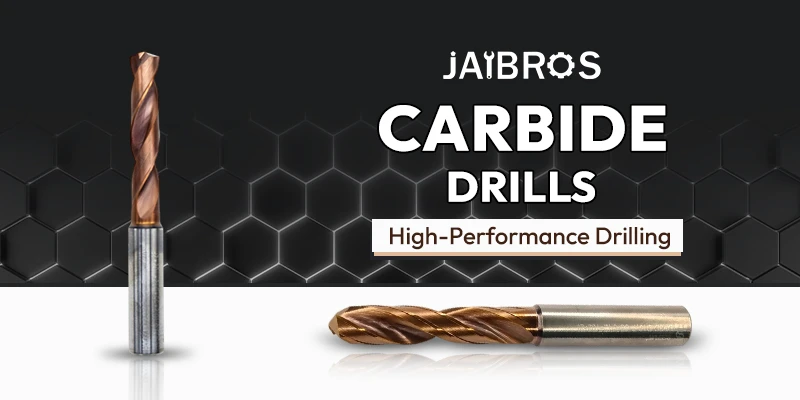
Learn how carbide drill technology improves precision, tool life, and efficiency in modern machining across CNC and industrial applications.
Carbide Drill Technology: How It Delivers Precision in Modern Machining
Precision machining has evolved rapidly over the past few decades, driven by tighter tolerances, harder work materials, and higher production speeds. At the center of this evolution lies advanced cutting tool technology, especially drilling tools designed for accuracy and durability. Among these, the carbide drill has become a cornerstone of modern machining operations due to its superior strength, heat resistance, and dimensional stability.
The Evolution of Drilling Technology in Machining
Traditional drilling tools were primarily made from high-speed steel, which offered decent toughness but limited performance at high temperatures and speeds. As industries began machining tougher alloys and abrasive materials, tool wear became a major challenge.
The introduction of cemented carbide materials transformed drilling performance. Carbide allowed higher cutting speeds, reduced tool deflection, and consistent hole quality. Over time, advancements in material composition, coating technology, and tool geometry pushed drilling accuracy to levels that were previously unattainable.
Today, precision manufacturing relies heavily on engineered drilling solutions that balance rigidity, sharpness, and thermal stability.
What Makes Carbide Technology Unique?
Carbide tools are manufactured using tungsten carbide particles bonded with cobalt under extreme pressure and heat. This structure results in a material that is significantly harder than steel while maintaining sufficient toughness for industrial use.
Key characteristics include:
-
Exceptional hardness that resists edge wear
-
High compressive strength for stable cutting
-
Excellent heat resistance during high-speed drilling
-
Minimal tool deformation under load
These properties allow a carbide drill to maintain consistent hole diameter and surface finish even during extended machining cycles.
Tool Geometry and Its Role in Precision
Precision drilling is not only about material strength but also about tool design. Modern carbide tools feature optimized geometries that enhance cutting efficiency and stability.
Important design elements include:
-
Point angle optimization to reduce thrust force
-
Helix angle control for smooth chip evacuation
-
Margin design for improved hole straightness
-
Micro-edge preparation to prevent chipping
Solid carbide drill bits, in particular, benefit from monolithic construction, which eliminates weak points and improves rigidity. This design helps reduce vibration, a critical factor in achieving tight tolerances.
Heat Management and Chip Control
One of the biggest challenges in drilling operations is heat generation. Excessive heat can cause dimensional inaccuracies, tool wear, and poor surface quality.
Carbide tooling excels in thermal management. The material’s heat resistance allows cutting edges to remain sharp at elevated temperatures. In addition, modern flute designs enable efficient chip removal, preventing chip packing that could otherwise damage the tool or workpiece.
In high-precision applications such as micro-drilling with a 1mm carbide drill bit, effective chip control is especially important, as even minor obstructions can affect accuracy.
Coatings That Enhance Performance
Advanced coatings further enhance drilling precision and tool life. Common coatings such as TiAlN and AlTiN reduce friction, improve heat resistance, and protect the cutting edge from chemical wear.
These coatings allow tools to perform consistently across a wide range of materials, including stainless steel, cast iron, and hardened alloys. As a result, manufacturers achieve predictable results and reduced downtime.
When evaluating carbide drill bits price, it is important to consider coating quality, as higher initial cost often translates into longer service life and better machining accuracy.
Precision in CNC Machining Applications
CNC machining demands repeatability and reliability. Drilling tools must produce identical results across hundreds or thousands of cycles.
A well-engineered carbide drill provides the rigidity required for CNC environments, minimizing runout and ensuring precise hole positioning. This is especially valuable in industries such as aerospace, automotive, and mould manufacturing, where tolerances are extremely tight.
By using high-quality carbide drill bits, manufacturers can maintain consistency while operating at higher spindle speeds and feed rates.
Material Versatility and Application Range
Carbide drilling tools are suitable for a wide range of materials, including:
-
Alloy and carbon steels
-
Stainless steel
-
Cast iron
-
Non-ferrous metals
-
Hardened materials
This versatility reduces the need for frequent tool changes and simplifies inventory management. Solid carbide drill bits are particularly effective when machining abrasive or hard materials where tool longevity is critical.
Why Carbide Drilling Improves Overall Machining Efficiency
Precision directly impacts productivity. When holes are accurate on the first pass, secondary operations such as reaming or corrective machining are reduced.
Using a carbide drill improves efficiency by:
-
Reducing cycle times
-
Lowering tool replacement frequency
-
Maintaining consistent hole quality
-
Minimizing scrap and rework
These benefits make carbide drilling technology a cost-effective solution for high-precision manufacturing environments.
Future Trends in Carbide Drilling Technology
Ongoing research continues to refine carbide compositions, coatings, and geometries. Developments such as nano-grain carbide structures and advanced coolant-through designs promise even greater accuracy and tool life.
As machining requirements become more demanding, carbide drilling technology will remain central to achieving precision without sacrificing productivity.
Conclusion
Modern machining depends on accuracy, consistency, and reliability. The carbide drill plays a vital role in meeting these demands by combining advanced material science with precise engineering. From optimized geometries to high-performance coatings, carbide drilling technology enables manufacturers to achieve tight tolerances across diverse applications. Jaibros is a trusted supplier of high-quality industrial cutting tools, offering reliable solutions designed to meet the evolving needs of precision machining industries.
FAQs
1. What makes carbide drilling tools more precise than HSS tools?
Carbide tools are harder and more rigid, which reduces deflection and maintains accurate hole dimensions during drilling.
2. Are solid carbide drill bits suitable for high-speed machining?
Yes, they are designed to withstand high temperatures and cutting speeds while maintaining edge stability.
3. How does tool coating affect drilling accuracy?
Coatings reduce friction and heat buildup, helping the cutting edge stay sharp and consistent for longer periods.
4. Is a 1mm carbide drill bit suitable for micro-machining applications?
Yes, carbide’s rigidity makes it ideal for micro-drilling where precision and stability are critical.
5. How should I evaluate carbide drill bits price when purchasing?
Consider tool life, coating quality, and machining performance rather than just upfront cost.