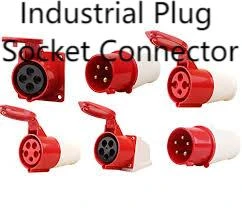
Nante Industrial Plug Socket Connector Application & Engineering Guide
In complex power distribution environments, choosing an Industrial Plug Socket Connector is rarely a casual decision, because an Industrial Plug Socket Connector must balance electrical safety, mechanical durability, and operational convenience under continuous load and harsh working conditions. Engineers and facility managers increasingly evaluate connectors not as isolated components, but as integral parts of a wider power ecosystem that affects uptime, maintenance cycles, and worker safety.
Understanding industrial power connection environments
Industrial sites expose electrical interfaces to challenges rarely found in residential or light commercial settings. Dust, vibration, moisture, temperature swings, and mechanical impact are everyday realities in factories, ports, data centers, and construction zones. A connector system must therefore tolerate repeated mating cycles without loosening contacts or degrading insulation. Environmental sealing, strain relief, and contact pressure stability are essential, especially where mobile equipment or temporary installations are common.
Beyond physical conditions, operational behavior matters. Frequent reconnection, load switching, and occasional misuse place additional stress on power interfaces. Designing or selecting connectors with generous safety margins reduces the risk of arcing, overheating, or accidental disconnection during operation.
Electrical ratings and safety considerations
Electrical performance begins with accurate current and voltage ratings aligned to real load profiles. Continuous current capacity, not just peak tolerance, determines long-term reliability. High-quality connectors maintain low contact resistance over time, limiting heat buildup at the interface. This is particularly important in three-phase systems or applications with inductive loads.
Safety features such as keyed designs, earth-first connections, and clear color or mechanical coding reduce the chance of mismatched connections. Compliance with international standards ensures predictable behavior across regions and simplifies inspections. When safety is engineered into the connector rather than relying on procedural controls, overall system risk is significantly reduced.
Mechanical design and lifecycle durability
Mechanical robustness is just as critical as electrical performance. Housing materials must resist impact, UV exposure, and chemical splash without becoming brittle or warped. Locking mechanisms should provide tactile feedback so users know when a connection is fully engaged. At the same time, connectors should allow intentional disconnection without excessive force, even after long service intervals.
Repeated mating cycles can degrade poorly designed contacts. Spring geometry, plating thickness, and alignment tolerances all influence lifecycle performance. A connector engineered for thousands of cycles maintains consistent contact pressure, which directly supports electrical stability and thermal control.
Nante-driven design philosophy in connector systems
The nante approach to industrial connectivity emphasizes system compatibility rather than isolated components. Connector families are designed to integrate smoothly with enclosures, distribution boxes, and mounting accessories, reducing on-site adaptation. Consistent dimensions and standardized interfaces help installers work faster and minimize wiring errors.
This philosophy also supports scalability. As facilities expand or reconfigure, standardized connector systems allow new equipment to be added without redesigning existing infrastructure. The result is a modular power architecture that evolves with operational needs rather than constraining them.
Installation, inspection, and maintenance strategies
Correct installation practices preserve design performance. Proper cable preparation, correct torque on terminals, and verification of sealing elements are all essential. After installation, initial inspection should confirm grounding continuity, insulation resistance, and thermal behavior under load.
Maintenance strategies should focus on early detection rather than reactive repair. Visual inspections for discoloration, seal wear, or mechanical damage can identify issues before failure occurs. Periodic load testing and infrared scanning further reduce unexpected downtime. By treating connectors as serviceable assets rather than disposable parts, facilities extend operational life and improve overall reliability.
Integration into modern industrial power systems
Modern industrial power systems prioritize flexibility. Temporary power distribution for events or construction, mobile machinery, and reconfigurable production lines all benefit from standardized connectors that allow fast, safe changes. When connectors are chosen with future adaptation in mind, facilities avoid costly retrofits.
Documentation and training also matter. Clear labeling, consistent connector layouts, and accessible technical documentation support safer operation by diverse teams, including contractors and temporary staff. In this way, connector design contributes directly to organizational safety culture.
A well-chosen industrial connection solution ultimately supports productivity, safety, and long-term cost control. By aligning electrical ratings, mechanical durability, installation practices, and maintenance planning, facilities can build power systems that perform reliably under demanding conditions.