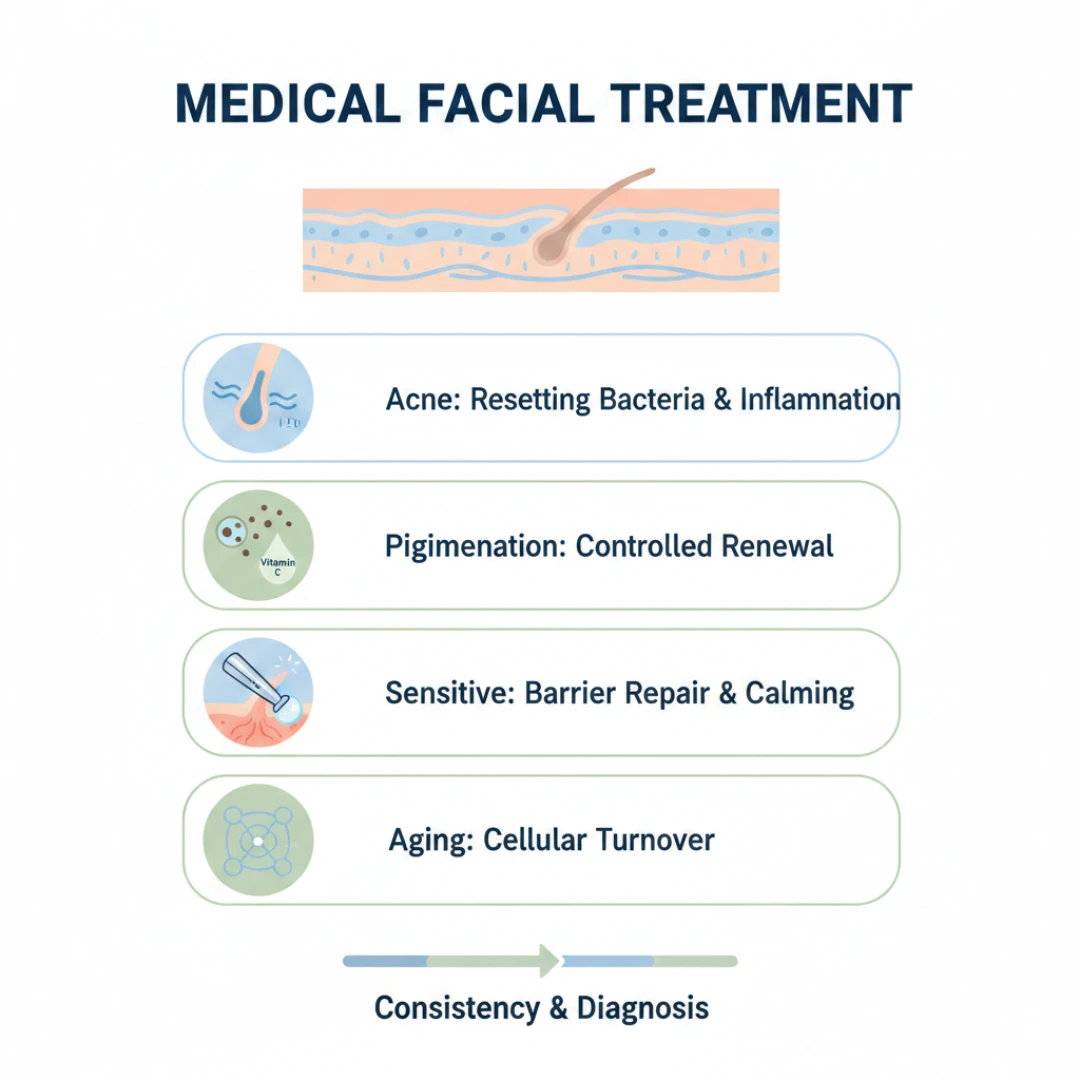
Medical facials work because they are built around diagnosis, not relaxation. Each session is designed after reading the skin’s behavior, not just its surface. Instead of offering a generic cleanse and mask, the practitioner chooses tools, actives, and techniques based on what the skin actually needs to correct.
This is why people with acne, pigmentation, rosacea, or early aging see real change. The facial is not a preset routine. It is a controlled treatment plan applied in one sitting.
A proper medical facial begins with assessment. The therapist or clinician looks at pore behavior, oil flow, hydration, inflammation patterns, and barrier health. They decide what to remove, what to repair, and what to protect. Every step serves a specific purpose.
Acne Focused Facials
Acne skin is not just oily. It is reactive and often inflamed. A good acne facial reduces congestion without stripping the barrier.
Extractions are done carefully to avoid trauma. Exfoliation is chosen based on sensitivity, not strength. Salicylic-based solutions are used to clear pores from within rather than scraping the surface.
LED therapy is often added to calm bacteria-driven inflammation. The aim is not instant clearance. It is to reset how the skin behaves between breakouts.
In clinics, this is often the first line before medication. Many adults manage long-term acne purely through structured facials and home care.
Pigmentation and Uneven Tone
Pigment problems are common in people who spend time outdoors or live in warm climates. These are not solved by scrubbing or brightening masks.
Medical facials for pigmentation focus on controlled exfoliation and pigment regulation. Lactic or mandelic acids are used in low-strength layers. This lifts dull cells without triggering rebound darkening.
Vitamin C, tranexamic acid, and barrier repair serums follow. The goal is to interrupt the cycle where irritation creates more pigment.
Clients often expect instant whitening. Professionals manage this expectation. Results build over sessions because aggressive correction often causes more discoloration.
Sensitive and Rosacea Prone Skin
Sensitive skin needs stability more than stimulation. These facials avoid heat, friction, and harsh exfoliation.
The session focuses on:
-
Reducing surface inflammation
-
Restoring hydration balance
-
Strengthening the barrier
-
Calming nerve response
Cold tools, enzyme-based exfoliation, and anti-inflammatory masks are used. Many clinics also use oxygen infusion or calming LED.
People with flushing or burning symptoms often notice that their skin holds makeup better and reacts less between appointments.
Aging and Texture Correction
For early aging, medical facials target collagen signaling and cellular turnover without downtime.
Micro exfoliation, peptide infusion, and controlled stimulation are combined. The skin is encouraged to renew without being shocked.
These facials are popular with professionals who cannot afford peeling or redness. They maintain firmness and clarity over time.
This is where a well-planned medical facial treatment fits into long term skin management rather than one-time correction.
Why Customization Matters
Two people with acne will not receive the same facial. One may have inflamed cystic breakouts. Another may have clogged pores with minimal redness.
A preset menu cannot handle this difference.
In practice, clinics adjust:
-
Acid type and contact time
-
Extraction depth
-
Device intensity
-
Post-treatment serums
This flexibility is what separates medical facials from spa routines.
It is also why these treatments are often performed under clinical supervision.
The Role of Consistency
A single session can calm skin and improve tone. Real correction comes from patterns.
Most practitioners schedule these facials in cycles of three to six sessions. Each visit builds on the last. The skin is trained to behave differently.
Clients who treat facials as one-off events rarely see lasting change. Those who follow a plan often reduce their dependence on makeup and active creams.
Medical facial treatment works best when seen as maintenance, not rescue.
Conclusion
Medical facials target skin conditions by treating behavior, not just appearance. They correct acne by regulating pores and inflammation. They manage pigmentation through controlled renewal. They support sensitive skin by rebuilding its barrier. Each session is shaped by diagnosis, not routine. The strength of these facials lies in their precision and consistency. When used as part of a plan, they change how skin functions over time.
FAQs
Are medical facials painful?
Most are comfortable. Sensation depends on the condition being treated.
How often should they be done?
Usually every two to four weeks, depending on the skin goal.
Can they replace medication for acne?
In mild to moderate cases, yes. Severe acne may still need medical support.
Do they cause peeling?
Some may cause light flaking, but downtime is minimal.
Are they suitable for sensitive skin?
Yes, when designed specifically for barrier repair and calming.