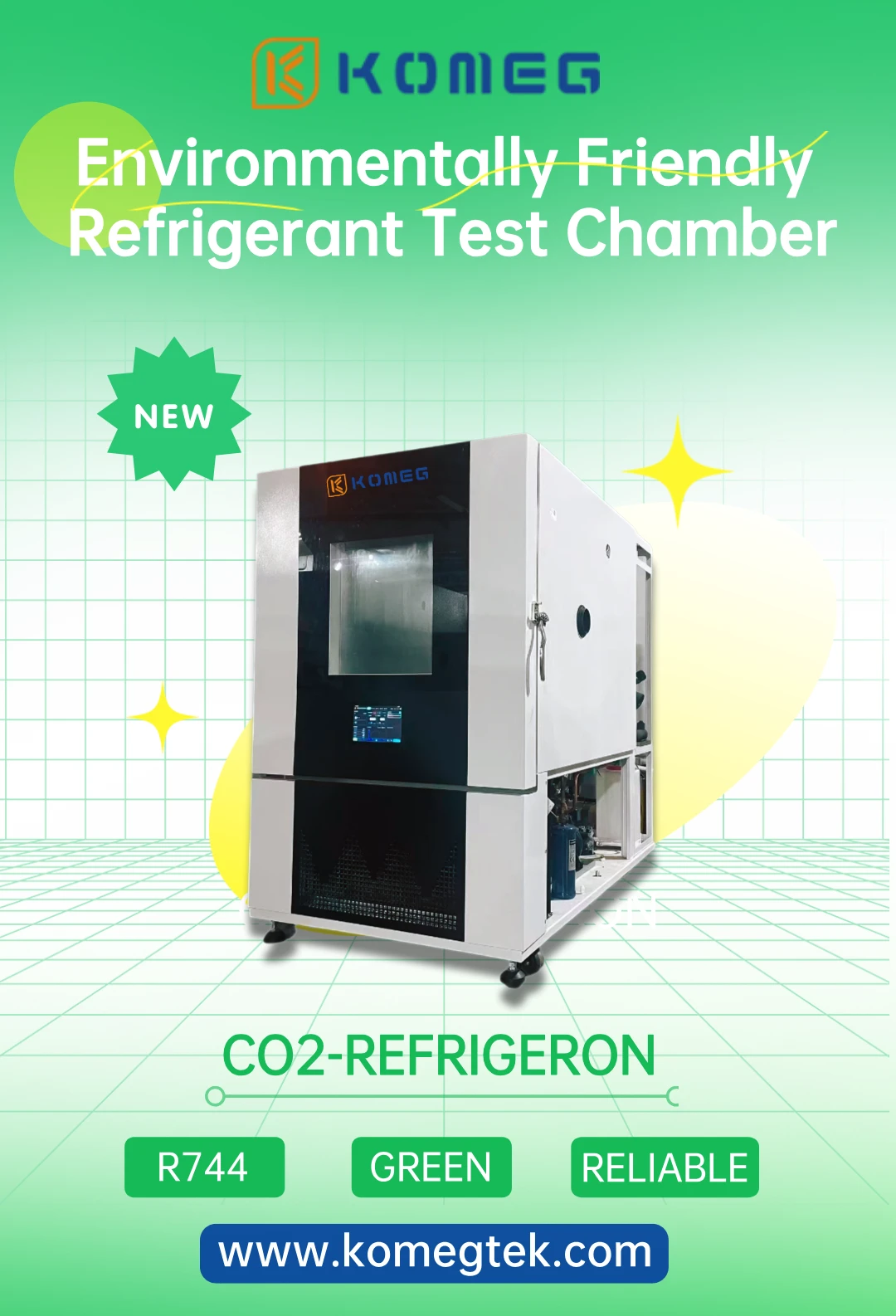
CO₂ (R744) refrigeration systems are increasingly applied in environmental test chambers to deliver sustainable and efficient cooling. With a Global Warming Potential (GWP) of 1, they comply with stringent environmental regulations. These systems deliver outstanding performance, with achievable low temperatures as low as −50∘C or −56∘C. Compared with traditional F-GAS systems, they feature higher energy efficiency, often cutting energy consumption by up to 30%, and operate at lower noise levels.
Key Advantages of CO₂ in Environmental Test Chambers
Eco-friendliness: As a natural refrigerant, CO₂ has a GWP of 1, serving as a green alternative to HFCs and ensuring compliance with upcoming environmental standards.
Performance:
CO₂ systems, covering both subcritical and transcritical configurations, realize efficient, stable, and rapid cooling for temperature and climatic tests, with an achievable low temperature of −50∘C.
Energy Efficiency & Noise Reduction:
Such systems can reduce energy consumption by 15% to 30% on average, and run more quietly owing to their compact and dedicated components.
Safety:
CO₂ is non-flammable and non-toxic, creating a safer test environment.
Efficiency in Ultra-Low Temperatures:
CO₂ provides substantially higher cooling capacity than traditional refrigerants (e.g., R449A) at ultra-low temperature points such as −40∘C.
Applications and Design
Applications: These chambers are utilized to test the durability of materials, electronic components, automotive parts, and batteries under extreme temperature and humidity conditions.
Design: Modern CO₂ environmental test chambers feature the same footprint as traditional F-GAS units, enabling straightforward drop-in replacement in laboratories. They are equipped with specialized high-pressure-resistant components.
Flexibility: System options include, but are not limited to, subcritical cooling for moderate to low temperatures and transcritical systems for quicker and deeper cooling.
The main manufacturer in this field is: KOMEG