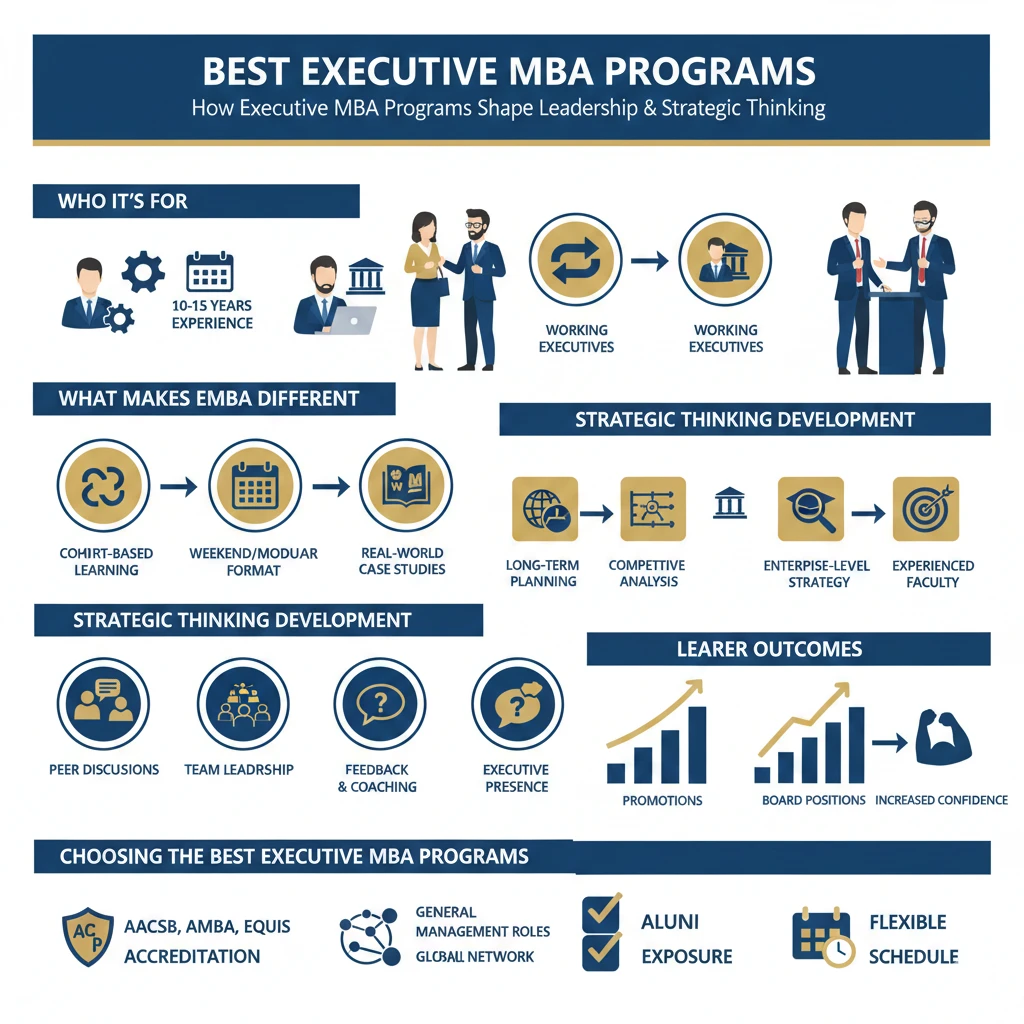
Executive MBA programs build leadership capability and strategic thinking by placing working professionals in structured learning environments where they analyze real business problems, engage with peers from different industries, and apply concepts directly to their current roles. Unlike traditional MBA programs, the EMBA is designed for mid to senior level managers who want to grow into executive positions without leaving their jobs.
The impact is practical: participants learn to make better decisions, lead larger teams, and think beyond their functional area. This is applied learning that changes how professionals approach their daily work.
What Makes Executive MBA Programs Different
Executive MBA programs cater specifically to professionals with 10 to 15 years of work experience. The structure is built around weekend classes or modular formats that allow continued employment.
The key differences from a regular MBA include:
-
Cohort based learning with experienced peers
-
Curriculum focused on enterprise level thinking
-
Case studies and projects drawn from real business situations
-
Immediate application of concepts at work
-
Faculty who have industry backgrounds
This format means participants do not just learn theory. They test ideas with classmates who run operations, lead marketing teams, or manage finance functions at other companies. The cross industry exposure alone creates a shift in perspective that is hard to get anywhere else.
How Strategic Thinking Develops During the Program
Strategic thinking is not a single skill. It is a combination of pattern recognition, long term planning, competitive analysis, and resource allocation. EMBA programs build this capability through structured exposure to business strategy frameworks and repeated practice in applying them.
Exposure to Multiple Business Functions
Most professionals enter an EMBA with deep knowledge in one area. A supply chain director knows logistics inside out but may not understand how marketing budgets get allocated or how financial models drive board decisions.
EMBA coursework covers all core functions: finance, operations, marketing, human resources, and strategy. This cross functional knowledge changes how professionals view their own organization. They start seeing connections between departments and understanding trade offs at the company level.
Learning to Think Long Term
Day to day management focuses on short term results. Quarterly targets, project deadlines, and immediate problems dominate attention. Strategic thinking requires stepping back and asking bigger questions: Where is the industry heading? What capabilities will matter in five years?
EMBA programs force this shift through case discussions, strategy simulations, and capstone projects. Participants practice making decisions with incomplete information, balancing short term performance against long term positioning.
Leadership Development in Practice
Leadership in an EMBA context is not about motivational speeches or personality traits. It is about influence, decision making under pressure, and building teams that perform consistently.
Learning from Peers
The cohort model is central to leadership development. When a marketing executive discusses a challenge with a manufacturing plant manager and a healthcare administrator, different perspectives surface. Each brings industry norms and problem solving approaches that others have never encountered.
This peer learning builds humility and expands the range of options a leader considers when facing problems. It also creates lasting professional networks that continue to provide value after graduation.
Self Awareness and Feedback
Many EMBA programs include assessments and coaching components. Participants receive structured feedback on their leadership style, communication patterns, and blind spots. This is often the first time a senior professional gets honest, data driven feedback outside of their company's performance review process.
Real Career Impact
The practical outcomes of an EMBA vary based on individual goals, but common results include:
-
Promotion to senior leadership roles within two to three years of graduation
-
Transition to general management from functional leadership
-
Board or advisory positions in startups or industry organizations
-
Increased confidence when dealing with complex, ambiguous situations
For those researching options, the best executive mba programs consistently produce these outcomes because they attract experienced applicants, maintain small class sizes, and employ faculty with real industry exposure.
Choosing the Right Program
Not all EMBA programs are equal. The right choice depends on career goals, geographic flexibility, and industry focus.
Key factors to consider:
-
Accreditation and reputation: Programs accredited by AACSB, EQUIS, or AMBA meet recognized quality standards.
-
Alumni network: A strong alumni base in your target industry can open doors.
-
Format and schedule: Some programs require weekend travel; others offer more flexible structures.
-
Global exposure: International residencies add value for professionals in multinational organizations.
-
Faculty access: Smaller cohorts mean more direct interaction with instructors.
The best executive mba programs align with your specific career trajectory. A program known for finance may not be the right fit for someone aiming for a general management role in healthcare.
Practical Advice for Prospective Applicants
Before applying, have honest conversations with current students and alumni. Ask about workload, the quality of class discussions, and whether the program actually changed how they approach their work.
Also consider timing. An EMBA is demanding. If you are in the middle of a major role transition or facing personal commitments that limit bandwidth, delaying may be the right call.
Conclusion
Executive MBA programs develop leadership and strategic thinking through structured learning, peer interaction, and applied projects. The value comes from cross functional exposure, feedback based self awareness, and a network of experienced professionals. For mid career managers aiming for senior roles, this experience provides both the skills and the credibility needed to move up. The choice of program matters, so research carefully based on your goals and industry.
Frequently Asked Questions
Q.1 Who should consider an Executive MBA?
Ans: Professionals with 8 to 15 years of experience who want to move into senior leadership roles. It is best suited for those in management positions who want to think beyond their functional expertise.
Q.2 How long does an Executive MBA take to complete?
Ans: Most programs take 18 to 24 months. Classes are held on weekends or in monthly modules so participants can continue working full time.
Q.3 What is the difference between an MBA and an Executive MBA?
Ans: A regular MBA is designed for early career professionals and is typically full time. An Executive MBA is for experienced managers and uses a part time format with a focus on leadership and strategy.
Q.4 Is an Executive MBA worth the cost?
Ans: For most participants, yes. Career outcomes include higher salaries, promotions, and expanded professional networks. However, the return depends on your goals and how actively you apply what you learn.
Q.5 Can I do an Executive MBA while working?
Ans: Yes. The program is specifically designed for working professionals. Most employers support attendance, and some offer tuition sponsorship.