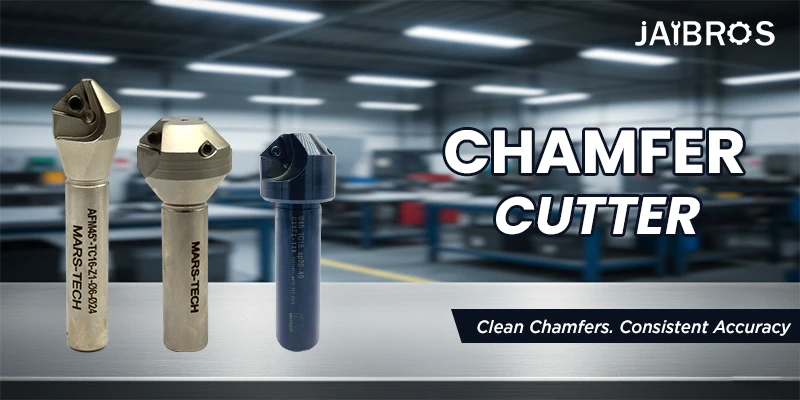
Discover the top advantages of using a chamfer tool for deburring and beveling, including better safety, smooth edges, and improved machining efficiency.
Benefits of Using a Chamfer Tool for Deburring and Beveling
Deburring and beveling are essential finishing processes in manufacturing and fabrication. Sharp edges, burrs, and uneven surfaces not only reduce product quality but can also create safety risks and assembly issues. To address these challenges efficiently, manufacturers rely on a chamfer tool to create smooth, angled edges that enhance both functionality and appearance. Whether used in metalworking or woodworking, this tool plays a key role in achieving professional-grade results.
As machining technology advances, the demand for clean and precise edge finishing continues to grow. From CNC machining to manual workshop operations, chamfering has become a standard practice for improving part reliability and reducing secondary finishing work.
What Is Deburring and Beveling?
Deburring is the process of removing unwanted sharp edges and burrs formed during machining, drilling, or cutting operations. Beveling involves creating an angled edge, usually at a defined degree, to improve fit, safety, or aesthetics. A properly selected chamfer tool allows both of these processes to be performed efficiently in a single operation.
These finishing techniques are widely used across industries such as automotive, aerospace, furniture manufacturing, and metal fabrication. Clean edges reduce the risk of injury, improve coating adhesion, and ensure smooth assembly of components.
Improved Safety and Handling
One of the biggest advantages of chamfering is enhanced safety. Sharp edges and burrs can cause injuries during handling, transportation, or assembly. Using a chamfer tool helps eliminate these hazards by creating smooth, controlled edges that are safer to touch and work with.
In industrial environments where parts are handled frequently, improved edge safety reduces workplace accidents and protects both workers and equipment. This makes chamfering an important step in quality control and safety compliance.
Enhanced Assembly and Fitment
Proper beveling significantly improves how parts fit together. Sharp edges can interfere with alignment, especially in press-fit or bolted assemblies. A chamfering tool helps guide components into position, reducing assembly time and minimizing the risk of damage.
Beveled edges also reduce stress concentration at corners, which improves the durability and performance of assembled parts. This is especially important in high-load or vibration-prone applications.
Better Surface Finish and Appearance
A smooth, beveled edge enhances the overall appearance of a finished product. Whether it is a metal component or a wooden panel, clean edges reflect high-quality craftsmanship. Using a chamfer cutter ensures uniform angles and consistent finishes across all parts.
In consumer-facing products such as furniture, tools, and decorative components, visual appeal plays a major role. Proper chamfering adds a professional touch that improves customer perception and product value.
Increased Tool Efficiency and Productivity
Modern chamfering tools are designed to perform deburring and beveling quickly and accurately. A well-chosen chamfering tool reduces the need for manual filing, sanding, or grinding, which saves time and labor costs.
In CNC machining environments, automated Chamfering tool improves cycle times and ensures repeatable results. This leads to higher productivity and reduced operational downtime, especially in high-volume production.
Versatility Across Materials
Chamfering solutions are suitable for a wide range of materials, including steel, aluminum, brass, plastics, and wood. For metal applications, a carbide chamfer tool offers excellent wear resistance and heat tolerance, making it ideal for continuous cutting operations.
For softer materials, proper tool geometry ensures smooth cutting without tearing or chipping. This versatility makes chamfering an essential process across multiple industries and applications.
Consistent Results in CNC Machining
In CNC environments, consistency is critical. An insert-type chamfer tool provides uniform edge quality across large production batches. Replaceable inserts ensure that cutting performance remains stable without the need to replace the entire tool body.
This consistency improves dimensional accuracy and reduces scrap rates. Manufacturers benefit from predictable results and easier quality control when changing is integrated into CNC programs.
Reduced Secondary Finishing Operations
One of the major advantages of using a chamfer is the reduction in secondary finishing tasks. Manual deburring and edge smoothing can be time-consuming and inconsistent. Chamfering during the machining process eliminates the need for additional steps.
By integrating chamfering into primary operations, manufacturers streamline workflows and improve overall efficiency. This also reduces dependency on skilled manual labor for finishing tasks.
Improved Tool Life and Cost Efficiency
High-quality chamfering tools are designed for durability and long service life. Proper tool selection and maintenance reduce wear and prevent premature failure. Using a chamfer tool designed for specific materials ensures optimal cutting performance and longer tool life.
Insert-based systems further enhance cost efficiency by allowing only the worn cutting edge to be replaced. This minimizes tooling expenses and supports sustainable manufacturing practices.
Applications in Woodworking and Metalworking
In woodworking, chamfering improves the appearance of furniture edges, panels, and decorative elements. Clean bevels reduce splintering and enhance finishing results. In metalworking, chamfering prepares parts for welding, coating, or assembly.
Across between both fields, a chamfer tool ensures consistent quality and professional results. Its ability to handle different materials and applications makes it an indispensable finishing solution.
FAQs
1.What is the main benefit of chamfering in machining?
Chamfering improves safety, assembly, and appearance by removing sharp edges and creating smooth bevels.
2.Can chamfering replace manual deburring?
Yes, chamfering during machining significantly reduces or eliminates the need for manual deburring operations.
3.Why are carbide tools preferred for chamfering metal?
Carbide tools provide superior hardness and heat resistance, ensuring consistent performance in metal cutting applications.
4.What makes insert-based chamfer tools cost-effective?
They allow quick insert replacement, reduce downtime, and lower overall tooling costs in production environments.
5.Is chamfering important for aesthetic purposes only?
No, chamfering also improves part fit, safety, durability, and overall functional performance.
Conclusion
The advantages of using a chamfer tool for deburring and beveling go far beyond simple edge finishing. From improved safety and better assembly to enhanced appearance and higher productivity, chamfering plays a vital role in modern manufacturing. By choosing the right chamfering solution, manufacturers can achieve consistent quality, reduce costs, and streamline operations.
At Jaibros, we offer advanced chamfering solutions designed to meet the demands of precision machining. Our tools are engineered for durability, accuracy, and efficiency across a wide range of applications. Whether you require carbide-based designs or insert-driven systems, Jaibros delivers reliable tooling that supports superior finishing and long-term performance.