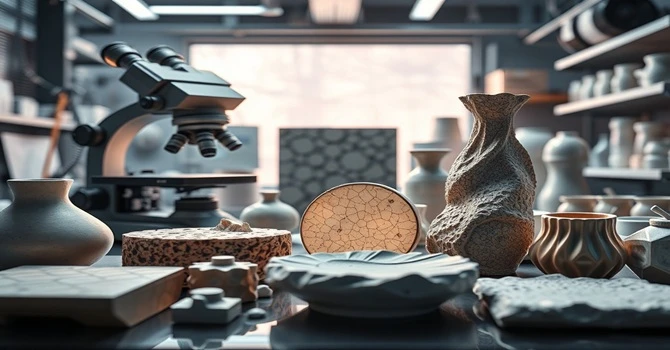
Advanced Ceramics: Powering Innovation Across Modern Technologies
Advanced ceramics are engineered materials designed to perform where traditional metals and plastics fall short. These high-performance materials combine exceptional hardness, thermal stability, chemical resistance, and electrical properties that make them crucial in demanding applications. From aerospace and healthcare to energy systems and electronics, advanced ceramics technology enables breakthroughs that support safer, more efficient, and longer-lasting solutions.
Unlike traditional clay-based ceramics used in pottery and tiles, advanced ceramics are precision-manufactured using engineered powders, controlled microstructures, and advanced sintering methods. This difference allows them to meet exacting specifications that modern applications require.
Evolution of Advanced Ceramics Technology
The field of advanced ceramics has evolved rapidly as material scientists push the boundaries of what’s possible. Innovations in structural design, nano-engineering, and composite formulations have expanded the capabilities of ceramic materials. Advanced ceramics technology now includes engineered materials such as silicon carbide, zirconia, alumina, and ceramic matrix composites (CMCs), each with unique combinations of strength, toughness, and temperature resistance.
One of the most exciting developments in advanced ceramics technology is additive manufacturing, or 3D printing. This approach enables intricate geometries and customized components that were once difficult or impossible to produce with traditional methods. Complex internal channels, optimized lattice structures, and lightweight parts for aerospace and defense applications are now feasible thanks to this integration of ceramics with digital fabrication.
Real-World Applications and Projects
Applications of advanced ceramics span a broad range of sectors, each leveraging unique material properties to meet specific performance goals. In aerospace, ceramic matrix composites are being deployed in high-temperature engine components, offering strength and heat resistance that improve efficiency and durability. These advanced ceramics projects aim to reduce fuel consumption and extend service intervals in next-generation aircraft.
In the medical field, bioceramics such as hydroxyapatite and zirconia are key components in joint replacements, dental implants, and bone scaffolds because of their biocompatibility and wear resistance. Such projects combine material science with life-critical design requirements, addressing both performance and patient safety.
Energy and power applications also benefit from advanced ceramics. Solid oxide fuel cells, gas turbines, and nuclear reactors rely on ceramic components to withstand extreme heat and corrosive environments. These projects push the limits of material performance while enabling cleaner and more efficient energy production.
Transparent, Functional, and Nano-Engineered Ceramics
The breadth of advanced ceramics technology also extends into functional materials. Transparent ceramics like aluminum oxynitride and spinel are used for high-strength optical windows, sensors, and protective systems where clarity and toughness are equally critical. In electronics, piezoelectric and dielectric ceramics are essential for sensors, actuators, and high-frequency devices, supporting advancements in communication and automation.
At the nano scale, engineered ceramics offer enhanced mechanical, thermal, and electrical properties. Nanocomposites and nanopowders improve toughness, reduce defect propagation, and enable miniaturized components with superior performance. These nano-engineered approaches are part of cutting-edge advanced ceramics projects aimed at next-generation technologies.
Integration with Sustainable and Digital Technologies
Sustainability and digital transformation are influencing how advanced ceramics are designed and manufactured. Lifecycle assessments and eco-efficient processes ensure that the environmental impact of ceramic components is minimized from production to end-of-life. Advanced ceramics technology now increasingly incorporates digital twins and simulation tools that model material behavior under stress, reducing the need for extensive physical prototypes and accelerating development cycles.
In parallel, advancements in sensor integration and smart ceramics open the door to self-monitoring structures and adaptive systems. These innovations reflect a broader trend where materials do more than just endure—they interact with their environment and provide real-time data to improve performance and safety.
Growth Outlook and Industry Momentum
The demand for advanced ceramics solutions continues to expand as their applications broaden and mature. In value terms, global activity associated with advanced ceramics was estimated at $119.44 billion in 2025 and is expected to grow at a CAGR of 3.6% from 2026 to 2033. This steady progression highlights how critical these materials have become to solving some of the most complex engineering challenges of our time.
The Future of Advanced Ceramics
Looking ahead, advanced ceramics technology will continue to evolve through deeper integration with artificial intelligence, materials informatics, and additive manufacturing. These tools will help scientists discover new compositions, predict performance with greater certainty, and tailor ceramics for highly specialized applications. As projects become more ambitious and performance demands rise, advanced ceramics will play an even greater role in shaping innovative solutions across sectors.