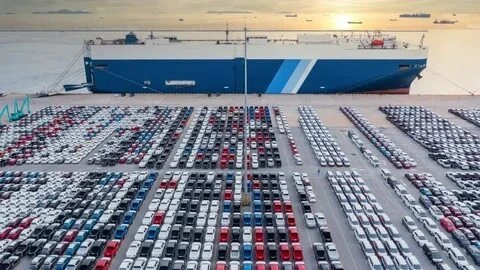
For most of us, the journey of our car is a simple narrative: a test drive, a purchase, and then countless commutes, road trips, and school runs. We rarely consider the epic voyages our vehicles undertake before they ever grace a dealership lot, or when life demands they traverse a continent. This is the realm of professional automobile shipping costs—a complex, behind-the-scenes network that moves millions of vehicles each year. At the heart of every decision to use this service lies a single, pivotal question: what determines automobile shipping costs? The answer is a fascinating interplay of geography, physics, economics, and even the seasons.
The Invisible Road: More Than Just Point A to Point B
To understand the pricing of auto transport, one must first discard the notion of a simple "per-mile" rate. Imagine two identical sedans. One needs to go from Miami to Atlanta, a popular route dotted with major cities. The other must travel from a remote ranch in Montana to a small coastal town in Maine. The distance might be similar, but the costs will tell wildly different stories. This is due to the fundamental concept of lane density.
Major metropolitan areas and high-traffic corridors (like Los Angeles to Phoenix or Chicago to Dallas) are the interstates of the auto transport industry. Carrier trucks are constantly flowing through these lanes, creating competitive pricing and readily available service. Conversely, shipping to or from a low-population area presents a challenge. A carrier might have to "deadhead"—drive empty—for hundreds of miles just to reach the pickup point, a cost inevitably factored into the quote. The return journey from that remote destination poses the same problem. Therefore, the availability of other vehicles needing transport along a similar route is the first and most powerful silent architect of your price.
Your Vehicle’s Tale: Size, Stature, and Story
Not all vehicles are created equal in the eyes of a transport trailer. The industry standard is the multi-car carrier, typically an 80-foot rig with two levels. The space on these rolling garages is precious, and it is allocated based on the physical footprint of your automobile.
A standard compact or sedan is the baseline, often referred to as the "transport bread and butter." It fits neatly into a slot. Move up to a full-size SUV, a crew-cab pickup truck, or a tall van, and you graduate to a different category. These "oversized" vehicles may take up the space of one-and-a-half standard cars, block the loading of another vehicle behind them, or require placement only on the lower deck due to height restrictions. This efficient use of space is paramount for carrier profitability, so a larger vehicle commands a higher cost.
But size isn't just about dimensions; it's also about weight. A heavy-duty diesel truck or a luxury armored vehicle pushes the limits of the trailer's axle weight limits, adding another layer of consideration. Furthermore, the vehicle's condition is a chapter in this story. A non-running car (a "non-op") requires special equipment like a winch and skilled labor to load and secure, involving extra time and manpower compared to a vehicle that can be driven onto the trailer under its own power.
The Choice of Passage: Open vs. Enclosed Transport
Here lies one of the most significant decisions you will make, one that directly impacts cost and peace of mind. The vast majority of vehicles travel via open transport. These are the iconic multi-level trailers you see on the highway, carrying everything from economy cars to new luxury models. It is the most common, efficient, and economical method. It exposes the vehicle to the elements—road dust, rain, and occasional highway debris—but it is a perfectly safe and standard practice for most cars.
Enclosed transport, on the other hand, is the white-glove service. Using a rigid, trailer-sized garage on wheels, it provides a shield from weather, road spray, and flying stones. This method is reserved for classic cars, exotic supercars (where even rock chips are a major concern), high-value collectibles, or vehicles undergoing restoration. The premium for this service is substantial, as an enclosed carrier holds far fewer vehicles (often only 3-5), and the clientele demands a higher level of care and insurance. Choosing between open and enclosed is a balance of your vehicle’s value (both monetary and sentimental) against the added expense.
The Winds of Change: Timing and Market Forces
Automobile shipping does not exist in an economic vacuum. The price you are quoted on Tuesday can change by Friday due to powerful, invisible market currents. Consider seasonal demand. In winter, there is a massive influx of vehicles (dubbed "snowbirds") being shipped from the cold Northeast and Midwest to the warm climates of Florida, Arizona, and California. This creates a supply imbalance, raising costs on southbound routes. In summer, the demand often reverses. Similarly, the military moving season (summer) creates predictable spikes in traffic to and from base towns.
Broader economic factors play a role, too. Fluctuating diesel fuel prices are a direct cost passed through to the consumer. When fuel is high, a base fuel surcharge is often applied. Furthermore, the health of the new car market impacts the availability of carriers. When dealerships are selling more new cars, manufacturers are booking huge volumes of transport from factories and ports, tightening capacity for individual private shipments and potentially raising prices.
Navigating the Quote: How to Be a Savvy Shipper
Understanding these factors empowers you to be an informed participant in the process. Here is how you can navigate toward a fair and reliable cost:
Flexibility is Your Greatest Asset: If your schedule allows, provide a flexible pickup window. Giving a carrier a 5-7 day window to pick up your vehicle allows them to optimize their route, potentially filling that last slot on a trailer that happens to be coming through your area. This flexibility can result in a better rate than demanding an exact, specific day.
Prepare Your Vehicle, Not Your Wallet: A key, often overlooked, factor is the state of your car at pickup. A vehicle at curb weight (with only a quarter tank of fuel and personal items removed) is cheaper to transport than one laden with heavy possessions. Carriers are licensed to move vehicles, not household goods, and excess weight costs them in fuel and legal compliance. Ensuring your car is in good working order (for drive-on transport) and easily accessible can prevent last-minute fees for special equipment or difficult access.
The Insurance Implication: Reputable carriers come with cargo insurance. Understand what is covered under their policy and what the deductible is. For ultra-high-value vehicles, you may need to arrange a supplemental policy. This isn't a direct shipping cost, but a critical part of the financial equation. Never assume your personal auto insurance automatically covers long-distance transport; always check.
The Final Tally: An Investment in Time, Safety, and Convenience
When you peel back the layers, automobile shipping costs are not merely a fee for distance. They are a dynamic reflection of a sophisticated logistics operation. You are paying for professional expertise, multimillion-dollar equipment, layered insurance, and a national network of drivers who specialize in the safe handling of what is often a person's second-largest investment.
Choosing to ship a car is ultimately an investment in time, vehicle wear-and-tear, and personal safety—avoiding a long, grueling cross-country drive. By understanding the dance of factors that create your quote—from the lane you're in and the car you drive, to the season and the service you select—you move from a passive consumer to an informed partner. You gain the clarity to ask the right questions, spot realistic quotes, and ensure your vehicle's journey on the unseen highway is as smooth and economical as possible. In the end, the cost is the ticket for a complex ballet of logistics, ensuring your car arrives not with stories of breakdowns and road fatigue, but simply, safely, ready for its next chapter on the road.