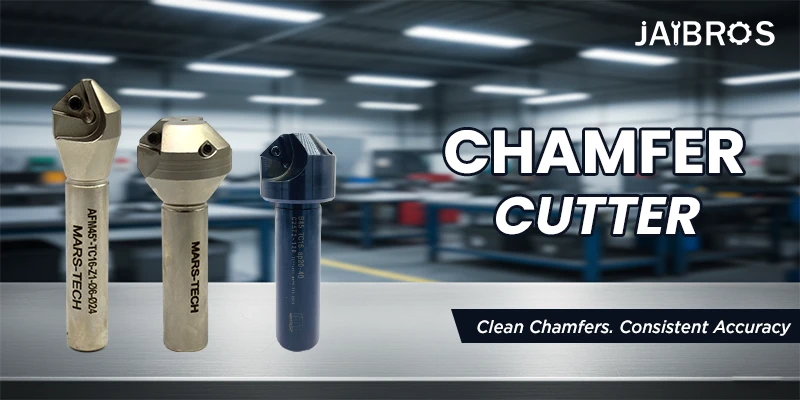
How a Chamfer Tool Enhances Safety and Part Assembly
Learn how a chamfer tool improves workplace safety and part assembly by removing sharp edges and ensuring smooth, accurate component fitting.
The Role of a Chamfer Tool in Safer Handling and Better Assembly
Introduction to Safety and Assembly in Manufacturing
In modern manufacturing, safety and precision are just as important as speed and productivity. Poorly finished edges can lead to workplace injuries, damaged components, and assembly delays. This is why edge preparation plays a crucial role in machining and fabrication processes. A chamfer tool helps manufacturers achieve smooth, angled edges that significantly improve both operator safety and part assembly efficiency.
From CNC machining centers to manual workshops, chamfering has become a standard practice across industries such as automotive, aerospace, heavy engineering, and furniture manufacturing. Understanding how chamfering contributes to safer handling and better-fitting components helps manufacturers improve overall production quality.
Understanding the Role of Chamfering in Edge Preparation
Chamfering is the process of creating a beveled edge between two intersecting surfaces. During machining, drilling, or cutting operations, sharp edges and burrs are often formed. These imperfections can cause injuries during handling and interfere with the assembly process. A properly selected chamfer tool removes these sharp edges and creates a controlled bevel that improves usability and functionality.
By integrating chamfering into the machining process, manufacturers reduce the need for manual deburring and ensure consistent edge quality across production batches.
Improving Workplace Safety Through Chamfering
One of the most significant advantages of chamfering is improved workplace safety. Sharp edges and burrs pose a serious risk to operators during part handling, inspection, and assembly. Cuts, abrasions, and glove damage are common issues when components are left unfinished.
Using a chamfering tool helps eliminate these hazards by producing smooth edges that are safe to touch and handle. In high-volume manufacturing environments, this reduction in injury risk contributes to better compliance with workplace safety standards and fewer production interruptions.
Reducing Assembly Errors and Component Damage
Assembly efficiency is heavily influenced by edge quality. Sharp edges can cause misalignment, galling, or damage when parts are fitted together. A chamfer tool helps guide components into place, making assembly smoother and more reliable.
Beveled edges are especially important in press-fit assemblies, threaded connections, and welded joints. They reduce resistance during insertion and help prevent surface damage, ensuring components fit together as intended without excessive force.
Enhancing Precision in CNC Assembly Processes
In CNC machining environments, consistency is critical. Components must meet strict dimensional and surface quality requirements to ensure proper assembly. An insert type chamfer tool is particularly useful in CNC applications because it provides uniform edge finishing across large production runs.
Replaceable inserts maintain cutting accuracy and reduce downtime, ensuring that every component meets the same quality standard. This level of consistency improves assembly efficiency and reduces the risk of part rejection.
Supporting Safer Handling During Transportation and Storage
Safety concerns extend beyond the machining floor. Finished components are often transported, stored, and handled multiple times before final assembly. Sharp edges can damage packaging, scratch adjacent parts, or cause injuries during handling.
By applying chamfering during production, manufacturers ensure that components remain safe throughout the supply chain. A chamfer cutter creates durable, smooth edges that withstand handling without compromising safety or appearance.
Material-Specific Benefits of Chamfering
Different materials present different safety and assembly challenges. Metals such as steel and stainless steel produce sharp burrs that are particularly hazardous. A carbide chamfer tool is ideal for such applications due to its durability and ability to maintain sharp cutting edges under high loads.
In softer materials like aluminum or wood, chamfering improves surface finish and prevents splintering or deformation. Regardless of material type, chamfering contributes to safer handling and better assembly outcomes.
Improving Product Durability and Performance
Chamfering also improves long-term product performance. Sharp corners can act as stress concentrators, increasing the risk of cracks or failures under load. By removing these sharp edges, manufacturers improve the durability and reliability of components.
A well-finished chamfer reduces wear during assembly and operation, helping components maintain their integrity over time. This is particularly important in applications involving vibration, thermal expansion, or repeated mechanical stress.
Reducing Manual Finishing and Human Error
Manual deburring and edge finishing are time-consuming and inconsistent. They also expose workers to sharp edges and repetitive strain. Using a chamfer tool during machining reduces the need for manual finishing, minimizing human error and improving safety.
Automated chamfering ensures uniform results and allows skilled workers to focus on higher-value tasks. This improves productivity while maintaining consistent safety standards.
Quality Control and Compliance Benefits
Many industries have strict safety and quality standards that require controlled edge finishing. Chamfering helps manufacturers meet these requirements by delivering consistent, measurable edge geometry.
A reliable chamfer tool supports quality control efforts by producing predictable results that are easy to inspect and verify. This reduces work and supports compliance with industry regulations.
FAQs
Q1.Why is chamfering important for workplace safety?
Chamfering removes sharp edges and burrs that can cause cuts and injuries during handling and assembly.
Q2.How does chamfering improve part assembly?
Beveled edges help guide components into place, reduce resistance, and prevent damage during assembly.
Q3.What type of tool is best for CNC chamfering?
Insert-based chamfering tools are ideal for CNC applications due to their consistency and easy maintenance.
Q4.Why are carbide tools commonly used for chamfering metal?
Carbide tools offer high hardness and heat resistance, making them suitable for demanding metal-cutting environments.
Q5.Can chamfering replace manual deburring?
Yes, chamfering during machining significantly reduces or eliminates the need for manual deburring operations.
Conclusion
A chamfer tool plays a vital role in enhancing safety and improving part assembly across manufacturing environments. By removing sharp edges, improving fit, and reducing manual finishing, chamfering supports safer workplaces and more efficient production processes. From CNC machining to manual fabrication, proper edge preparation contributes directly to product quality and reliability.
At Jaibros, we specialize in high-performance chamfering solutions designed for industrial applications. Our tools are engineered to deliver precision, durability, and consistent results, helping manufacturers achieve safer handling and smoother assembly. With Jaibros, you can rely on advanced tooling that supports productivity, safety, and long-term performance.