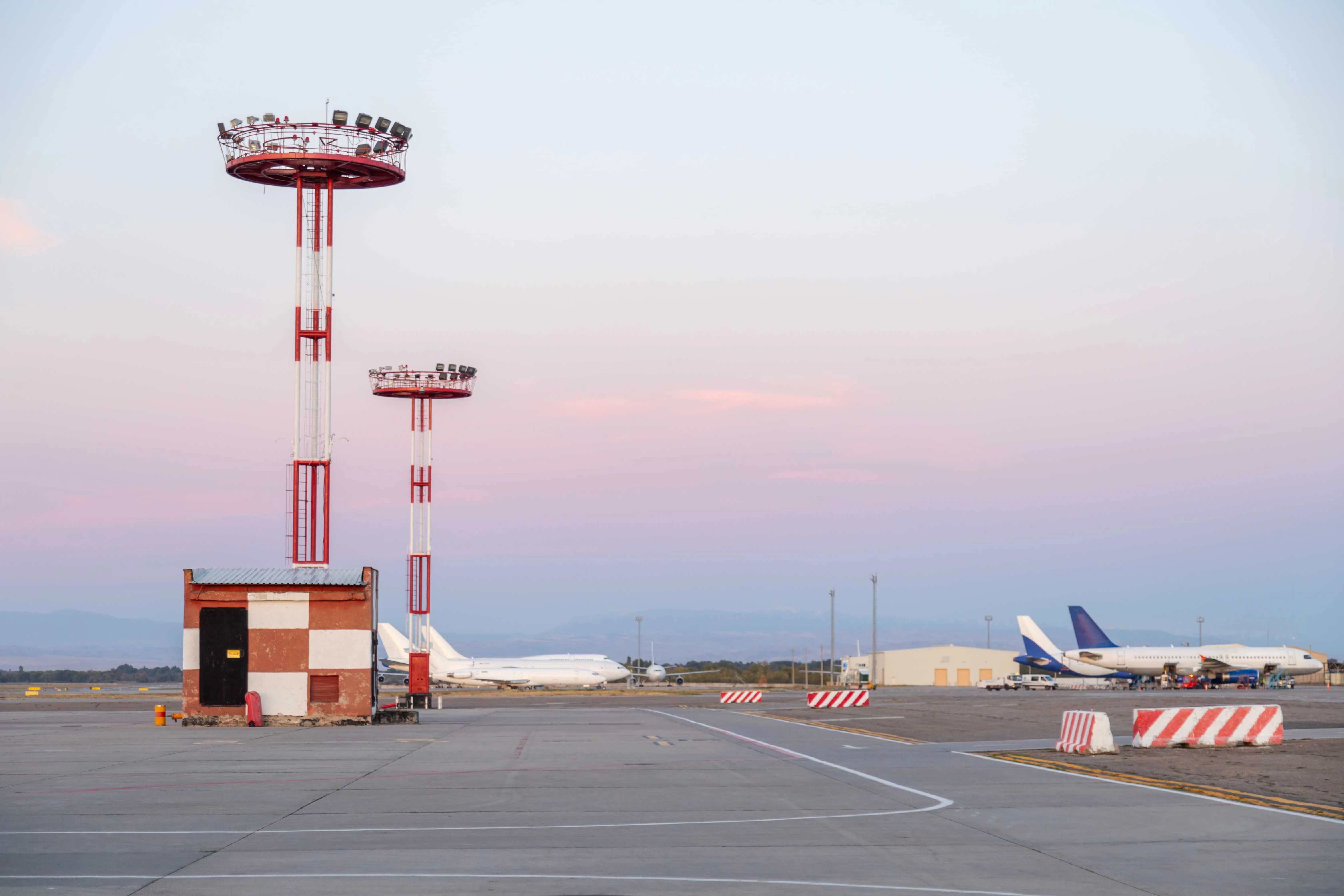
In the complex world of aviation, where seconds count and clarity is non-negotiable, communication is the invisible thread holding everything together. For passengers, the journey is about checking in and boarding. But behind the scenes, a sophisticated network of Radio Communication ensures that pilots, air traffic controllers, and ground crews can talk to each other safely and effectively.
For experts in airport engineering Qatar and aviation enthusiasts alike, understanding the technical backbone of these communications is essential. The industry relies heavily on three distinct systems: VHF, UHF, and TETRA. While they all transmit voice and data, they operate on different frequencies and serve unique purposes.
This article breaks down the key differences between these systems, their specific roles in an airport environment like Hamad International, and why a mix of all three is necessary for modern aviation.
1. Frequency Ranges: The Physics of Connection
The primary difference between these systems lies in the frequency bands they utilize. The frequency determines the range of the signal, its ability to penetrate buildings, and the quality of the transmission.
- VHF (Very High Frequency): Operates between 30 MHz and 300 MHz. In aviation, the specific band used is 118–137 MHz. These waves travel far but generally require a clear "line of sight" between the transmitter and receiver.
- UHF (Ultra High Frequency): Operates between 300 MHz and 3 GHz. These shorter wavelengths are better at penetrating concrete and steel structures but have a shorter overall range than VHF in open spaces.
- TETRA (Terrestrial Trunked Radio): This is a digital standard that typically operates in the UHF band (around 380–470 MHz depending on the region). Unlike the analog VHF and UHF systems widely used in the past, TETRA is a fully digital, trunked system designed for efficiency and security.
2. Roles and Applications in Aviation
Because of their physical properties, these systems are assigned to different teams and tasks within an airport ecosystem.
VHF: The Standard for Air-to-Ground
VHF is the global language of civil aviation. It is almost exclusively used for communication between pilots and Air Traffic Control (ATC).
- Application: Takeoff clearances, landing instructions, and en-route navigation updates.
- Why it works: Its long-range capabilities allow a tower in Doha to speak clearly to a plane hundreds of miles away over the Gulf, provided the plane is at a high enough altitude.
UHF: Military and Legacy Support
UHF is less common in civil aviation communication but remains critical in specific sectors.
- Application: It is the primary frequency for military aviation. Airports in the Middle East that handle both commercial and military traffic must maintain UHF capabilities to communicate with state aircraft.
- Ground use: Historically, UHF was used for ground crews (baggage handling, fuel trucks) because signals could penetrate the maze of terminal buildings and service tunnels better than VHF.
TETRA: The Digital Workhorse of Ground Ops
TETRA represents the modern evolution of ground communication. It is a digital system used by the thousands of staff members who keep the airport running on the ground.
- Application: Security teams, fire and rescue services, shuttle bus drivers, and maintenance engineers.
- Qatar's Advantage: In advanced setups like those driven by airport engineering Qatar, TETRA networks allow for distinct "talk groups." A security supervisor can speak to all guards at once without interrupting the baggage handlers on a different channel.
3. Key Operational Differences
Beyond frequency, the way these systems function operationally sets them apart.
Analog vs. Digital
VHF (in its traditional form) and older UHF radios are analog. This means if two people talk at once, the signal garbles or squeals. TETRA is digital. It converts voice into data packets. This eliminates background noise—crucial on a noisy tarmac—and allows for features like text messaging and GPS tracking.
Channel Access
- VHF: Operates on fixed frequencies. A pilot tunes to 119.5 MHz, and everyone else on that frequency can hear them. If the channel is busy, they must wait.
- TETRA: Uses "trunking" technology. Instead of assigning a fixed channel to a group, the system automatically assigns an available frequency from a pool the moment the user presses the "push-to-talk" button. This makes it incredibly efficient for high-density environments like a major international airport.
Security
Traditional VHF is unencrypted; anyone with a receiver can listen in. TETRA, however, supports high-level encryption. This is vital for airport security and police operations where sensitive information regarding VIP movements or security threats is shared.
The Future of Radio Communication in Qatar
As Qatar continues to solidify its position as a global aviation hub, the integration of these technologies becomes more sophisticated. The future of Radio Communication is not about replacing VHF with TETRA, but about making them work seamlessly together.
We are moving toward:
- Digital VHF: Implementing data-link systems (VDL) to send text-based instructions to pilots, reducing voice congestion.
- LTE and 5G Integration: Combining TETRA's reliability with 5G's bandwidth to allow ground crews to stream live video of maintenance issues or emergencies directly to command centers.
In conclusion, while VHF remains the master of the sky and UHF serves its niche, TETRA has revolutionized the ground. By mastering the distinct advantages of each, airport engineering Qatar ensures that from the moment a plane enters Qatari airspace to the moment it parks at the gate, every instruction is heard, understood, and executed with precision.