Automated Machine Learning: How AutoML Tools Are Transforming the Future of AI Tools?
Automated machine learning, often called AutoML, is reshaping how organizations build, deploy, and scale artificial intelligence solutions. What once required deep technical expertise, long development cycles, and constant tuning can now be accomplished faster and more efficiently using intelligent automation. As AI tools continue to evolve, automated machine learning has become a critical bridge between complex data science and practical, real-world applications.
Understanding Automated Machine Learning
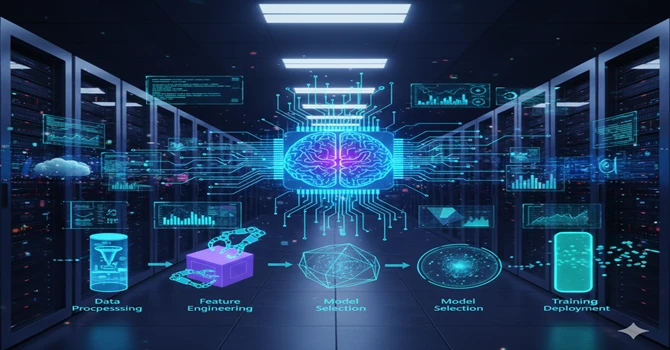
At its core, automated machine learning simplifies the end-to-end process of creating machine learning models. From data preparation and feature selection to algorithm choice and hyperparameter tuning, AutoML tools handle tasks that traditionally demanded significant manual effort. This allows teams to focus more on problem-solving and strategy rather than repetitive technical work.
The growing adoption of automated machine learning reflects its ability to shorten development timelines while improving accuracy and consistency. Businesses, researchers, and developers alike are turning to AutoML tools to accelerate experimentation and bring AI tools into production faster than ever before.
The Rise of Smarter AutoML Tools
Modern AutoML tools are far more advanced than early automation systems. One of the most notable trends is the integration of generative AI. These capabilities allow automated machine learning platforms to generate synthetic data, assist with data labeling, and even suggest optimized model architectures. As a result, AI tools are becoming more adaptive and capable of handling complex datasets with limited human intervention.
Another important development is the shift toward context-aware automated machine learning. Instead of treating every task independently, newer AutoML tools learn from past projects and adapt workflows based on the specific problem domain. This approach improves performance and reduces redundant experimentation, making AI tools more intelligent over time.
Accessibility Through No-Code and Low-Code AI Tools
Automated machine learning is also driving accessibility. No-code and low-code AutoML tools allow non-technical users to build and deploy models through intuitive interfaces. This democratization of AI tools empowers business analysts, product teams, and domain experts to work directly with data without relying entirely on specialized data scientists.
As more organizations adopt these platforms, automated machine learning is becoming a foundational capability rather than a niche technical skill. This widespread use is reflected in the growing global value associated with automated machine learning, which is projected to reach $61.23 billion by 2033, highlighting the scale and momentum of this transformation.
Responsible and Explainable Automated Machine Learning
As AI tools are increasingly used in sensitive areas such as healthcare, finance, and public services, explainability and trust have become essential. Automated machine learning platforms are now embedding transparency features that help users understand how models make decisions. Explainable AI techniques ensure that automated processes remain accountable and aligned with ethical expectations.
Human-in-the-loop systems are another important trend. While AutoML tools automate much of the technical work, human oversight ensures that models remain relevant, fair, and aligned with real-world goals. This balance between automation and human judgment is shaping the next generation of automated machine learning solutions.
Cloud, Edge, and Federated AutoML
Deployment flexibility is also redefining automated machine learning. Cloud-native AutoML tools provide scalable environments for training and monitoring models, while edge-focused solutions allow AI tools to operate closer to data sources, enabling faster responses and improved privacy.
Federated automated machine learning is gaining attention as well. By training models across decentralized data sources without moving sensitive data, organizations can maintain privacy while still benefiting from shared intelligence. This approach is particularly valuable for regulated environments and distributed systems.
The Future of Automated Machine Learning
Looking ahead, automated machine learning will continue to evolve toward greater autonomy, adaptability, and collaboration with humans. AutoML tools are expected to become more predictive, continuously learning from live data and adjusting models in real time. As AI tools grow more integrated into daily operations, automated machine learning will play a central role in making advanced intelligence scalable, reliable, and accessible.