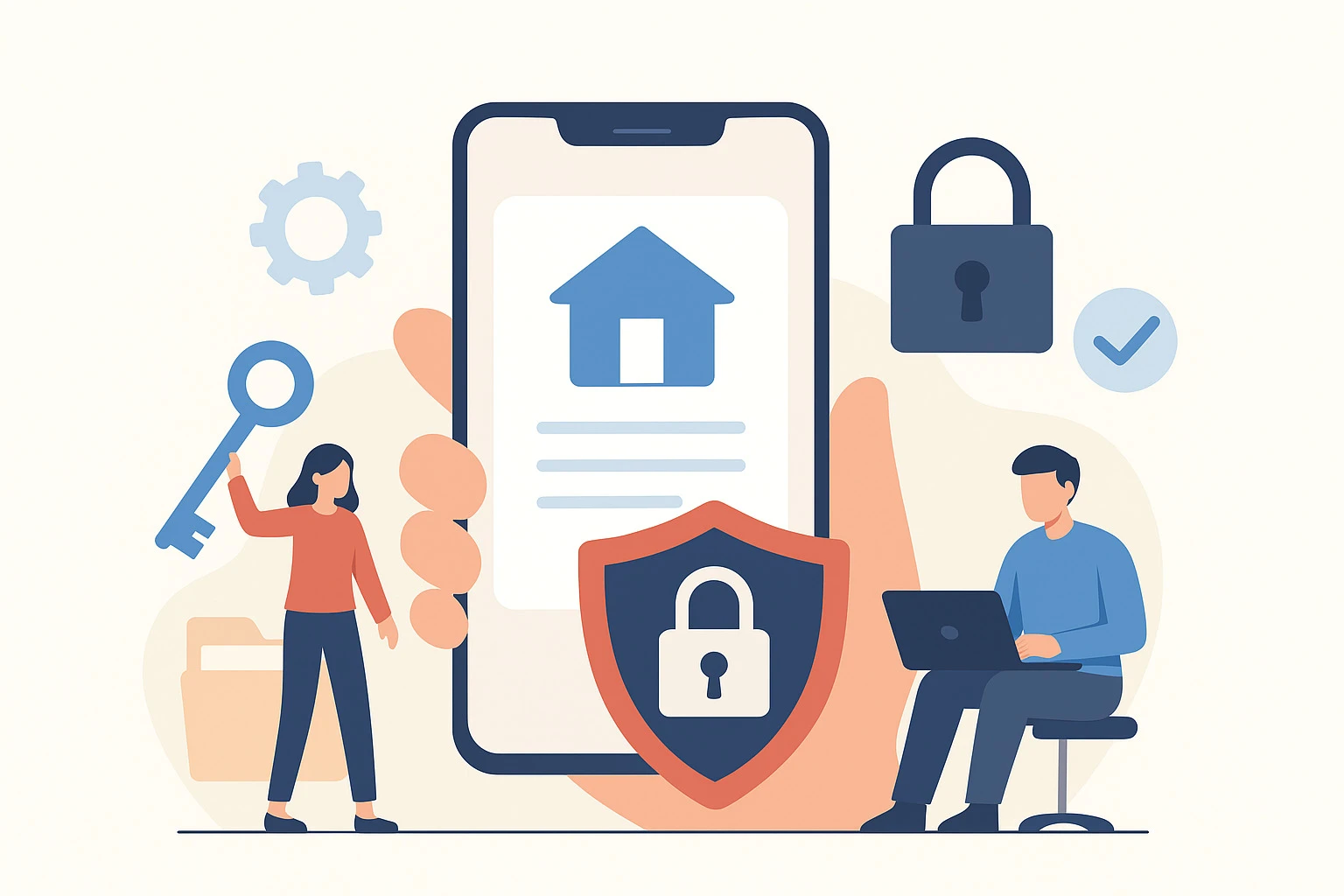
The real estate industry has rapidly embraced digital transformation, with mobile applications becoming a core tool for property listings, virtual tours, lead management, and transactions. While these apps deliver convenience and efficiency, they also handle highly sensitive data such as personal details, financial information, property documents, and location data. This makes security a critical concern in real estate app development. Understanding the major security challenges - and how to address them - is essential for building reliable and trustworthy real estate applications.
Why Security Is Crucial in Real Estate Apps
Real estate apps store and process valuable data for buyers, sellers, agents, and developers. Any security breach can lead to financial loss, legal issues, reputational damage, and loss of customer trust. Cyberattacks such as data leaks, unauthorized access, and payment fraud are becoming increasingly sophisticated. As real estate platforms grow in scale and complexity, security must be treated as a foundational element rather than an afterthought.
Data Privacy and Unauthorized Access Risks
One of the biggest challenges in real estate app development is protecting user data from unauthorized access. These apps often collect personal identities, contact details, transaction history, and property ownership information. Weak authentication mechanisms or poor access controls can allow hackers to exploit vulnerabilities.
A professional real estate app development company addresses this issue by implementing strong authentication protocols such as multi-factor authentication, role-based access control, and secure session management. Encrypting sensitive data both at rest and in transit ensures that even if data is intercepted, it cannot be misused.
Insecure APIs and Third-Party Integrations
Real estate apps rely heavily on APIs for maps, payment gateways, CRM systems, analytics tools, and property databases. Poorly secured APIs can become easy entry points for attackers, exposing backend systems and user data.
To solve this challenge, developers must use secure API authentication methods, rate limiting, and token-based authorization. Regular API audits and monitoring are also essential. Choosing reliable third-party services and keeping integrations updated reduces the risk of vulnerabilities spreading across the app ecosystem.
Payment and Transaction Security Threats
Many real estate apps facilitate booking fees, deposits, or rental payments. This makes them a prime target for financial fraud, phishing attacks, and payment data theft. If payment security is compromised, users may lose confidence in the platform entirely.
Secure payment gateways that comply with industry standards such as PCI-DSS are critical. Tokenization, secure encryption, and avoiding local storage of payment credentials significantly reduce risk. Regular penetration testing helps identify weaknesses before attackers can exploit them.
Cloud Storage and Document Security Issues
Real estate platforms often store contracts, property images, floor plans, and legal documents in the cloud. Misconfigured cloud environments or weak access policies can expose these documents to unauthorized users.
To mitigate this, developers should use secure cloud configurations, encrypted storage, and strict access permissions. Automated backups, audit logs, and continuous monitoring help ensure document integrity and traceability. Proper document lifecycle management also ensures that outdated or unnecessary files are securely removed.
Location Tracking and Privacy Concerns
Many real estate apps use GPS and location data to show nearby properties, neighborhoods, and amenities. While this improves user experience, it also raises privacy concerns if location data is misused or leaked.
Transparent permission policies and minimal data collection are key solutions. Apps should request location access only when necessary and allow users to control their privacy settings. Secure handling of location data ensures compliance with data protection regulations and builds user trust.
Lack of Regular Updates and Security Testing
Security threats evolve constantly, and apps that are not regularly updated become vulnerable over time. Outdated libraries, unpatched frameworks, and neglected testing can expose critical security gaps.
To solve this, real estate apps should follow a continuous security testing approach, including vulnerability scanning, code reviews, and penetration testing. Regular updates and proactive maintenance ensure that the app remains resilient against emerging threats.
Best Practices for Building Secure Real Estate Apps
Security should be integrated throughout the development lifecycle. This includes secure coding practices, threat modeling during planning, and ongoing monitoring after deployment. Working with experienced developers who prioritize security from day one significantly reduces long-term risk.
Choosing the right technology partner is just as important as choosing the right features. A skilled mobile app development company in Bangalore with expertise in secure architecture, compliance standards, and scalable solutions can help real estate businesses build apps that are not only functional but also safe, compliant, and future-ready.
Conclusion
Security challenges in real estate app development are complex, but they are manageable with the right strategies and expertise. From protecting user data and payments to securing APIs and cloud storage, every layer of the app requires careful attention. By addressing these challenges proactively, real estate businesses can deliver secure digital experiences that inspire confidence, protect users, and support long-term growth in an increasingly competitive market.