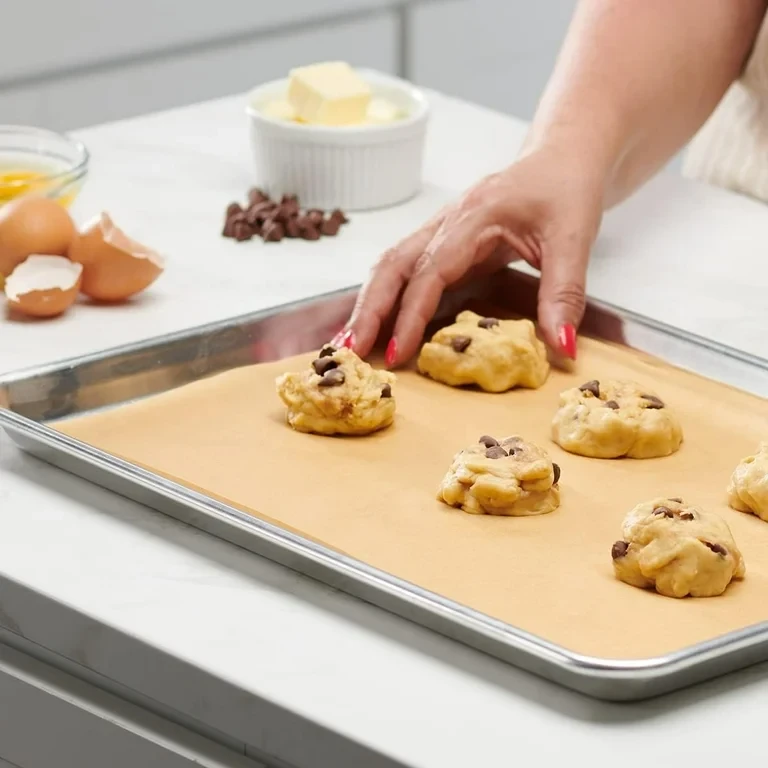
In both professional kitchens and home baking environments, material selection often dictates final results, and Parchment Paper plays a subtle yet crucial role in shaping outcomes. Unlike ordinary paper, its engineered surface ensures non-stick behavior, heat resistance, and structural stability during baking or roasting. Zhejiang Guanghe New Materials Co., Ltd. produces parchment paper that aligns these performance qualities with modern culinary demands, combining fiber quality, precise coating, and controlled manufacturing processes to ensure consistent results for chefs and home bakers alike.
The production of high-quality parchment paper starts with careful selection of cellulose fibers. These fibers are refined to achieve a balance between flexibility and strength, allowing the paper to resist tearing while accommodating the expansion of dough, batters, or other ingredients. Advanced surface treatments enhance the non-stick property without relying on excessive coatings, ensuring that the paper remains safe for food contact and free of chemical residues. Temperature tolerance is a key parameter; during processing, moisture content and drying stages are closely monitored to prevent curling, warping, or brittleness when exposed to high oven temperatures.
Handling and usage methods significantly influence baking performance. Properly cutting parchment paper to fit baking trays or molds avoids overlapping edges, which can block airflow and affect even cooking. Pre-shaping sheets for molds, gently pressing them into corners, and avoiding sharp folds reduce stress on fibers and minimize tearing. For delicate items such as meringues or puff pastries, lining trays with parchment paper helps maintain even baking and facilitates clean removal, reducing breakage or sticking. Additionally, using parchment paper in combination with lightly greased surfaces can enhance non-stick reliability for high-fat or sugary recipes.
Parchment paper is also versatile beyond conventional baking. It serves as a barrier for roasting vegetables, fish, or meats, helping to retain moisture while preventing direct contact with hot trays. In steaming applications, it can separate layers of food to prevent sticking, while maintaining adequate heat and moisture transfer. Its functionality extends to food preparation tasks such as layering doughs, separating frozen portions, or staging ingredients for assembly, where its structural stability and non-stick properties reduce waste and improve efficiency. This multi-functional nature has made parchment paper a staple in professional kitchens and domestic households alike.
Industrial and commercial applications emphasize consistent quality and compatibility with automated processes. Conveyor baking lines, portion control systems, and large-scale roasting operations require parchment paper that feeds smoothly, maintains shape under repeated handling, and resists curling or tearing during extended heat exposure. Zhejiang Guanghe New Materials Co., Ltd. works to provide products that meet these stringent requirements, aligning production control and material properties with the needs of both small-scale and industrial users. More details and product options are available at https://www.guanghepaper.com/product .