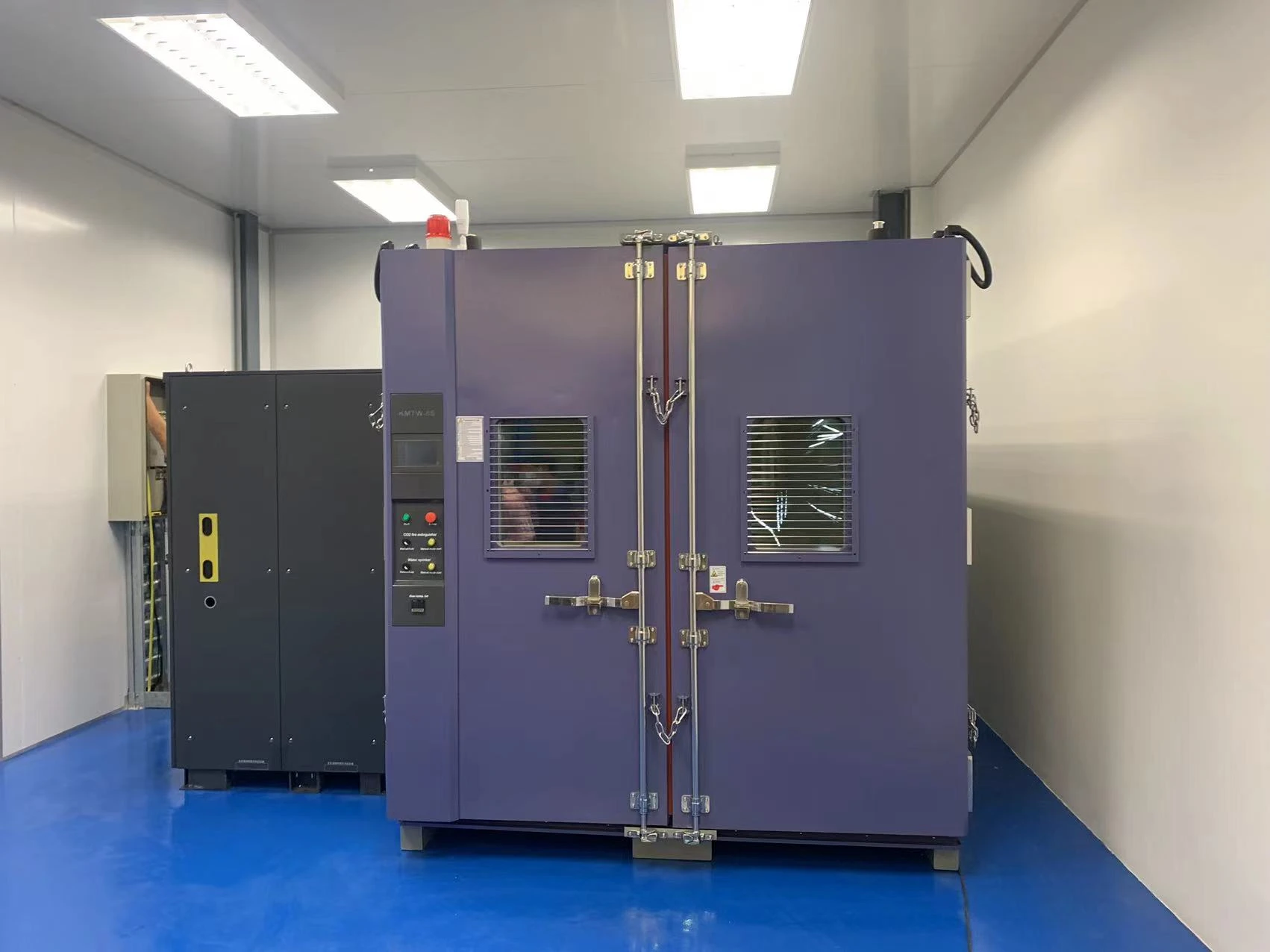
Environmental testing chambers—also known as climatic test chambers—serve as indispensable tools in scientific research and industrial production. They create controlled environmental settings that enable the assessment of product performance and durability under a wide array of simulated conditions. This article delves into the definition of environmental testing chambers, their core characteristics, practical applications, and the technological innovations driving their evolution.
Definition of Environmental Testing Chambers
What Are Environmental Testing Chambers?
Referred to interchangeably as climatic chambers, climate simulation chambers, or simply “environmental chambers,” these specialized enclosures are engineered to replicate diverse environmental parameters, including temperature variations, humidity levels, mechanical vibration, and light exposure. Their primary purpose is to analyze how these conditions affect products, materials, and components, ensuring that they can endure the harsh or variable environments they may encounter in real-world use.
Importance in Research and Industry
Environmental testing chambers play an irreplaceable role across multiple industries, such as automotive, aerospace, electronics, and pharmaceuticals. They offer a reliable method to replicate and closely monitor environmental conditions, empowering researchers and manufacturers to evaluate product performance, dependability, and longevity. This controlled testing environment is critical for upholding product quality and meeting the strict standards set by various industries.
Key Features of Environmental Testing Chambers
Temperature Control
Precise temperature regulation stands as one of the most fundamental features of environmental test chambers. These devices can simulate an extensive range of temperatures, from extreme cold to intense heat, enabling researchers to examine how fluctuations in temperature impact a product’s functionality and structural integrity.
Humidity Regulation
Another essential function is humidity control. Environmental test chambers can maintain specific humidity levels to replicate targeted testing conditions, which is vital for understanding how moisture affects a product’s stability, performance, and lifespan.
Airflow and Ventilation
Effective airflow and ventilation are necessary to maintain consistent environmental conditions throughout the chamber. Designed with high-efficiency airflow systems, these chambers prevent the formation of hotspots and ensure that temperature, humidity, and other test parameters remain uniform, thus delivering accurate and reliable test results.
Vibration Testing
Many environmental testing chambers are equipped with integrated vibration systems, which simulate the mechanical stress that products may experience during use. This feature is particularly important for industries like automotive and aerospace, where products are often subjected to significant vibrations during operation.
Light Simulation
Environmental testing chambers can also replicate various light conditions, including solar radiation, UV exposure, and other light sources. This type of testing helps determine the photostability of products and their long-term durability when exposed to sunlight or artificial light.
Variety of Sizes
To accommodate diverse research and industrial needs, environmental testing chambers are available in a wide range of sizes. Compact benchtop and reach-in models are ideal for small-scale experiments and laboratory use, while larger walk-in chambers are suitable for large-scale studies and can hold bigger product samples. There are even “drive-in” chambers that can accommodate entire vehicles or trucks. This flexibility allows researchers and manufacturers to choose a chamber size that aligns with their specific testing requirements and space limitations.
Types of Environmental Testing Chambers
Temperature and Humidity Chambers
These chambers combine temperature and humidity control to simulate different climatic conditions, making them widely used in industries such as electronics, automotive, and pharmaceuticals to test product performance under varying environmental scenarios.
Thermal Shock Chambers
Also known as temperature shock chambers, these devices rapidly switch between extreme hot and cold temperatures to test a product’s ability to withstand sudden temperature changes. This type of testing is crucial for identifying potential weak points or failure modes in materials and components.
Vibration Testing Chambers
Vibration testing chambers integrate temperature and humidity control with mechanical vibration capabilities, allowing for the evaluation of product durability under real-world conditions. They are commonly used in the automotive and aerospace industries to ensure that products can withstand the combined effects of environmental factors and mechanical stress.
Customized Environmental Chambers
For specialized testing needs, customized environmental chambers are available. These chambers can be tailored to meet unique environmental parameters, size requirements, and other specific features. Customization ensures that the chamber perfectly matches the demands of a particular research project or industrial application.
Applications of Environmental Testing Chambers
Automotive Industry
The automotive industry relies heavily on environmental testing chambers to assess the durability and performance of vehicles and their components under various environmental conditions. This testing is essential for ensuring the safety and reliability of automotive products before they reach the market.
Aerospace and Defense
In the aerospace and defense sectors, environmental testing chambers simulate the extreme conditions that aircraft, spacecraft, and military equipment may encounter, such as extreme temperatures, high humidity, and intense vibration. This testing is critical for ensuring the performance and reliability of critical components in high-stakes applications.
Electronics and Semiconductors
Environmental testing chambers are used to test the resilience of electronic devices and semiconductor components against temperature fluctuations, humidity, vibration, and other environmental factors. This helps ensure that electronic products are reliable and have a long service life.
Materials and Packaging
These chambers are used to evaluate the durability and performance of materials and packaging under various environmental conditions. By doing so, manufacturers can develop packaging solutions that effectively protect products from environmental stressors, ensuring product integrity and safety during storage and transportation.
Pharmaceuticals and Medical Devices
In the pharmaceutical and medical device industries, environmental testing chambers are used to test the stability and performance of products under different environmental conditions. This testing ensures that pharmaceuticals and medical devices remain effective and safe throughout their intended shelf life.
Advantages of Using Environmental Testing Chambers
Compliance with Industry Standards
Environmental testing chambers help manufacturers ensure that their products meet the quality and safety standards set by regulatory bodies and industry organizations. By providing a controlled testing environment, these chambers enable thorough and accurate stability studies, which are required for regulatory approval.
Enhanced Product Reliability
By using environmental testing chambers, researchers can identify potential stability issues and design flaws early in the product development process. This proactive approach leads to the production of higher-quality products that are more likely to perform consistently and reliably in the market.
Accelerated Testing Processes
Environmental testing chambers can simulate long-term exposure to extreme conditions in a compressed time frame, significantly accelerating the testing process. This allows manufacturers to bring products to market more quickly while still ensuring that they meet all necessary quality and safety standards.
Conclusion
Environmental testing chambers are essential tools in scientific research and industrial production, providing controlled environments for evaluating the performance and durability of products. By understanding their key features, applications, and technological advancements, researchers and manufacturers can select the right chamber to enhance their work and achieve reliable, accurate results. These chambers play a critical role in ensuring that products can withstand real-world conditions, thereby guaranteeing quality, safety, and durability across a wide range of industries.