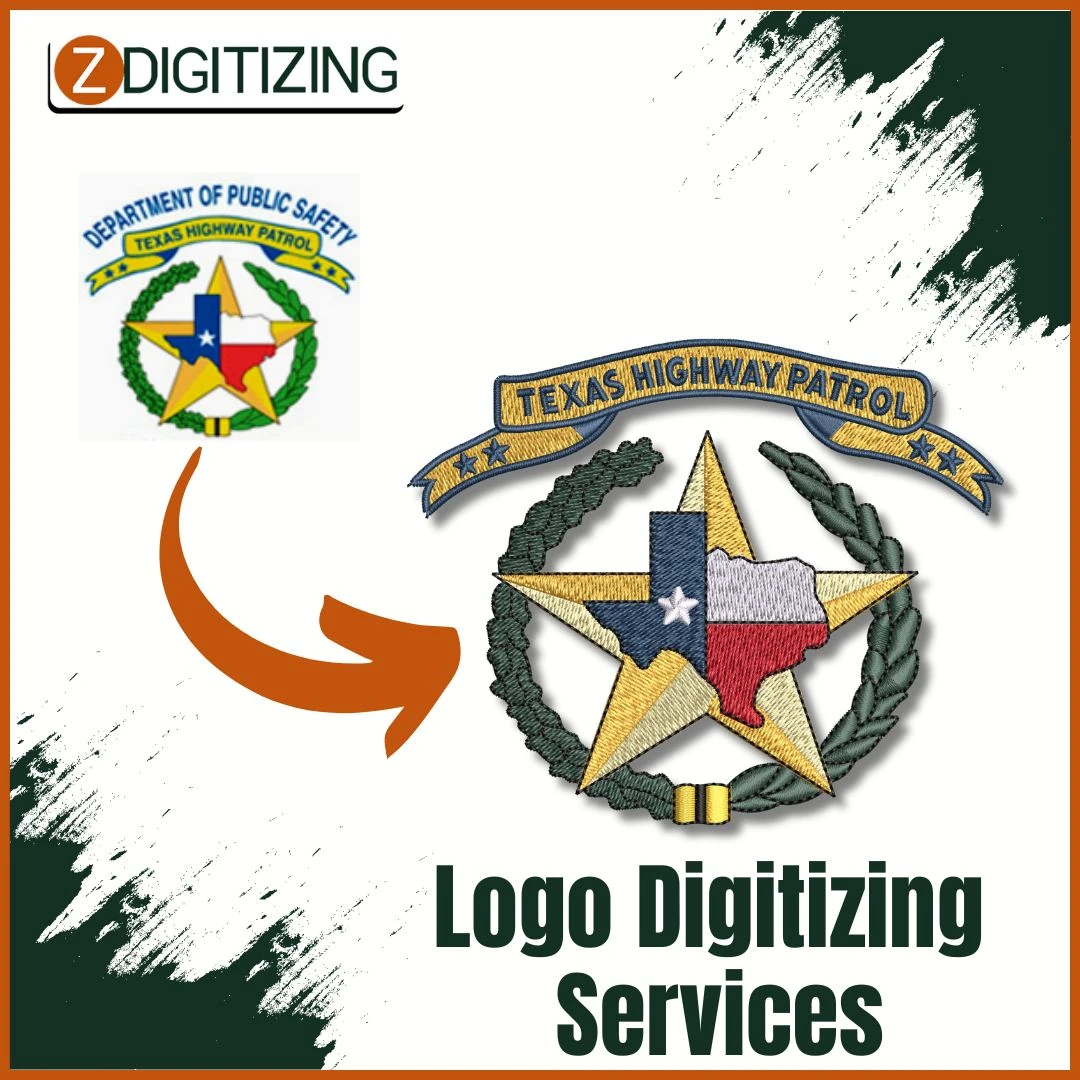
In the modern business landscape, logos are essential for establishing a recognizable identity. Whether on apparel, promotional items, or uniforms, logos communicate professionalism and consistency. However, when applied to embroidery, a logo cannot simply be printed it must be carefully digitized. Logo digitizing in USA is the process of converting a digital design into a format that embroidery machines can interpret, ensuring each stitch accurately reproduces the original design.
What is Logo Digitizing?
Logo digitizing involves transforming a graphic design, such as a vector or raster image, into a file compatible with embroidery machines. Unlike standard digital graphics, embroidery requires precise instructions regarding stitch type, direction, density, and sequence. A trained digitizer uses specialized software to map out these parameters so that the finished embroidery maintains clarity, proportion, and quality.
This process requires technical expertise. A poorly digitized logo can lead to misaligned stitches, uneven textures, or distortion, which may negatively affect brand presentation.
Benefits of Professional Logo Digitizing
Investing in professional logo digitizing provides measurable advantages:
- Precision and Accuracy: Digitizing ensures that all details, from fine text to intricate elements, are faithfully reproduced.
- Consistency Across Products: Digitized logos maintain the same quality across various items, from jackets to caps.
- Durability: Proper digitizing ensures embroidery withstands frequent washing and wear without fading or deforming.
- Cost Efficiency: By minimizing errors and wasted materials, digitizing saves both time and money during production.
The Logo Digitizing Process
A typical digitizing workflow involves several steps:
- Design Evaluation: The original logo is assessed for complexity, color, and size.
- File Conversion: The design is converted into a format compatible with embroidery machines, such as DST, PES, or EXP.
- Stitch Mapping: The digitizer selects stitch types and sequences, optimizing for durability and clarity.
- Test Stitching: A sample is created to verify how the logo appears on the chosen fabric.
- Final Adjustments: Any required corrections are applied to ensure the design meets quality standards.
Best Practices for Effective Digitizing
To achieve optimal results, consider the following:
- Provide high-resolution or vector files (AI, EPS, or SVG) to preserve detail.
- Simplify overly complex designs, as intricate elements may not translate well into stitches.
- Account for the fabric type; stretch or thick fabrics require specific stitch adjustments.
- Test the design before full production to catch errors or distortions early.
Applications of Logo Digitizing
Logo digitizing is widely used in both commercial and personal projects:
- Corporate Apparel: Uniforms, jackets, and hats benefit from consistent logo placement and professional appearance.
- Sports Teams and Clubs: Team logos are embroidered on jerseys, caps, and bags for uniform branding.
- Promotional Merchandise: Items such as tote bags, towels, and caps can carry digitized logos to support marketing campaigns.
- Custom Gifts: Personalized embroidered items, including shirts and towels, add a professional touch for clients or employees.
Choosing a Professional Logo Digitizing Service
Selecting the right service ensures the quality and accuracy of your embroidery. Key considerations include:
- Expertise: Choose a service with experience across multiple types of designs, fabrics, and embroidery machines.
- Attention to Detail: The digitizer must carefully plan stitch direction, density, and sequence for optimal results.
- Technology: Advanced software and machines improve precision and allow for adjustments as needed.
- Customer Support: A responsive team can address revisions or provide guidance on optimizing your design for embroidery.
Frequently Asked Questions (FAQs)
1. How long does it take to digitize a logo for embroidery?
The timeline varies based on the logo’s complexity, but most digitizing projects are completed within 1–3 business days. Complex designs may take longer to ensure accuracy.
2. Can any logo be digitized for embroidery?
Most logos can be digitized, though extremely intricate designs may require simplification to ensure the stitches reproduce clearly on fabric.
3. What file types are required for logo digitizing?
High-resolution vector files (AI, EPS, SVG) are preferred. Raster images (JPEG, PNG) can also be used but may require additional adjustments for clarity.
4. Does the fabric type affect the digitizing process?
Yes. Different fabrics, such as cotton, polyester, or knits, affect how stitches behave. Digitizers adjust stitch type and density to ensure durability and clarity.
Conclusion
Logo digitizing is a vital step in producing high-quality embroidery. It ensures logos are precise, consistent, and durable, helping businesses and individuals maintain a professional and cohesive brand image.
By selecting a skilled digitizing service, providing high-quality files, and testing the design before full production, you can ensure your logos are represented accurately and attractively on all embroidered products.
Professional digitizing bridges the gap between digital designs and real-world embroidery, making every stitch count toward a polished and reliable final product.