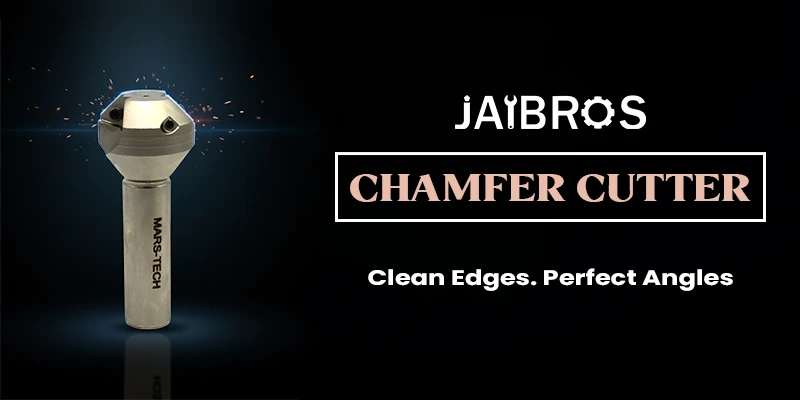
Learn chamfer tool basics, types, angles, and applications to achieve clean edges, improved assembly, and better machining accuracy in CNC operations.
How Chamfering Enhances Part Fit and Assembly Accuracy
In precision machining, edge quality is not just about looks—it directly affects part fitment, safety, and assembly efficiency. Sharp or unfinished edges can cause misalignment, wear issues, and even injuries during handling. This is where Chamfer Tool plays a vital role in modern workshops by creating smooth, angled edges that improve both functionality and appearance.
From CNC shops to high-volume production units, chamfering has become a standard operation. Understanding how chamfering works, which angles to use, and which variants suit different machines helps manufacturers maintain consistent quality while reducing rework.
What Is Chamfering and Why It Matters
Chamfering is the process of cutting a beveled edge between two surfaces, usually at a defined angle. Unlike sharp 90-degree corners, chamfered edges allow parts to fit together easily and reduce stress concentration. In industries like automotive, aerospace, and general engineering, chamfered edges are often mandatory for proper assembly.
Using a Chamfer Tool ensures uniform edge breaks, controlled angles, and repeatable results across batches. This consistency becomes especially important when parts must align perfectly or slide into mating components without resistance.
How Chamfering Improves Assembly Quality
Clean chamfered edges make assembly faster and more reliable. When bolts, pins, or shafts are inserted into holes, a bevelled edge guides them smoothly into position. This minimizes chances of cross-threading, surface damage, or forced fitting.
In automated and semi-automated assembly lines, even a slight edge imperfection can lead to stoppages. By using proper chamfering techniques, manufacturers reduce friction points and ensure seamless component integration.
Common Types of Chamfering Tools Used in CNC Machining
Different machining requirements call for different chamfering solutions. Below are some commonly used options in CNC and VMC setups:
Back Chamfer Tool
A back chamfer tool is designed to chamfer the backside of holes or internal edges that are difficult to reach with standard cutters. It is widely used when machining components that require deburring after drilling or tapping.
Back Chamfer Tool for VMC
In vertical machining centers, a back chamfer tool for VMC allows machinists to complete front and back chamfering in a single setup. This reduces cycle time and improves dimensional accuracy by eliminating multiple repositioning steps.
30-Degree Chamfer Tool
A 30-degree chamfer tool is often selected for light edge breaks, decorative finishes, or parts that require minimal material removal. It provides a subtle bevel that enhances edge safety without altering part geometry significantly.
15-degree Chamfer Tool
A 15-degree chamfer tool is used where very fine chamfering is required, especially in precision components or thin-walled parts. This angle is ideal for reducing burrs while maintaining tight tolerances.
Choosing the Right Chamfer Angle
Selecting the correct chamfer angle depends on the application. Larger angles offer stronger edge relief and easier assembly, while smaller angles focus on burr removal and surface refinement. Material type also plays a role—harder metals may require different angles and cutting parameters compared to softer alloys.
A well-selected Chamfer Tool helps maintain dimensional accuracy while delivering the required edge finish. Tool material, coating, and geometry should always match the workpiece material and machine capability.
Best Practices for Effective Chamfering
To achieve consistent results, machinists should follow a few best practices:
-
Use the correct spindle speed and feed rate to avoid chatter
-
Ensure proper tool alignment to maintain uniform chamfer depth
-
Avoid excessive depth, which can weaken part edges
-
Regularly inspect tools for wear to maintain finish quality
Applying these practices extends tool life and ensures clean, repeatable chamfers across production runs.
CNC Programming Considerations
Accurate chamfering also depends on correct CNC programming. Tool path must account for tool angle, diameter, and approach strategy. Poorly programmed moves can result in uneven chamfers or tool marks.
Using a high-quality Chamfer Tool with optimized programming reduces machining time while maintaining edge consistency. Many modern CAM systems offer built-in chamfering cycles that simplify programming and improve reliability.
Maintenance and Tool Life Tips
Regular maintenance is essential for consistent chamfer quality. Chips and coolant residue can affect cutting performance, especially in tight areas like back chamfers. Cleaning tools and checking inserts or cutting edges frequently prevents unexpected quality issues.
Investing in durable tooling reduces downtime and ensures stable performance over long production cycles.
FAQs
1. What is the main purpose of chamfering in machining?
Chamfering removes sharp edges, improves safety, and helps components fit together smoothly during assembly.
2. When should a back chamfer tool be used?
It is used when the backside of a hole or internal edge needs chamfering and cannot be accessed from the front.
3. Which chamfer angle is best for general applications?
Angles like 30 degrees are commonly used, but the best angle depends on assembly and design requirements.
4. Can chamfering reduce assembly time?
Yes, chamfered edges guide parts into position easily, reducing alignment issues and rework.
5. Is chamfering necessary for all machined parts?
Not always, but it is highly recommended for parts involved in assembly or handling.
Conclusion
Chamfering may seem like a small step in machining, but its impact on quality, safety, and assembly efficiency is significant. By selecting the right angles, tools, and machining strategies, manufacturers can achieve clean edges that enhance both performance and appearance. A reliable Chamfer Tool ensures consistent results and smoother production workflows.
About Jaibros:
Jaibros is a trusted name in precision cutting solutions, offering high-quality chamfering and CNC tooling designed to meet modern manufacturing demands with accuracy, durability, and performance you can rely on.