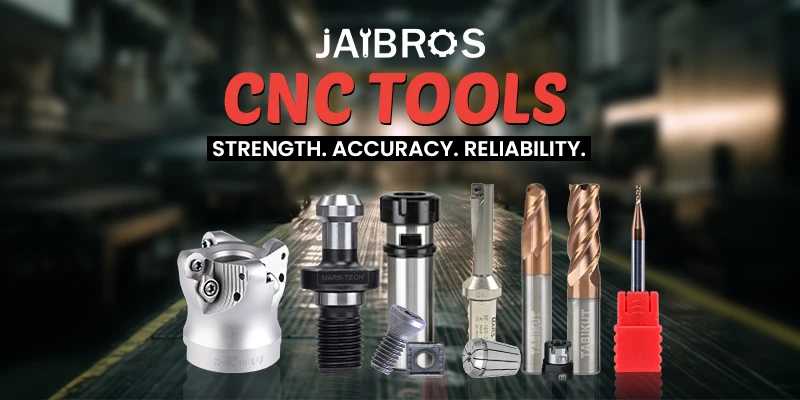
Discover different CNC tool types used in precision machining and understand how reliable CNC tools suppliers support accuracy, performance, and efficiency.
Complete Guide to CNC Tool Types for Modern Machining
Modern manufacturing relies heavily on accuracy, repeatability, and efficiency, and machining processes are at the heart of this transformation. From automotive and aerospace to general engineering, CNC machining enables manufacturers to produce complex parts with tight tolerances. To achieve these results, understanding the different types of CNC tools used in machining is essential, along with choosing reliable CNC suppliers who can provide consistent quality and technical support.
The Role of CNC Tools in Modern Machining
CNC machining involves automated control of cutting operations using programmed instructions. The performance of this process depends not only on the machine itself but also on the tools that perform cutting, shaping, and finishing. High-quality tools ensure smoother operations, better surface finishes, and longer tool life.
Manufacturers often rely on experienced tool suppliers to guide them in selecting suitable tools for specific materials and applications. With the right tools, machining operations become more predictable, productive, and cost-effective.
Overview of Different Types of CNC Tools
There are various types of CNC tools, each designed for specific machining tasks. Understanding their purpose helps manufacturers optimize performance and avoid unnecessary wear or tool failure.
Turning Tools
Turning tools are commonly used on CNC lathes to remove material from rotating workpieces. They are ideal for producing cylindrical components, threads, and grooves. Proper tool geometry and coating play a key role in achieving dimensional accuracy and surface quality.
Milling Tools
Milling tools are widely used in CNC milling operations to cut flat surfaces, slots, and complex contours. These tools rotate at high speeds and can handle both roughing and finishing tasks. Selecting the best tools for milling improves productivity and reduces vibration during cutting.
Drilling Tools
Drilling tools are used to create precise holes in workpieces. CNC drilling tools offer excellent consistency, especially in high-volume production. Their performance depends on material compatibility, cutting speed, and coolant flow.
Boring and Reaming Tools
Boring tools enlarge existing holes, while reaming tools refine hole size and finish. These tools are critical in applications requiring tight tolerances, such as automotive and aerospace components.
Threading Tools
Threading tools are used to create internal and external threads with high accuracy. CNC-controlled threading ensures uniform thread profiles and repeatability across batches.
Importance of Tool Material and Coatings
The effectiveness of CNC tools also depends on the materials and coatings used in their construction. Carbide, high-speed steel, and advanced ceramics are commonly used materials. Coatings such as titanium nitride or aluminum oxide reduce friction, improve heat resistance, and extend tool life.
Reliable CNC tool suppliers understand these technical aspects and recommend tools based on machining conditions and material hardness. This expertise helps manufacturers avoid premature wear and maintain consistent output.
How Tool Selection Impacts Machining Efficiency
Choosing the right tool directly affects machining efficiency, surface finish, and cycle time. Incorrect tool selection can lead to tool breakage, increased scrap rates, and higher production costs. This is why manufacturers often search for CNC tools near me to ensure quick access to expert advice and immediate availability.
Working with established CNC manufacturers through trusted suppliers ensures access to tested and proven solutions. It also provides confidence that tools meet industry standards and performance expectations.
Sourcing Tools: Online and Offline Options
Today, manufacturers have multiple sourcing options. Many prefer CNC tools online platforms for convenience, easy comparison, and quick ordering. Online catalogs provide detailed specifications, making it easier to select suitable tools.
At the same time, local sourcing remains important. Trusted tools suppliers with a physical presence can offer faster delivery, on-site support, and personalized service. Combining online accessibility with local availability creates a flexible and efficient procurement process.
Quality, Consistency, and Supplier Reliability
Consistency is critical in machining operations. Variations in tool quality can disrupt production and affect final product accuracy. Partnering with dependable CNC tools suppliers ensures uniform quality across batches and reliable performance over time.
Quality-focused suppliers invest in testing, certifications, and partnerships with reputable tool manufacturers. This commitment helps manufacturers maintain precision and meet customer expectations without frequent adjustments or downtime.
Future Trends in CNC Tooling
As machining technology evolves, CNC tools are becoming more advanced. Developments in tool materials, coatings, and digital monitoring systems are improving performance and tool life. Smart tools with wear monitoring capabilities are helping manufacturers optimize operations and reduce unexpected failures.
Leading tools suppliers stay aligned with these trends, offering innovative solutions that support automation and high-speed machining. This forward-looking approach helps manufacturers remain competitive in a rapidly changing industry.
Conclusion
Understanding the different types of CNC tools used in machining is essential for achieving accuracy, efficiency, and long-term productivity. From turning and milling to drilling and threading, each tool plays a specific role in shaping high-quality components. Choosing the right tools and sourcing them from experienced partners ensures consistent performance and reduced operational risks. Companies like Jaibros stand out by offering dependable products, technical expertise, and customer-focused service, making them a trusted name for manufacturers seeking reliable machining solutions.
Frequently Asked Questions (FAQs)
1. Why is it important to understand different CNC tool types?
Understanding tool types helps manufacturers select the right solution for each machining operation, improving accuracy and efficiency.
2. How do tool coatings affect machining performance?
Coatings reduce friction, improve heat resistance, and extend tool life, especially in high-speed operations.
3. Is online sourcing reliable for CNC tools?
Yes, when tools are sourced from reputed suppliers, online platforms offer convenience along with detailed technical information.
4. How does supplier expertise influence tool performance?
Experienced suppliers provide guidance on tool selection, setup, and usage, reducing errors and improving productivity.
5. What should manufacturers consider when choosing tools for CNC milling?
They should consider material type, cutting parameters, tool geometry, and overall machining requirements to ensure optimal results.