TL;DR
-
Startups often struggle with MVPs because the product goal is not clear from day one.
-
Many teams build based on assumptions instead of real user validation.
-
Too many features in version one make the MVP slow, costly, and confusing.
-
Unrealistic timelines and budgets create pressure and lead to rework.
-
Team and execution gaps reduce product quality and slow learning after launch.
Introduction:
Creating an MVP sounds simple at first. You build a basic product, launch it, and learn from users. But many startups face problems here. They get delays, higher costs, and confusion about what to build next.
This happens when there is no clear plan. Teams add too many features, skip user feedback, or set timelines that are too tight. A clear MVP development roadmap helps the team move step by step. In this blog, you will learn 5 common MVP development challenges startups face, in very simple language.
Common MVP Development Challenges Startups Face
Building an MVP is not just about speed; these are the common challenges that often slow startups down and affect early product success.
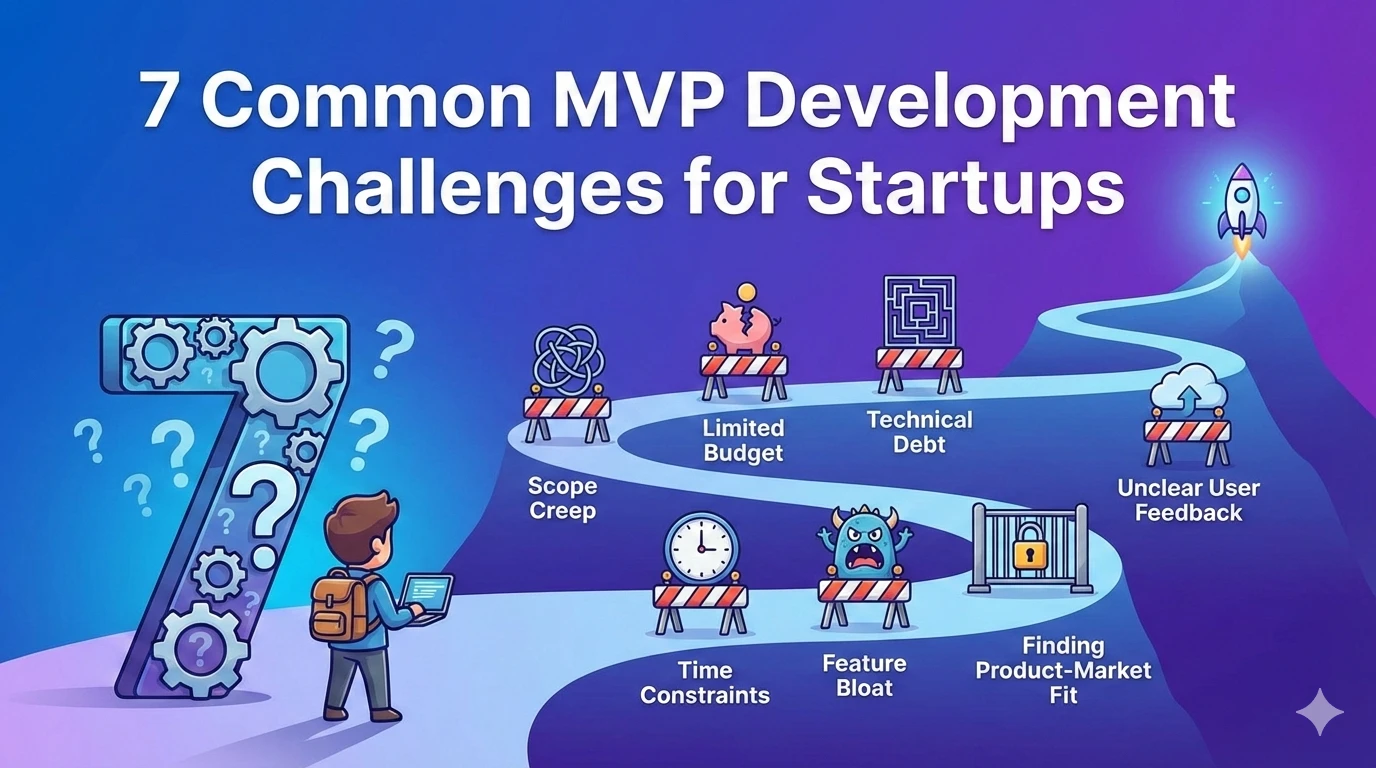
1. Unclear Problem and MVP Scope
Many startups start building too early. They are not fully clear about the main problem, target user, or what should be in version one. Because of this, new ideas keep getting added during development. This makes the MVP bigger, slower, and harder to launch.
2. Weak Market Validation
Some teams build first and validate later. They assume users need the product but do not test that idea with enough real users. After launch, users may not engage because the problem is not urgent for them. This leads to low traction and unclear next steps.
3. Poor Feature Prioritization
Startups often try to include too many features in the MVP. Everything feels important, so the first version becomes heavy and confusing. Users struggle to see the main value quickly. More features also mean more time, more cost, and slower learning.
4. Unrealistic Timeline and Budget Expectations
Many teams think MVP development will be faster and cheaper than it really is. They plan for development, but miss hidden work like testing, bug fixes, and changes after feedback. As work grows, deadlines slip and budget pressure increases. This creates stress and weak decision-making.
5. Execution Gaps Across Team, Tech, and Launch Readiness
Good ideas can still fail if execution is weak. Teams may have unclear roles, communication issues, or quick tech decisions that cause problems later. Some MVPs also launch without proper tracking or feedback systems. Then teams cannot clearly understand what is working and what needs improvement.
6. No Clear Way to Measure Success
Many startups launch their MVP without clear goals. They check many numbers, but do not know which ones matter. Because of this, they feel confused after launch. Before launching, choose a few simple metrics like sign-ups, active users, and conversions.
7. Not Improving After Launch
Some teams launch the MVP and then stop improving it. They collect feedback, but do not use it in updates. This slows growth and users may lose interest. Keep improving your MVP in small steps based on real user feedback.
How These MVP Challenges Affect Growth
-
Your launch gets late, so you learn from real users much slower.
-
Your costs go up, because you spend more time fixing and changing things.
-
Your team gets confused, when priorities keep changing during development.
-
Users may not stay, if the MVP does not solve one clear problem well.
-
Growth becomes slow, because time and budget are used on rework instead of progress.
Conclusion
An MVP should help startups learn fast with less risk. But if the problem is not clear, user validation is weak, and too many features are added, launch becomes difficult. Improving the product also becomes harder. These are common issues for early-stage startups. The right MVP development team can help you stay focused and avoid these mistakes.
The good news is that these problems can be fixed early. A focused MVP helps you get better user feedback, save time and budget, and grow your startup with more confidence.
FAQs
1) What is the biggest MVP development challenge for startups?
The biggest challenge is unclear scope. When teams are not clear about the main problem, target user, and MVP boundaries, development becomes slow and confusing.
2) Why do many startup MVPs fail after launch?
Many MVPs fail because they are built on assumptions instead of real user validation. If the problem is not urgent for users, adoption stays low.
3) How many features should an MVP have?
An MVP should include only the minimum features needed to test one core idea. Too many features increase cost, delay launch, and reduce clarity.
4) Why do MVP timelines usually get delayed?
Timelines often slip because teams underestimate testing, bug fixing, revisions, and post-launch changes. MVP development usually needs more iteration than expected.
5) How do MVP challenges affect startup growth?
These challenges lead to delayed launches, higher costs, weak user traction, and slower learning. This directly impacts momentum and early growth.