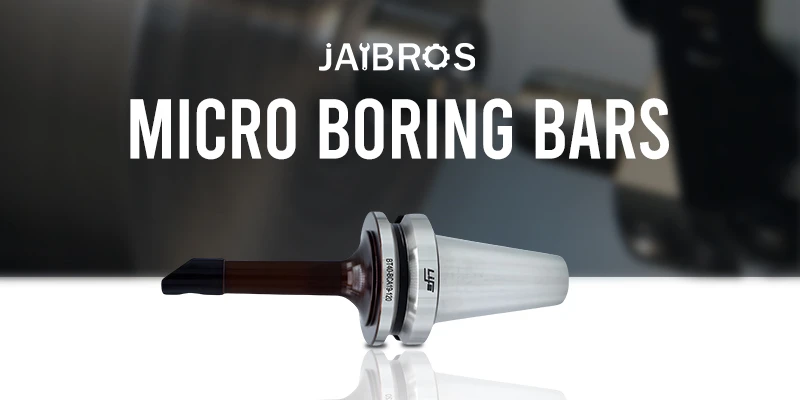
Learn practical tips for selecting micro boring bars for industrial machining. Compare tool types, micro-boring heads, VMC compatibility, and cost factors to achieve precision results.
Understanding Precision Needs in Small Diameter Machining
Industrial machining often involves components where internal diameters must meet extremely tight tolerances. In such cases, tool selection becomes more critical than cutting parameters alone. Choosing the correct micro boring bar is essential when working with fine holes, deep cavities, and high-accuracy internal features. These operations are common in aerospace parts, medical components, mould inserts, and miniature mechanical assemblies where even slight deviation can cause part rejection.
Micro boring processes differ from standard boring because the scale is smaller and the margin for error is minimal. Tool deflection, spindle runout, and vibration have a much larger effect when diameters shrink. That is why selection should be based on rigidity, holder compatibility, geometry, and coating rather than only size.
Why Tool Rigidity Comes First
Rigidity is the most important factor in successful micro boring operations. Smaller diameter tools naturally have less cross-sectional strength, which increases the chance of bending under cutting load. A well-designed micro boring bar uses high-stiffness materials and optimised shank design to resist deflection and maintain dimensional accuracy throughout the cut.
When rigidity is insufficient, the bore may show taper, poor roundness, or chatter marks. Industrial users should always choose the largest possible shank diameter that safely fits the hole size. Reduced overhang and strong clamping further improve performance. Rigidity is not just about tool material but also about the complete setup from the spindle to the cutting edge.
Choosing the Right Tool Material
Material choice directly affects performance and tool life. Solid carbide is widely preferred for micro boring because it offers higher stiffness and wear resistance compared to high-speed steel. Carbide maintains edge sharpness longer and supports higher cutting speeds, which is important in modern CNC environments.
Grain structure also matters. Fine-grain carbide grades are typically better for small diameter tools because they provide edge strength without becoming too brittle. A high-quality micro boring bar made from fine carbide can maintain consistent size across longer production runs and reduce the need for frequent tool changes.
In special materials such as hardened steels or abrasive alloys, advanced grades and coatings further improve durability. Matching the tool material to the workpiece material is a key selection step that should not be skipped.
Fixed Tools vs Adjustable Systems
Industrial shops must decide whether a fixed-size tool or an adjustable system better fits their workflow. Fixed tools are simpler and usually more rigid, which makes them suitable for repeat production. They are easy to set and stable in long runs.
Adjustable micro boring heads are better suited for tool rooms, development work, and low-volume precision batches. They allow very fine diameter corrections without replacing the entire tool. This flexibility helps when tolerance targets are extremely tight or when bore sizes vary slightly between jobs. Micro boring heads require more careful setup and calibration, but they provide excellent control when used correctly.
The decision depends on production volume, tolerance range, and operator skill level.
Machine Compatibility and Holder Quality
Tool performance is strongly influenced by the machine and holder system. Most industrial small-hole work is performed on vertical machining centres, so holder precision is critical. A vmc boring bar must run with high concentricity because spindle runout transfers directly to bore size error.
Hydraulic and shrink-fit holders are often recommended because they provide uniform clamping and low runout. Standard collets can work, but only if they are high precision and well maintained. Projection length should always be minimised to increase stiffness and reduce the riskof vibration.
The machine spindle condition should also be checked regularly. Even the best micro boring bar cannot compensate for poor spindle accuracy or worn bearings.
Geometry and Chip Control Considerations
Cutting geometry must be selected based on both the material and bore depth. Sharp cutting edges reduce cutting pressure and help maintain size control. However, edges must still have enough strength to resist premature wear. Proper rake and clearance angles allow smooth cutting action while preventing rubbing inside the bore.
Chip evacuation is often underestimated in micro boring operations. Because hole diameters are small, chips have limited exit space. If chips pack inside the hole, they damage surface finish and raise temperature. Good geometry combined with directed coolant flow helps maintain clean cutting conditions. Industrial users should evaluate chip behavior during trial cuts and adjust parameters accordingly.
Coating Selection for Longer Tool Life
Modern coatings significantly enhance tool performance in industrial environments. Coatings reduce friction and heat at the cutting zone, which is especially important in small diameter operations where thermal load concentrates quickly. Coated tools usually maintain edge integrity longer and produce more stable finishes.
Different coatings perform better on different materials. Heat-resistant coatings are suitable for steels and superalloys, while low-friction coatings are often better for aluminum and non-ferrous metals. Selecting a coated micro boring bar for production work often improves consistency and reduces total tooling cost over time.
Evaluating Cost Versus Performance
Many buyers compare micro boring bars for VMC price across suppliers, but smart selection goes beyond the catalog rate. True cost should include tool life, bore consistency, rejection rate, and downtime risk. A lower-priced tool that fails early or produces variable sizes increases overall expense.
Industrial buyers should review performance data, supplier support, and replacement availability. Insert supply, regrinding options, and delivery reliability also affect long-term value. Investing in a stable micro boring bar often reduces total machining cost even if the purchase price is higher.
Setup Discipline and Cutting Parameters
Proper setup discipline ensures that tool capability is fully utilized. Tool projection should be kept as short as possible. Holder surfaces must be clean, and clamping torque should follow manufacturer guidance. Cutting parameters should begin conservatively and increase gradually based on sound and chip shape feedback.
Feed rates and depth of cut must remain light enough to control cutting force. Coolant should reach the cutting zone directly to assist chip evacuation and temperature control. A stable vmc boring bar setup with balanced parameters produces more repeatable bore geometry and better finishes across batches.
Common Selection Mistakes in Industry
Many boring problems come from preventable selection mistakes. Choosing tools based only on diameter without considering rigidity is a frequent error. Excessive overhang, low-precision holders, and incorrect geometry also lead to chatter and taper. Ignoring chip evacuation needs causes finish problems and edge damage.
Industrial machinists should evaluate the entire system rather than just the tool size. When the setup, holder, parameters, and micro boring bar are aligned, results become predictable and repeatable.
FAQs
What is micro boring used for in industrial machining?
Micro boring is used to accurately enlarge and finish small internal holes where tight tolerance and fine surface finish are required.
When should adjustable micro boring heads be selected?
They are best when bore diameter needs fine adjustment or when working on prototype and low-volume precision jobs.
Why is carbide preferred for small diameter boring tools?
Carbide provides higher rigidity and wear resistance, which helps maintain dimensional accuracy in small bores.
How can vibration be reduced during micro boring operations?
Vibration can be reduced by shortening tool overhang, using high-precision holders, and lowering cutting forces.
Is higher tool price always better for performance?
Not always, but higher-quality tools often deliver longer life and more consistent bore results, reducing total production cost.
Conclusion
Selecting the right boring tool for small diameter work requires attention to rigidity, material, geometry, coating, and holder precision. Shops that evaluate the full machining system instead of only tool size achieve better bore accuracy and longer tool life. With correct setup and parameter control, a properly chosen micro boring bar delivers stable and repeatable internal machining performance across demanding industrial applications.
Jaibros is an industrial cutting tool supplier focused on CNC and VMC machining solutions, offering precision boring, milling, and speciality tools designed to support accurate and efficient manufacturing across a wide range of industries.