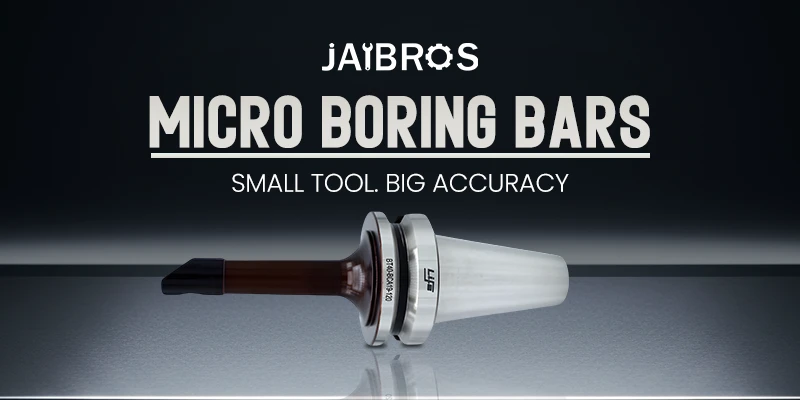
Follow this micro boring bar buying checklist for CNC shops to choose the right tool for small diameter boring, better accuracy, and stable machining results.
Micro Boring Bar Buying Checklist for CNC Machine Shops
Small diameter internal machining demands a higher level of precision, planning, and tooling quality than standard boring work. CNC shops that regularly produce tight-tolerance components know that tool selection directly affects finish quality, cycle time, and rejection rate. Choosing the right micro boring bar is not just a purchase decision but a process decision that influences the entire machining workflow. A structured buying checklist helps prevent common mistakes and ensures the tool matches the machine, material, and production goals.
CNC environments are performance driven. When shops deal with miniature bores, even minor tool deflection or vibration can create oversize holes, poor finish, or taper. That is why buyers should evaluate technical features, compatibility factors, and operational limits before selecting a micro boring bar for daily use.
Understanding the Application Before Buying
Before reviewing any catalog or supplier quote, shops should clearly define the application. Bore diameter range, depth, tolerance requirement, and workpiece material all shape the correct choice. Tools used for shallow finishing cuts in aluminum are very different from those required for deep bores in hardened steel. A micro boring bar that performs well in one material may fail quickly in another due to cutting force and heat differences.
Application clarity also helps determine whether standard tools are enough or whether specialized micro boring heads are required. Many buyers skip this step and select purely based on diameter, which leads to performance issues later. Knowing the exact job type prevents overspending and underperformance at the same time.
Matching Tool Size and Minimum Bore Capacity
One of the most important checklist items is minimum bore capacity. Every boring bar is rated for a specific minimum hole diameter. Operating below that size increases rubbing instead of cutting, which damages both the insert and the work surface. Buyers should always choose the largest shank diameter that fits the bore because higher diameter means greater rigidity.
Length-to-diameter ratio must also be reviewed. Long reach with a thin tool increases vibration risk. If the job requires deeper reach, it is better to select a purpose-built long-reach micro boring instead of extending a shorter one beyond its stable range.
Shank Material and Rigidity Considerations
Tool shank material strongly influences cutting stability. Carbide shanks are widely preferred in micro boring operations because they resist bending and vibration better than steel. Greater stiffness produces more predictable sizing and finish. For very small diameters, rigidity matters more than cost difference.
CNC buyers should include shank material in their checklist and not treat all tools as equal. A vmc boring bar used for precision finishing should ideally have a high-stiffness construction. This reduces the need for repeated offset corrections and improves repeatability across batches.
Insert Style and Cutting Edge Geometry
Insert design is another critical factor. Micro boring inserts are usually ground sharp with positive rake to lower cutting pressure. Lower pressure reduces tool deflection and improves surface quality. Buyers should confirm that insert geometry matches the work material and finish requirement.
Some micro boring heads support interchangeable insert styles, which gives flexibility for different materials. Shops running mixed materials benefit from this adaptability. Edge preparation, coating, and chip control features should also be reviewed because chip evacuation is more difficult in small bores.
Machine Compatibility and Holder Quality
A buying checklist should always include machine compatibility. High precision boring requires low spindle runout and a high-quality holder. Even a premium boring bar will not perform well if mounted in a worn holder. Collet or hydraulic holders generally provide better concentricity than older side-lock systems.
Spindle speed capability is another machine-side factor. Small-diameter tools require higher RPMs to maintain the correct cutting speed. When buyers compare micro boring bar for VMC price, they should also confirm whether their machine can run the required speeds safely and consistently.
Overhang Limits and Vibration Control
Overhang directly affects performance in micro boring. As tool extension increases, stiffness drops quickly. Buyers should check manufacturer overhang recommendations and ensure the planned setup stays within limits. If long reach is unavoidable, vibration-damped or heavy metal designs should be considered.
A stable micro bar with controlled overhang produces better finishes and reduces insert wear. Shops that ignore overhang limits often blame inserts when the real issue is tool deflection.
Coolant Access and Chip Evacuation
Chip evacuation is more difficult in small internal bores. Poor chip removal leads to scratching, built-up edge, and insert failure. Buyers should check whether the tool supports effective coolant delivery. Through-tool coolant designs can improve chip flow and temperature control.
This is especially important in deep micro boring operations where chips cannot easily escape. A checklist that includes coolant strategy helps avoid performance surprises after purchase.
Cost Evaluation Beyond Tool Price
Purchase price alone should never decide tooling choice. Buyers should evaluate cost per component, expected insert life, finish consistency, and downtime risk. A slightly higher priced micro boring bar may deliver more stable performance and reduce scrap, which lowers total cost per part.
When reviewing boring bar for VMC price, include replacement insert cost and availability as well. Production shops benefit from tools that have consistent supply and predictable performance rather than the lowest upfront cost.
Supplier Support and Technical Documentation
Reliable suppliers provide cutting data, setup guidance, and troubleshooting support. Technical documentation helps programmers and operators apply the tool correctly. Buyers should check whether cutting parameters, bore limits, and insert charts are clearly available.
Support matters because micro boring is less forgiving than general machining. Access to correct data reduces trial-and-error time and protects production schedules.
Conclusion
A structured buying checklist helps CNC shops choose the right micro boring bar with confidence. Key evaluation areas include bore size compatibility, shank rigidity, insert geometry, overhang limits, holder quality, coolant access, and real cost per part. When these factors are reviewed together, tooling decisions become more predictable and performance improves across production runs. Careful selection reduces vibration, improves finish, and increases dimensional control, which are the core goals of precision internal machining. Jaibros is an industrial cutting tool supplier offering a broad range of CNC and VMC tooling solutions, focusing on quality, application support, and dependable availability for modern machine shops.
FAQs
What is the most important factor when buying a boring bar for CNC work?
Minimum bore size compatibility and tool rigidity are the most critical starting points.
Is carbide shank better than steel for micro boring applications?
In most precision cases, carbide provides higher stiffness and better vibration resistance.
How does overhang affect micro boring performance?
Greater overhang increases deflection and chatter risk, which harms accuracy and finish.
Can the same tool be used for different materials?
Sometimes, but insert geometry and coating should match the material for best results.
Why should shops look beyond tool purchase price?
Because tool life, scrap reduction, and stability determine the real cost per part.