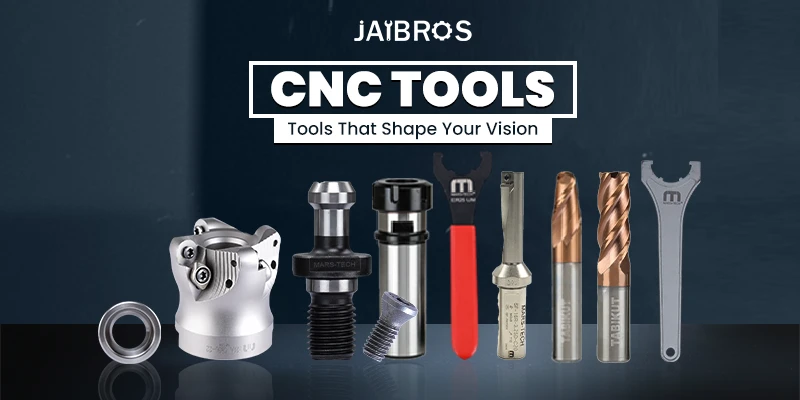
Learn how CNC tool planning improves high-volume production with better tool life, stable output, reduced downtime, and smarter inventory and setup strategies.
How to Plan CNC Tool Strategy for High-Volume Manufacturing Runs
High-volume manufacturing depends on precision, repeatability, and process stability. When production runs are large, even a small inefficiency gets multiplied across thousands of parts. That is why CNC tool planning becomes a critical part of production engineering. Proper planning ensures consistent cycle time, predictable tool life, reduced scrap, and safer machine operation. Without structured preparation, frequent tool failures and unplanned stoppages can destroy productivity targets.
Production teams that treat planning as a formal step rather than a quick setup task usually achieve better output and lower per-part cost. Tool planning connects design intent, material behaviour, machine capability, and cutting strategy into one controlled workflow.
Understanding Production Requirements Before Tool Selection
Before selecting any cnc tool, planners must fully understand the production requirement. This includes material type, hardness range, tolerance demand, surface finish expectation, and batch size. High-volume runs require stability more than experimentation. A tool that performs slightly faster but wears unpredictably is often worse than one that runs slower but lasts consistently.
Engineers should also study part geometry carefully. Deep cavities, thin walls, and tight corners influence tool geometry choice. Awareness of the types of CNC tools available for each operation helps planners match cutters correctly to each feature. When the selection is aligned with geometry and material, tool stress reduces and output becomes more reliable.
Standardization Improves Repeatability
Standardization is one of the strongest advantages in volume production. Using the same holder systems, preset lengths, and repeatable offsets reduces setup variation between batches. Each cnc tool should have a defined setup sheet with stick-out, holder type, torque value, and cutting parameters recorded. This prevents dependency on individual operator memory and reduces human error.
Standardization also simplifies training and shift changes. When every machine cell follows the same tooling logic, replacement and troubleshooting become faster. Many teams prefer working with a consistent CNC tools manufacturer so dimensional accuracy and performance behavior remain predictable across batches.
Tool Life Forecasting and Replacement Planning
In high-volume environments, tool life should be forecasted, not guessed. Historical run data, wear patterns, and cutting time logs should be analyzed to estimate safe replacement intervals. Replacing a cnc tool slightly before end-of-life is safer and more economical than risking sudden breakage that damages parts and stops production.
Digital tool monitoring systems help, but even manual cycle counting works when done consistently. Replacement schedules should be built into the production plan so changeovers are expected and quick rather than reactive and stressful.
Balancing Speed and Stability
High-volume production often creates pressure to push cutting parameters aggressively. However, maximum speed is not always maximum productivity. A tool that runs at extreme parameters may fail unpredictably, causing scrap and downtime that erases any cycle time gain. Stable parameters that produce consistent wear are usually better for long runs.
Testing should be done before full production launch. Trial batches help determine the safe performance window. Once validated, those parameters should be locked and documented so every shift runs under the same safe conditions. Shops that invest in the best CNC tools often get more stable performance at productive speeds because coatings and substrates are optimized for endurance.
Inventory Planning and Supply Continuity
Tool planning for volume production must include inventory strategy. Running out of a critical cutter during a large batch creates avoidable downtime. Each CNC used in the process should have minimum stock levels defined based on usage rate and supplier lead time.
Procurement teams often maintain backup supply channels, including trusted local vendors found through searches like CNC tools near me, to handle urgent needs. Many factories also maintain scheduled purchasing through CNC tools online platforms to keep stock levels stable without overbuying. Balanced inventory reduces both shortage risk and excess carrying cost.
Presetting and Offline Preparation
Presetting tools outside the machine saves valuable spindle time. When each cnc tool is measured and offset data is prepared offline, changeovers become faster and safer. Machines spend more time cutting and less time waiting for setup adjustments.
Offline presetting also improves accuracy because measurement happens in a controlled environment. Length and diameter values can be verified and recorded before the tool reaches the spindle. This reduces trial cuts and protects expensive workpieces during initial runs.
Process Documentation and Operator Communication
Clear documentation is essential in high-volume workflows. Every cnc tool used in the job should be listed in a structured process sheet with its operation number, parameters, holder details, and expected life. Operators should be able to understand the full tool sequence without guesswork.
Shift communication also matters. When wear trends or minor issues are noticed, they should be logged for the next team. This continuity prevents repeated mistakes and supports continuous improvement across the production run.
Continuous Improvement Through Data Review
After each major batch, tooling performance data should be reviewed. Wear patterns, breakage incidents, and replacement timing should be analyzed. This feedback helps refine the next planning cycle. Over time, this creates a data-driven planning model rather than a trial-and-error approach.
A mature planning culture treats every production run as a learning opportunity. Small parameter tuning and geometry adjustments based on real data produce long-term gains.
Conclusion
High-volume production succeeds when preparation is detailed and disciplined. Strong CNC tool planning integrates correct selection, standardisation, life forecasting, inventory control, and documentation into a single repeatable system. Stability should always be prioritized over short-term speed gains. When planning is data-driven and consistently applied, manufacturers achieve predictable output, lower downtime, and safer machining conditions. Good planning turns tooling from a variable risk into a controlled production asset.
About Jaibros
Jaibros is an industrial tooling brand focused on delivering dependable cutting solutions for modern machining environments. The company supports manufacturers with performance-oriented tooling, application support, and reliable supply so production teams can maintain efficiency, consistency, and operational confidence at scale.
FAQs
Q1. How is tool planning different for high-volume production compared to small batches?
High-volume planning focuses more on repeatability, life forecasting, and standardized setups rather than flexible experimentation.
Q2. Why is tool life forecasting important?
It prevents sudden failures, reduces scrap, and allows scheduled replacement instead of emergency stoppages.
Q3. Should cutting parameters be pushed to maximum in mass production?
Not always. Stable and predictable performance is usually more productive than extreme speed.
Q4. How does presetting help production efficiency?
Presetting reduces machine idle time and improves setup accuracy before the tool reaches the spindle.
Q5. Why is supplier consistency important in tooling?
Consistent supply and dimensional reliability reduce variation and planning uncertainty.