Compare digital vs traditional feeler gauge accuracy, price, least count, and sizes in mm to choose the right tool for precise gap measurement.
Digital vs Traditional Feeler Gauge: Accuracy, Features & Key Differences
Precision measurement plays a crucial role in automotive repair, mechanical engineering, and industrial maintenance. Even the smallest miscalculation in gap or clearance can lead to performance issues, component wear, or costly breakdowns. When it comes to measuring narrow spaces, professionals often debate between digital tools and the traditional feeler gauge.
So which option truly delivers better accuracy? Is modern technology superior, or does the classic design still hold its ground? In this detailed comparison, we’ll explore accuracy, usability, durability, cost, and practical applications to help you make the right choice.
Understanding the Traditional Feeler Gauge
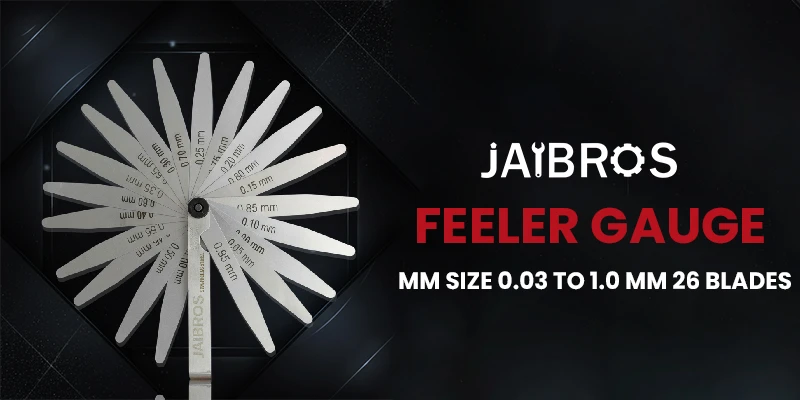
A traditional feeler gauge is a simple yet highly precise measuring tool consisting of thin metal blades, each marked with a specific thickness. These blades are inserted into gaps to measure clearances between components.
The design is straightforward:
-
Multiple steel blades
-
Clearly marked thickness values
-
Foldable or detachable structure
-
No electronic components
Because of its mechanical simplicity, it has remained a trusted tool for decades in automotive workshops and industrial settings.
What Is a Digital Feeler Gauge?
A digital feeler gauge operates using electronic sensors to measure and display gap thickness on a digital screen. Instead of manually inserting different blades, the device calculates the spacing electronically and provides a numerical reading.
It typically includes:
-
A digital display
-
Sensor-based measuring tip
-
Battery-powered operation
-
Enhanced precision calibration
Digital models are designed for convenience and quick reading, particularly in environments requiring repeated measurements.
Accuracy Comparison: Which One Performs Better?
Accuracy depends on multiple factors such as design quality, calibration, and user handling.
1. Mechanical Precision
A high-quality feeler gauge provides extremely reliable results because each blade is manufactured to a specific thickness tolerance. Since it is a fixed measurement tool, it does not rely on electronics that may drift over time.
Traditional sets often follow a detailed feeler gauge size chart, allowing mechanics to choose or combine blades for exact thickness.
2. Electronic Precision
Digital versions can offer very fine measurement increments. However, accuracy depends on sensor calibration and battery condition. If calibration shifts or batteries weaken, readings may become unreliable.
In highly controlled environments, digital tools can match or sometimes exceed manual measurement precision. But in rough workshop conditions, durability becomes a factor.
Feeler Gauge Least Count: Why It Matters
One of the most important aspects of precision is the feeler gauge least count, which refers to the smallest measurable increment in the tool.
Traditional sets often start from very fine increments such as 0.02 mm. Digital models may display readings in similar or smaller increments depending on their design.
However, real-world accuracy is not just about least count. It also depends on:
-
Blade manufacturing tolerance
-
Sensor calibration
-
User technique
-
Surface cleanliness
In most automotive applications, both options provide sufficient precision when properly used.
Practical Applications in Automotive Work
For engine tuning and valve clearance adjustment, a feeler gauge remains the preferred choice for many mechanics. It provides tactile feedback—meaning you can physically feel resistance when the blade fits correctly. This physical sensation helps confirm measurement accuracy.
Digital tools provide visual confirmation but lack the same tactile sense of fit. For experienced technicians, the manual method often feels more reliable.
Common applications include
-
Valve clearance adjustment
-
Spark plug gap setting
-
Bearing clearance checks
-
Gear backlash measurement
In many of these cases, the simplicity of manual blades makes them easier to use in tight engine compartments.
Feeler Gauge Sizes in mm and Measurement Range
Most modern workshops rely on feeler gauge sizes in mm because metric measurements provide standardized precision.
Traditional sets typically range from:
-
0.02 mm to 1.00 mm
-
Some sets extending beyond 1.00 mm
Digital tools may offer adjustable measurement ranges depending on their sensor design. However, traditional blade sets allow stacking multiple blades together to achieve highly specific thickness combinations.
For mechanics who regularly consult manufacturer specifications, referencing a feeler gauge size chart ensures accurate compliance with required tolerances.
Durability and Maintenance
Traditional Models
A feeler gauge made from hardened steel is extremely durable. It:
-
Requires no batteries
-
Resists impact
-
Works in dusty environments
-
Handles oil exposure well
Maintenance typically involves cleaning blades and preventing rust.
Digital Models
Digital tools contain electronic components that are more sensitive to:
-
Moisture
-
Dust
-
Oil contamination
-
Impact damage
They also require battery replacement and occasional recalibration.
In harsh workshop conditions, traditional tools often last longer.
Cost Comparison
When comparing options, many mechanics consider feeler gauge price as a deciding factor.
Traditional sets are generally very affordable and provide excellent long-term value. Even professional-grade models are budget-friendly.
Digital versions, on the other hand, are significantly more expensive due to electronic components and calibration systems.
For most standard automotive and mechanical tasks, the cost difference does not necessarily justify switching to digital unless specialized precision is required.
Ease of Use
Traditional blades require manual selection and insertion. While this may take slightly more time, the process is straightforward and reliable.
Digital tools offer quicker numeric readings but may require:
-
Setup time
-
Calibration checks
-
Proper positioning to avoid false readings
-
For fieldwork and on-site repairs, simplicity often wins.
When Digital May Be Better
Digital tools may be an advantage to us when:
-
Recording repeated measurements
-
Working in laboratory conditions
-
Needing digital data logging
-
Performing ultra-fine calibration tasks
In precision engineering labs or quality control departments, digital measurement systems can streamline documentation.
When Traditional Is the Better Choice
A feeler gauge remains superior when:
-
Working on tight engine components
-
Performing routine maintenance
-
Operating in dusty or oily environments
-
Needing durable and low-maintenance tools
For everyday mechanics, the traditional version often proves more practical.
Final Accuracy Verdict
So which is more accurate?
In controlled conditions, both digital and traditional tools can provide highly precise readings. However, real-world reliability often favors the traditional blade design.
Because a feeler gauge does not rely on electronics, calibration drift, or power supply, it consistently delivers dependable results. Its tactile feedback also gives mechanics confidence in measurement accuracy.
For most automotive and industrial applications, traditional tools remain the industry standard.
FAQs
1. Is a digital feeler gauge more accurate than a traditional one?
Not necessarily. Both can be precise, but traditional blade sets often provide reliable real-world accuracy without electronic calibration concerns.
2. What is feeler gauge least count?
It refers to the smallest measurement increment available in the tool. Smaller increments allow more precise gap measurement.
3. Are feeler gauge sizes in mm better than inches?
Metric measurements are widely used in modern automotive and industrial systems, making millimeter sizes more common globally.
4. How much does feeler gauge price vary?
Prices vary depending on quality and type. Traditional sets are affordable, while digital models are generally more expensive.
5. Can I combine blades in a traditional set?
Yes, multiple blades can be stacked to achieve a specific thickness when needed.
Conclusion
Both digital and traditional measuring tools have their place in modern workshops. While digital options offer convenience and advanced features, the classic feeler gauge continues to deliver dependable accuracy, durability, and cost-effectiveness.
For everyday mechanical tasks, engine tuning, and industrial maintenance, traditional blade sets remain a practical and trusted solution. Ultimately, the right choice depends on your working environment, precision requirements, and budget.
About Jaibros
Jaibro is a trusted provider of high-quality industrial tools and precision measuring instruments. Known for durability and accuracy, Jaibros offers reliable solutions designed for mechanics, technicians, and engineering professionals. With a focus on performance and long-term value, Jaibros supports workshops and industries with tools that meet modern standards